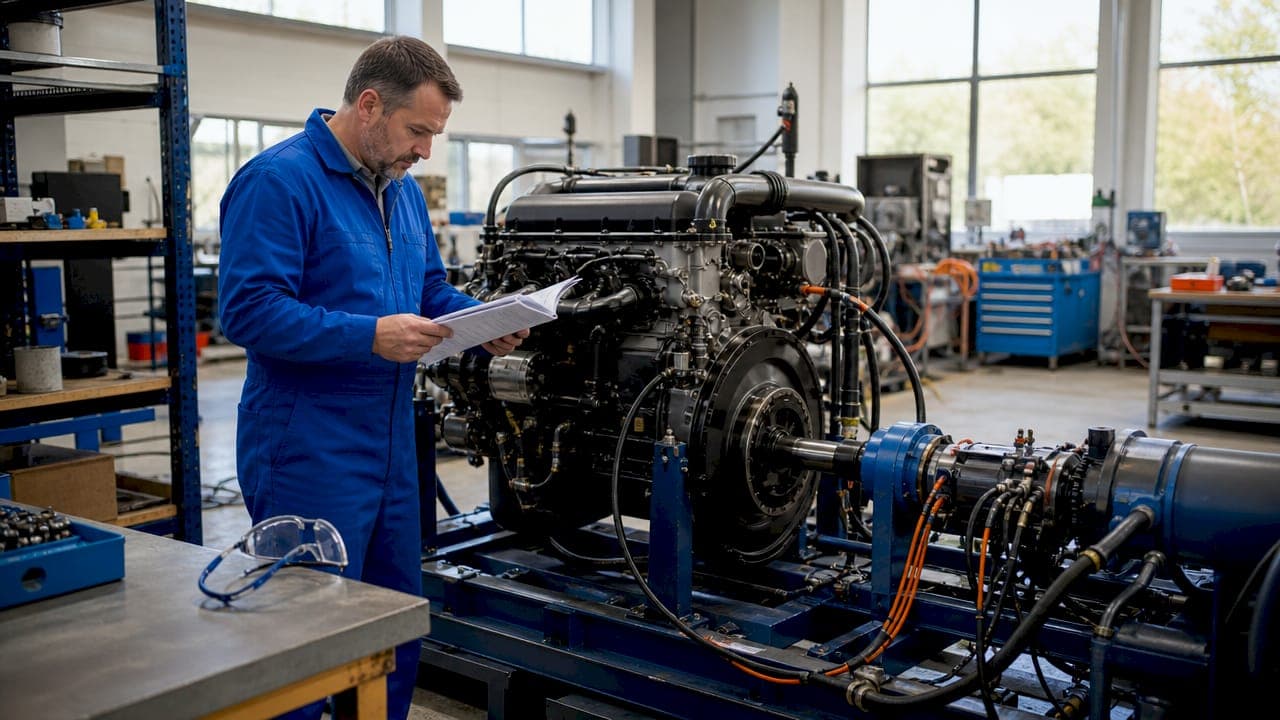
Diesel engine horsepower rating is the standardized measure of mechanical power output a diesel engine can sustain under defined conditions, expressed in units such as brake horsepower (BHP) or net horsepower. For mechanics diagnosing performance issues, fleet managers sizing replacement engines, or truck owners comparing specs, understanding this rating is the difference between a well-matched engine and a costly mistake. The rating tells you how much work an engine can perform over time, but only if you know which rating type you are reading and what conditions it assumes.
What is diesel engine horsepower rating and how is it measured?
Diesel engine horsepower rating quantifies mechanical power output using a standard unit: 1 HP equals 550 foot-pounds of work per second. That definition comes from James Watt's original comparison to draft horse output, but modern diesel testing has nothing to do with horses. It is a precise laboratory measurement performed on a dynamometer under controlled conditions.
The industry standard for those conditions is ISO 3046-1, which sets the baseline at 25°C ambient temperature, 100 kPa atmospheric pressure, and 30% relative humidity. Any engine tested outside these parameters must have its rating adjusted. This matters because a Cummins ISX15 rated at 600 HP at sea level will not deliver 600 HP at 6,000 feet elevation without a derating calculation.

Brake horsepower vs. net horsepower
Brake horsepower is measured directly at the crankshaft on a dynamometer, with no accessories attached. Net horsepower accounts for parasitic losses from components like the alternator, cooling fan, air compressor, and power steering pump. Gross horsepower is theoretical; net horsepower reflects what actually reaches the drivetrain under real operating conditions. When you read a spec sheet for a Detroit Diesel DD15 or a Paccar MX-13, the published figure is net horsepower unless the document explicitly states otherwise.
Rating types: standby, prime, and continuous
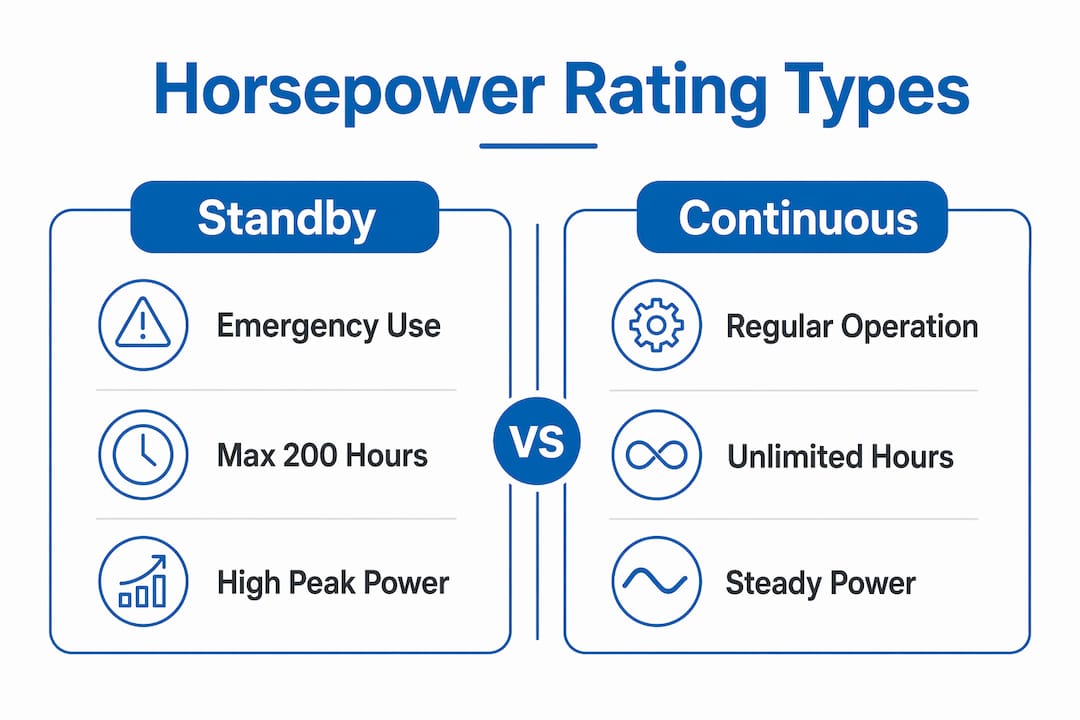
Beyond the measurement method, diesel engines carry three operational rating types that define duty cycle:
- Standby rating: Maximum output for emergency use, up to 200 hours per year. This is the peak number manufacturers publish, and it is not sustainable for daily operation.
- Prime rating: Designed for variable loads averaging 70 to 80% of rated capacity. Suitable for primary power applications where load fluctuates throughout the day.
- Continuous rating: Maximum power the engine can sustain indefinitely without overload. This is the number fleet managers and industrial operators should use for load matching.
Diesel engines are also classified by output range. Small engines produce up to 288 HP and power light trucks. Medium engines reach up to 1,000 HP for heavy trucks and vocational equipment. Large engines exceed 1,000 HP and are used in locomotives and marine vessels. That classification shapes which rating type applies to your application.
Pro Tip: Always confirm which rating type a seller is quoting before comparing engines. A standby-rated engine quoted against a continuous-rated competitor will look more powerful on paper but will fail prematurely under sustained load.
What factors affect the accuracy of diesel horsepower ratings?
Rated horsepower is a laboratory number. Real-world output depends on four factors that every mechanic and fleet manager should account for before finalizing an engine selection.
- Altitude derating. Air density drops as elevation rises, reducing oxygen available for combustion. A diesel engine loses roughly 3% of its rated power for every 1,000 feet above sea level. A truck running routes through the Rocky Mountains needs this factored into its engine spec before purchase.
- Temperature derating. High ambient temperatures reduce air density the same way altitude does. Environmental factors like altitude and temperature significantly reduce available power from rated conditions, which is why summer fleet performance often lags winter performance on the same routes.
- Humidity. Water vapor displaces oxygen in the intake charge. The ISO 3046-1 baseline of 30% humidity is lower than what most operating environments see in summer months, so rated output is slightly optimistic for humid climates.
- Parasitic accessory loads. Air conditioning compressors, hydraulic pumps, and PTO-driven equipment all draw power from the engine. Gross horsepower measured without accessories can be meaningfully higher than net horsepower once these loads are active.
Power density, the ratio of output to engine displacement and physical size, also shapes how derating affects a given engine. A high-density engine like the Detroit DD13 packs more output into a smaller package, which means thermal management becomes critical. When that engine is derated for altitude or heat, the margin between rated and actual output narrows faster than it would in a lower-density design.
How do diesel horsepower and torque work together?
Horsepower and torque are not the same metric, and confusing them is the most common mistake mechanics and fleet buyers make when evaluating diesel engine performance metrics.
Torque is rotational force measured in pound-feet. Horsepower is a function of torque multiplied by RPM, divided by a constant. The relationship means that at any given RPM, more torque produces more horsepower. But the two metrics peak at different points in the RPM range, and that separation defines how an engine behaves in the real world.
| Metric | What it measures | Best application |
|---|---|---|
| Torque | Rotational force at the crankshaft | Low-speed pulling, grade climbing, loaded starts |
| Horsepower | Sustained work capacity over time | Highway cruising, sustained high-speed loads |
| Peak torque RPM | RPM where torque is highest | Determines lugging ability and low-end response |
| Peak HP RPM | RPM where power is highest | Determines top-end performance and governed speed |
A Mack MP8 engine producing 1,860 lb-ft of torque at 1,100 RPM is built for heavy hauling at low speeds. A vocational truck pulling grades in the Appalachians needs that low-RPM torque more than peak horsepower. A long-haul truck running flat interstate at 65 mph needs sustained horsepower to maintain speed efficiently. Torque is critical for transient loads like startup and acceleration, while horsepower reflects continuous work capacity.
Pro Tip: When reviewing engine specs for a fleet replacement, always check both the peak torque value and the RPM at which it occurs. An engine with high peak torque at 900 RPM will outperform a higher-horsepower engine in stop-and-go urban delivery, even if the horsepower numbers favor the competitor.
Practical applications: using horsepower ratings correctly
Understanding the rating is only useful if you apply it correctly to engine selection, maintenance planning, and fleet management decisions.
Matching an engine's continuous horsepower rating to the actual load it will carry is the most important step. A matching ratio of 1.35 to 1.6 between rated engine power and load power is the accepted standard for reliable operation at low altitude. Critical applications like data centers or emergency power systems use a ratio of 2.0 or higher to build in reliability margin. The same logic applies to fleet trucks: an engine running at 95% of its continuous rating every day will wear faster and consume more fuel than one running at 75%.
Specialized applications add another layer. Fire pump diesel engines, for example, must be derated per NFPA 20 to guarantee continuous, non-overload operation. The standard distinguishes between the engine's maximum peak horsepower and its certified continuous rating, and only the continuous rating is acceptable for fire suppression use. That same principle applies to any mission-critical diesel application.
Common pitfalls to avoid when reading engine data plates and manufacturer specifications:
- Overrating the engine. Selecting an engine based on standby horsepower for a continuous-duty application causes premature wear and preventable failures from mismatched ratings.
- Ignoring derating factors. A spec sheet number without altitude and temperature adjustments is incomplete for any operation above 2,000 feet or in climates exceeding 95°F regularly.
- Comparing gross to net figures. Manufacturers do not always label which figure they publish. Confirm before comparing a Caterpillar C15 against an International engine from a different data source.
- Overlooking the torque curve. A high horsepower rating with a narrow torque band can underperform a lower-rated engine with broad, flat torque delivery in real hauling conditions.
Reading the data plate on a used engine requires checking the engine serial number against the manufacturer's published spec sheet. Cummins, Detroit Diesel, and Caterpillar all maintain online databases where you can verify the original factory rating for any serial number. That verification step is non-negotiable when buying a used engine for a fleet replacement.
Key takeaways
Diesel engine horsepower rating is only useful when you know the rating type, the measurement standard, and the real-world derating factors that separate laboratory output from what the engine delivers on the road.
| Point | Details |
|---|---|
| Net HP is the usable number | Net horsepower accounts for parasitic loads and reflects actual output under operating conditions. |
| Rating type determines duty cycle | Standby, prime, and continuous ratings define how long and how hard an engine can run safely. |
| Derating is mandatory above baseline | Altitude, heat, and humidity all reduce output below the ISO 3046-1 rated figure. |
| Torque and HP serve different roles | Torque drives low-speed pulling; horsepower sustains high-speed continuous loads. |
| Matching ratio protects engine life | Size the engine so the load runs at 70 to 80% of continuous rating for longevity and efficiency. |
What experience actually teaches you about horsepower ratings
I have reviewed hundreds of engine specs for fleet buyers, and the single most consistent mistake I see is treating the horsepower number on a spec sheet as a fixed truth. It is not. It is a snapshot taken under ideal conditions that may have nothing to do with where that engine will actually work.
The second mistake is chasing peak horsepower when the application demands torque. A fleet manager replacing a vocational truck engine for urban delivery routes does not need the highest horsepower number available. They need a broad torque curve that keeps the truck moving through traffic and up ramps without downshifting constantly. Horsepower sells engines. Torque does the work.
The third thing experience teaches is that the continuous rating is the only number that matters for daily commercial operation. Standby ratings are marketing. Prime ratings are useful for variable-load applications. But if your trucks run loaded routes five days a week, the continuous rating is your ceiling, and you should size the engine so you never hit it. Running at 80% of continuous capacity is not conservative. It is the correct engineering practice for maximizing service life and minimizing unplanned downtime.
One more thing: always verify the rating type and derating factors before buying a used engine. A used Detroit Diesel engine with a verified continuous rating and documented service history is worth more than a higher-horsepower engine with an unknown duty cycle. The number on the plate means nothing without context.
— Carl
Find the right diesel engine for your application
Knowing your horsepower rating requirements is the first step. Finding an engine that meets them at a price that makes sense is where Nationwideheavytruckparts comes in. Their inventory includes tested and inspected commercial diesel truck engines from Detroit Diesel, Cummins, Caterpillar, Mack, International, and Paccar, each backed by a standard warranty. Every engine in their catalog comes with documented specs so you can match the continuous rating, torque curve, and displacement to your actual load requirements before you buy. With same-day shipping and a daily-changing inventory, Nationwideheavytruckparts makes it straightforward to source a verified engine without delays. Browse their current truck engines for sale to find options matched to your horsepower and duty cycle needs.
FAQ
What is the difference between BHP and net horsepower?
Brake horsepower is measured at the crankshaft without accessories attached. Net horsepower deducts the power consumed by the alternator, cooling fan, and other engine-driven components, making it the realistic measure of usable output.
How does altitude affect a diesel engine's horsepower rating?
Altitude reduces air density, which lowers oxygen availability for combustion and reduces actual output below the rated figure. The ISO 3046-1 standard requires derating calculations whenever operating conditions differ from the 25°C, 100 kPa baseline.
What horsepower rating should I use for a fleet truck running daily routes?
Use the continuous rating, not the standby or prime rating. The continuous rating defines the maximum power the engine can sustain indefinitely, and fleet trucks should be sized so daily loads run at 70 to 80% of that figure.
Why do diesel engines have different rating types?
Standby, prime, and continuous ratings reflect different duty cycles. Standby covers emergency use up to 200 hours per year. Prime supports variable loads over extended periods. Continuous is for applications requiring maximum sustained power without interruption.
How do I verify the horsepower rating on a used diesel engine?
Cross-reference the engine serial number with the manufacturer's published spec database. Cummins, Detroit Diesel, and Caterpillar all provide online tools to confirm the original factory rating, which is the only reliable way to verify a used engine's specifications.