
Diesel engine mileage benchmarks define how many miles a diesel engine typically delivers before a major overhaul, reflecting both performance and efficiency standards across commercial trucking and automotive use. A well-maintained diesel engine lasts 500,000 to over 800,000 miles, far outlasting most gasoline counterparts. Class 8 heavy-duty trucks and light-duty diesel pickups operate in entirely different performance ranges, and knowing those ranges helps fleet operators and truck owners make smarter purchasing, maintenance, and replacement decisions. This guide breaks down current real-world benchmarks by truck class, explains what drives the numbers, and covers how EPA Phase 3 GHG standards will reshape efficiency expectations starting in model year 2027.
1. Diesel engine mileage benchmarks for Class 8 heavy-duty trucks
Class 8 heavy-duty diesel tractors set the standard for commercial fuel efficiency. The national average sits at 7 mpg, but that number tells only part of the story. Top-performing trucks in real-world freight-hauling conditions have reached 11.5 mpg. That gap between average and peak performance represents a significant cost opportunity for fleet operators.
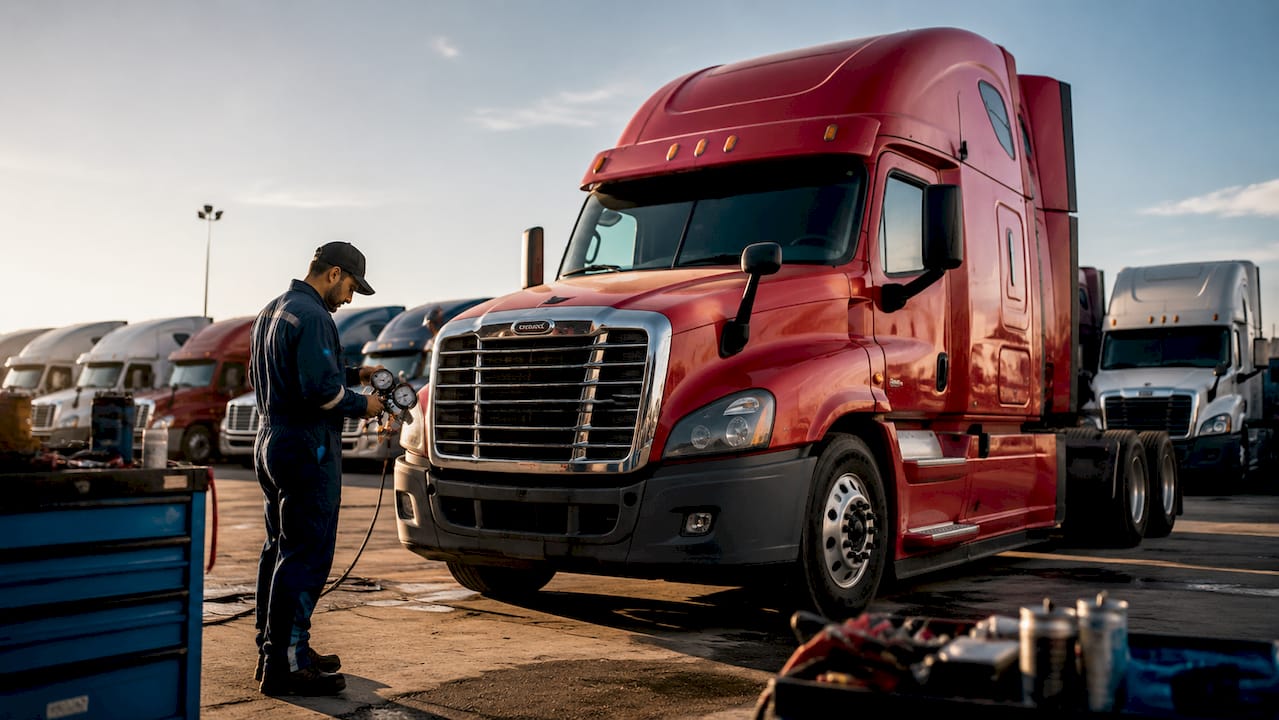
The North American Council for Freight Efficiency (NACFE) tracks these performance spreads closely. Their data shows that the difference between an average fleet and a high-performing one is not primarily the engine. Driver behavior, aerodynamic configuration, and load management account for most of the variance. A skilled driver in an aerodynamically optimized tractor can nearly double the fuel economy of an average operator in the same truck.
Key factors tracked in Class 8 mileage performance:
- Aerodynamic packages: Side skirts, roof fairings, and gap reducers reduce drag and improve mpg.
- Tire selection: Low-rolling-resistance tires contribute measurably to fuel savings on long hauls.
- Speed management: Consistent highway speeds below 65 mph keep fuel consumption predictable.
- Engine load management: Avoiding unnecessary idling and managing PTO use reduces waste.
- Driver coaching programs: Fleets using telematics-based coaching report consistent mpg improvements.
EPA Phase 3 GHG standards, effective for model year 2027, will push Class 8 diesel efficiency targets higher. Manufacturers are already investing in engine calibration, waste heat recovery, and improved drivetrain integration to meet those targets.
2. Mileage benchmarks for light-duty diesel trucks and pickups
Light-duty diesel trucks operate in a completely different efficiency range than their Class 8 counterparts. The 2025 Chevy Silverado HD diesel achieves 20.9 mpg versus 16.1 mpg for the gasoline version of the same truck. That 4.8 mpg advantage adds up fast for high-mileage drivers.
The upfront cost of choosing diesel is real. The diesel engine option on the Silverado HD costs $9,500 more than the gasoline engine. The break-even point on that premium lands at approximately 460,000 miles. That number sounds large, but for drivers who tow regularly or cover 30,000+ miles per year, it is achievable within the truck's working life.
Diesel pickups make the most financial sense in specific use cases:
- High-mileage commuters and work trucks covering more than 25,000 miles annually
- Towing-heavy applications where diesel torque reduces strain and improves control
- Operators who keep trucks for 10 or more years and want lower long-term fuel costs
- Fleet vehicles where fuel costs are tracked and reported against a budget
Pro Tip: Track your actual fuel economy manually using fuel receipts and odometer readings. Onboard dash computers can read 5–10% higher or lower than your real-world numbers, which distorts any break-even calculation you run.
3. What affects diesel engine mileage benchmarks
Diesel fuel efficiency is not a fixed number. It shifts based on how a truck is operated, maintained, and loaded. Understanding what moves the needle helps fleet operators close the gap between average and peak performance.
Driver behavior is the single largest variable. Skilled drivers proved that 11.5 mpg under real freight loads was achievable, disproving the assumption that such efficiency was impossible. That result came from deliberate speed management, smooth acceleration, and minimal idle time. No engine upgrade produced that result. Operator skill did.
Mechanical and operational factors that directly affect diesel mileage:
- ECU tuning: Engine Control Unit calibration affects fuel injection timing and quantity. Proper tuning for the load profile improves efficiency.
- Exhaust Gas Temperature (EGT) monitoring: EGT is the most critical real-time diagnostic for diesel engine health. Sudden EGT spikes often precede mechanical failures, making it a leading indicator, not just a performance metric.
- Diesel Exhaust Fluid (DEF) consumption: Higher DEF use per mile signals heavier engine load or reduced combustion efficiency. Tracking DEF consumption alongside fuel use gives a more complete picture of engine health.
- Air filter condition: A clogged air filter forces the engine to work harder, burning more fuel for the same output.
- Coolant and oil quality: Degraded fluids increase internal friction and thermal stress, reducing efficiency over time.
Pro Tip: Set up a simple spreadsheet to log fuel fill-ups, DEF refills, and mileage at each service interval. Patterns in that data reveal efficiency losses months before they show up as mechanical problems.
4. How EPA Phase 3 GHG standards will reshape future benchmarks
EPA Phase 3 GHG standards take effect for model year 2027 trucks, and they represent the most significant shift in diesel efficiency requirements in over a decade. Manufacturers must meet tighter emissions and fuel consumption targets, which drives real changes in engine technology and drivetrain design.
The cost impact is direct. Compliant Class 8 tractors will carry a cost premium of $6,000 to $15,000 per unit over current-generation trucks. That premium is not uniform. It depends on the powertrain configuration, manufacturer, and spec level. Fleet operators need to model that cost against their actual annual mileage before committing.
Annual mileage determines whether the Phase 3 premium pays off. Operators running 130,000 miles per year recover the efficiency premium far faster than those running 70,000 miles annually. For small fleet owners, the math may favor purchasing pre-2027 trucks now or sourcing quality used engines to extend current equipment life.
| Operator profile | Annual mileage | Phase 3 premium payback |
|---|---|---|
| High-mileage long-haul | 130,000+ miles | Faster ROI on efficiency gains |
| Regional carrier | 70,000–100,000 miles | Moderate payback timeline |
| Small fleet or owner-operator | Under 70,000 miles | Longer payback, used equipment often better value |
The used truck market is already responding. Pre-2027 inventory is moving faster as buyers anticipate the price jump on compliant new units. For fleet operators who understand diesel injection timing and engine maintenance, a well-maintained pre-Phase 3 truck with a quality used engine can deliver strong performance at a fraction of the new-unit cost.
5. How to track diesel mileage accurately
Accurate tracking separates operators who know their real fuel costs from those who guess. The dash computer is a starting point, not a final answer. Real-world diesel fuel economy can differ from dash computer estimates by 5–10% in either direction. That error compounds over thousands of miles and distorts any cost analysis.
Manual tracking using fuel receipts and odometer readings gives the most accurate baseline. Fill the tank completely, record the odometer reading, and repeat at every fill-up. Divide miles driven by gallons added. That number is your actual mpg, unfiltered by onboard software assumptions.
Fleet operators running multiple trucks benefit from centralizing this data. A simple fleet management spreadsheet or a telematics platform that logs fuel transactions against GPS mileage removes human error from the equation. The goal is a clean data set that shows each truck's real performance over time, not a manufacturer estimate or a dashboard average.
6. Engine longevity and its relationship to mileage benchmarks
Diesel engine longevity and fuel efficiency are connected. An engine running at peak mechanical health burns fuel cleanly and consistently. As components wear, combustion efficiency drops, and fuel consumption rises before any warning light appears.
A diesel engine in good condition reaches 500,000 to 800,000 miles before requiring a major overhaul. Reaching that upper range requires consistent maintenance: oil changes on schedule, coolant system flushes, injector cleaning, and EGT monitoring. Skipping any of these shortens the engine's productive life and raises per-mile fuel costs in the final years before failure.
The relationship between mileage benchmarks and engine condition is why sourcing a replacement engine matters. A used engine with documented service history and a verified test run delivers predictable performance. An untested unit introduces risk that shows up in fuel economy data within the first 10,000 miles. Nationwide Truck Parts tests and inspects every engine before it ships, which means the mileage performance you expect is the mileage performance you get.
For optimal RPM management and engine longevity, understanding tractor engine RPM ranges helps operators keep diesel engines in their most efficient operating band.
Key takeaways
Diesel engine mileage benchmarks vary sharply by truck class, with Class 8 trucks averaging 7 mpg and top performers reaching 11.5 mpg, while light-duty diesel pickups average 20.9 mpg under real-world conditions.
| Point | Details |
|---|---|
| Class 8 average vs. peak | National average is 7 mpg; skilled drivers in optimized trucks reach 11.5 mpg. |
| Light-duty diesel advantage | Diesel pickups average 20.9 mpg vs. 16.1 mpg for gasoline, with a $9,500 upfront premium. |
| Driver behavior is the top variable | Operator skill and aerodynamic setup drive the largest mpg gains, not engine upgrades alone. |
| Phase 3 cost premium | EPA Phase 3 compliant Class 8 trucks will cost $6,000–$15,000 more starting model year 2027. |
| Track mileage manually | Dash computers can be off by 5–10%; fuel receipts and odometer readings give accurate data. |
What I've learned about reading diesel mileage numbers honestly
Fleet operators often treat manufacturer mpg figures as targets. They are not. They are best-case results under controlled conditions. Real-world performance depends on load, terrain, driver habits, and maintenance history. The gap between what a truck is rated for and what it actually delivers tells you more about your operation than the rating itself.
The 11.5 mpg result from NACFE testing is genuinely impressive, but it required a skilled driver, an aerodynamically optimized tractor, and favorable freight conditions. Most fleets will not replicate that number consistently. What they can do is close the gap between their current average and their best trucks. That gap is almost always a driver training and maintenance problem, not an equipment problem.
The Phase 3 regulations concern me for small fleet owners. A $6,000 to $15,000 premium per unit is significant when you are running three to five trucks. The fuel savings are real, but the payback timeline at 70,000 miles per year is long. My recommendation is to run the numbers honestly for your specific duty cycle before committing to new iron. A well-maintained pre-2027 truck with a quality replacement engine from a source like Nationwide Truck Parts may deliver better total cost of ownership for the next five years than a new compliant unit.
Driver training is the most underused tool in fleet fuel management. I have seen fleets cut fuel costs meaningfully through structured coaching programs without touching a single engine. The technology to track and coach driver behavior exists and is affordable. Using it is a choice.
— John
Nationwide Truck Parts has the diesel engines your fleet needs
When a diesel engine reaches the end of its service life or needs replacement before the next regulatory cycle, the replacement unit matters as much as the original. Nationwide Truck Parts carries a daily-changing inventory of tested and inspected diesel engines for heavy-duty and medium-duty trucks, backed by a standard warranty and same-day shipping.
Whether you need a Detroit DD15 engine assembly, a Mack MP8 engine assembly, or a Paccar MX13 engine for your next replacement, Nationwide Truck Parts has the inventory to get your truck back on the road fast. Every engine is tested before it ships, so you know exactly what you are getting. Browse the full selection of diesel truck engines and find the right fit for your fleet today.
FAQ
What is the average mileage for a diesel engine?
A well-maintained diesel engine lasts 500,000 to over 800,000 miles before requiring a major overhaul. Class 8 heavy-duty trucks average around 7 mpg in real-world freight hauling.
How does diesel fuel economy compare to gasoline in pickups?
Diesel pickups like the 2025 Chevy Silverado HD average 20.9 mpg versus 16.1 mpg for the gasoline version. The diesel option costs $9,500 more upfront, with a break-even point around 460,000 miles.
What is the most important metric for monitoring diesel engine health?
Exhaust Gas Temperature (EGT) is the most critical real-time diagnostic for diesel engine health. Sudden abnormal EGT shifts often signal mechanical problems before they cause serious damage.
How accurate are onboard fuel economy displays in diesel trucks?
Onboard dash computers can differ from actual fuel economy by 5–10% in either direction. Manual tracking using fuel receipts and odometer readings gives the most accurate real-world mileage data.
How will EPA Phase 3 GHG standards affect diesel truck costs?
Phase 3 standards take effect for model year 2027 and add a $6,000 to $15,000 cost premium per Class 8 tractor. Operators running high annual mileage recover that premium faster through fuel savings.