
The engine block is the primary structural component of a truck's engine, housing the cylinders, coolant passages, and lubrication channels that make combustion possible. Every measurable output from a heavy-duty truck, including power, torque, fuel economy, and service life, traces back to the quality and condition of this single casting. Understanding the role of engine block in truck performance is not optional for mechanics, fleet operators, or serious truck enthusiasts. It is the foundation every other upgrade or maintenance decision is built on.
How engine block design affects truck performance
The cylinder block, the industry's standard term for what most people call the engine block, serves three simultaneous functions: it is a pressure vessel for combustion, a thermal management structure, and a precision alignment fixture for every moving part inside the engine. Fail at any one of those three jobs and the engine fails. That is why block selection and condition matter more than almost any other truck performance component.
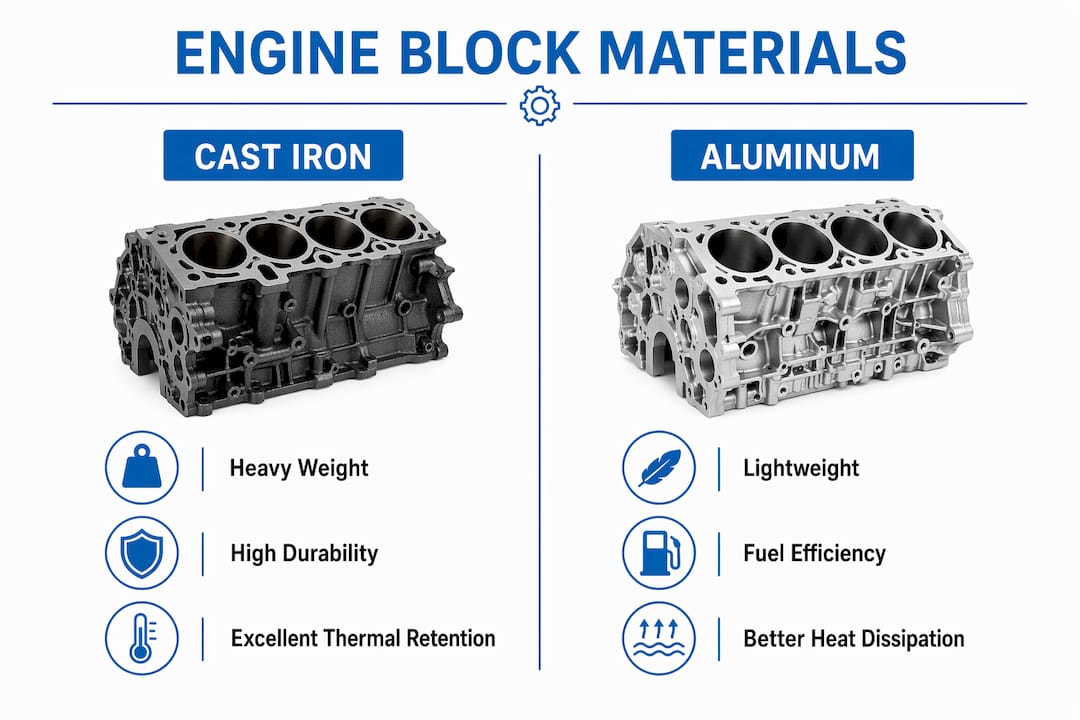
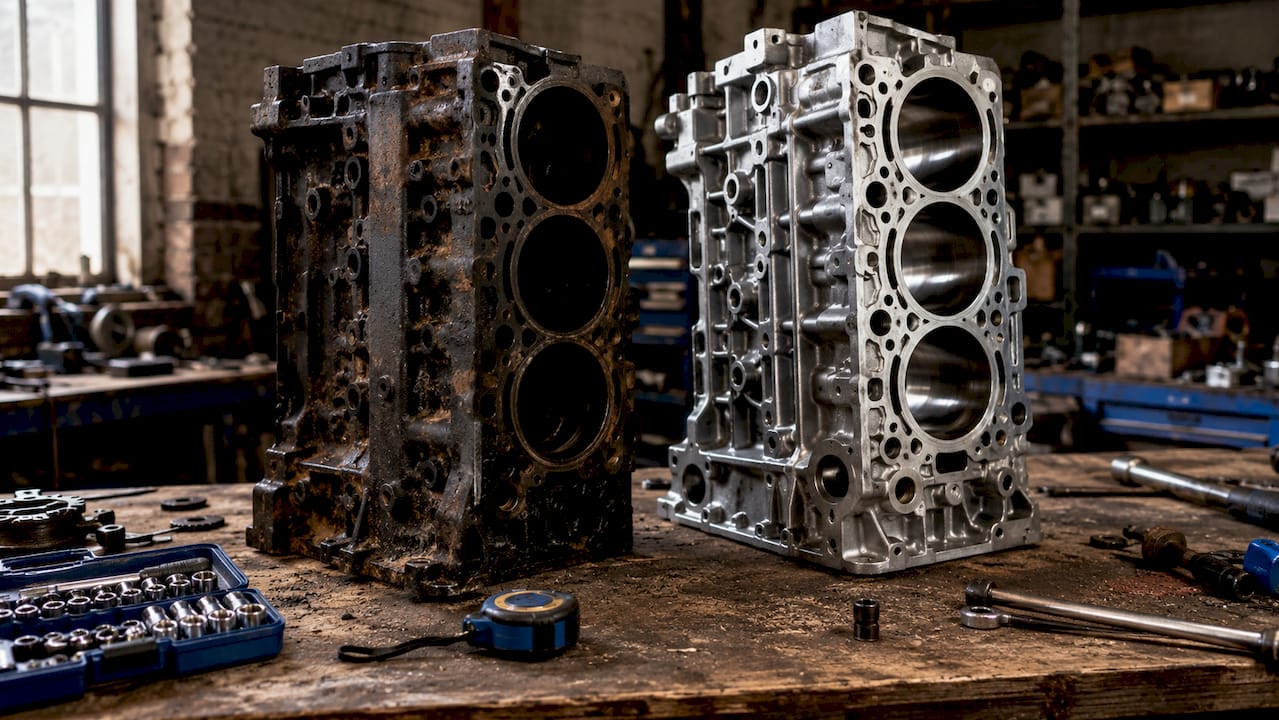
Cast iron and aluminum are the two dominant materials, and they represent genuinely different philosophies. Cast iron blocks deliver superior stiffness and bore stability under high thermal loads, which is why they remain standard in heavy-duty trucking applications like Mack MP8 and Detroit Diesel DD15 engines. Aluminum blocks, by contrast, reduce engine mass by 40 to 50% compared to cast iron. That weight reduction improves fuel efficiency and reduces stress on the front axle, but it comes with trade-offs in raw strength and heat tolerance.
Cast iron vs. aluminum: which block fits your truck?
| Feature | Cast iron | Aluminum |
|---|---|---|
| Weight | Heavy, adds to front axle load | 40 to 50% lighter than cast iron |
| Thermal durability | Excellent under sustained high heat | Requires better cooling management |
| Bore stability | Superior, resists distortion | More prone to distortion under stress |
| Best application | Long-haul, heavy hauling, high-load fleets | Lighter trucks, fuel-efficiency focused routes |
| Typical examples | Mack, Detroit Diesel, older Cummins | Some medium-duty and newer light commercial |
The engine block material choice is ultimately a trade-off between strength and weight, and that trade-off has direct consequences for fuel economy and durability in commercial trucking. A fleet running 80,000-pound loads across mountain grades needs the bore stability of cast iron. A regional delivery fleet prioritizing miles per gallon may benefit from aluminum's weight savings.
Pro Tip: If your truck is used primarily for heavy hauling or towing, prioritize cast iron blocks for their thermal and structural durability. If fuel efficiency on lighter loads is the goal, aluminum blocks paired with upgraded cooling systems are worth evaluating.
Why block rigidity determines power output and wear rates
The cylinder block acts as a rigid foundation that maintains precise alignment between the cylinders, crankshaft, and cylinder head. When that rigidity is compromised, the consequences cascade through every internal component.
Here is what block flex or distortion actually causes in practice:
- Ring sealing failure. When the block distorts under pressure, piston rings cannot maintain consistent contact with the cylinder wall. This allows combustion gases to blow past the rings, a condition called blow-by, which reduces compression and power output directly.
- Accelerated bearing wear. Crankshaft bearings depend on precise bore alignment. Even minor distortion shifts the load distribution across bearing surfaces, shortening their service life significantly.
- Head gasket stress. Deck surface distortion creates uneven clamping pressure across the head gasket. The result is coolant or combustion gas leaks that often go undetected until serious damage is done.
- Vibration damage. Worn or poorly designed engine mounts can offset the benefits of a rigid block by transmitting vibrations that accelerate wear on internal engine parts.
Power builders frequently discover this the hard way. Block deck deflection is one of the most common reasons high-boost builds fail to reach their horsepower targets. The 6.7 Cummins, for example, is a well-documented case where block choice becomes a hard ceiling on performance gains beyond external modifications.
Pro Tip: On high-performance diesel builds, upgrade main studs to larger diameters to prevent head lift and preserve block structural integrity under extreme cylinder pressure. This single step protects the entire investment in the build.
What causes engine block failures in trucks?
Block failures in trucks are almost always preventable, but they are rarely cheap once they occur. The three primary causes are overheating, freezing coolant, and mechanical stress from sustained high loads.
Overheating is the most common trigger. When coolant levels drop or the cooling system fails, the block absorbs heat it was not designed to sustain. The metal expands unevenly, and cracks form along stress concentration points near cylinder bores or coolant passages. Freezing coolant causes a different but equally destructive failure mode: water expands approximately 9% when it freezes, and that expansion inside a coolant jacket will crack even a heavy cast iron block.
Symptoms of a cracked or warped block include persistent misfires, unexplained coolant loss, white exhaust smoke, and a gradual loss of power under load. These symptoms often appear together and are frequently misdiagnosed as head gasket failures before the block itself is inspected.
The financial stakes are significant. An out-of-frame engine overhaul including block inspection runs $25,000 to $35,000 in 2026. Full replacement with a new block and engine costs $40,000 to $50,000 or more when labor and downtime are factored in. That cost range makes early detection and prevention far more economical than reactive repair.
A cracked engine block typically requires immediate engine replacement because minor repairs are rarely viable at the pressures and temperatures a truck engine sustains. The risk of a repaired crack reopening under load makes full replacement the standard recommendation from most experienced diesel mechanics.
| Failure cause | Common symptom | Repair path |
|---|---|---|
| Overheating | White smoke, coolant loss, power loss | Block inspection; likely replacement |
| Freezing coolant | Visible cracks, coolant in oil | Replacement required |
| Mechanical stress | Misfires, blow-by, bearing noise | Rebuild or replace depending on distortion |
| Neglected maintenance | Gradual power loss, oil consumption | Bore inspection, potential rebuild |
Engine block design features that optimize truck performance
Block design goes well beyond material selection. The internal architecture of a cylinder block directly shapes how efficiently an engine produces and sustains power.
- Cylinder configuration. V-block designs allow more cylinders in a shorter overall engine length, which improves power density and packaging in tight engine bays. Inline configurations, common in Cummins ISX and Paccar MX engines, offer simpler balancing and are easier to service in the field.
- Oil galleries. Internal lubrication passages feed pressurized oil to bearings, cylinder walls, and the valve train. Poorly designed or partially blocked galleries starve components of lubrication, accelerating wear at every friction point.
- Coolant channels. Integrated coolant passages regulate block temperature during sustained operation. Engines like the CAT C15 use precisely engineered channel geometry to maintain consistent bore temperatures, which directly supports ring seal and combustion efficiency.
- Deck surface geometry. A flat, true deck surface is the sealing interface between the block and cylinder head. Any deviation from flatness, even a few thousandths of an inch, compromises head gasket integrity and combustion pressure.
- Main bearing web design. Reinforced main bearing webs resist the rotational forces of the crankshaft under high torque. This is particularly relevant in high-output diesel builds where cylinder pressures exceed factory design parameters.
Geometric compatibility among the block, pistons, and cylinder heads must be verified during any custom build. Mismatches in compression height or bore diameter create combustion inefficiencies that no tuning can fully correct.
Practical guidelines for fleet operators and mechanics
Selecting and maintaining engine blocks is where theory meets the shop floor. These are the priorities that separate trucks that run 800,000 miles from those that need a major overhaul at 400,000.
- Inspect bore geometry, not just visual cracks. Bore distortion is a primary failure indicator that a visual inspection will miss entirely. Use a bore gauge to check for out-of-round conditions before committing to a rebuild.
- Check deck flatness at every overhaul. A warped deck surface causes head gasket failures that are often blamed on the gasket itself. Measure with a precision straightedge and feeler gauges before installing any new head.
- Match the block to the intended load. A block spec'd for a regional delivery truck will not survive the thermal and mechanical demands of a long-haul application running at or near gross vehicle weight consistently.
- Maintain coolant concentration and condition. Coolant that has degraded past its service interval loses freeze protection and corrosion inhibitors simultaneously. Both failures accelerate block damage.
- Evaluate rebuild versus replace based on block condition and truck life expectancy. A truck with 200,000 miles remaining in its service life justifies a $25,000 to $35,000 overhaul. A truck approaching end of service life may not.
Pro Tip: Before purchasing a used engine block, request documentation of bore measurements and deck surface checks. A block that passes visual inspection but has distorted bores will fail again quickly, regardless of how well everything else is rebuilt.
You can also explore the Nationwideheavytruckparts blog for detailed engineering specs and selection guidance for blocks optimized for towing, hauling, and high-output applications.
Key takeaways
The engine block sets the absolute ceiling for truck performance, durability, and total cost of ownership. No external modification or tuning strategy overcomes a compromised or mismatched block.
| Point | Details |
|---|---|
| Material determines application | Cast iron suits heavy hauling; aluminum suits fuel-efficiency focused, lighter-load routes. |
| Rigidity drives power output | Block flex causes ring seal failure, bearing wear, and head gasket damage that reduce power directly. |
| Failures are expensive | Out-of-frame overhauls cost $25,000 to $35,000; full replacement reaches $40,000 to $50,000 or more. |
| Design features matter | Cylinder configuration, oil galleries, and coolant channels shape efficiency and longevity as much as material does. |
| Inspection prevents catastrophic loss | Bore distortion and deck warpage cause failures that visual checks miss. Measure before you rebuild. |
Why the block is the last thing most builders think about and the first thing they should
I have watched experienced mechanics spend serious money on turbos, injectors, and fuel systems, then wonder why the engine still underperforms or fails early. The answer is almost always the block. The block sets the ultimate limit for engine output and reliability, and that limit does not move just because you added a bigger turbo.
What I have found in practice is that fleet operators who treat block selection as a commodity decision pay for it in downtime. Choosing a block based on price alone, without verifying bore condition, deck flatness, and material compatibility with the intended application, is the most expensive shortcut in trucking. A $3,000 savings on a used block that fails at 150,000 miles costs far more than the difference when you factor in labor, downtime, and lost revenue.
The other thing most people underestimate is how much block condition affects fuel economy over time. A block with worn bores and poor ring seal burns more fuel on every single cycle. Across a fleet of 20 trucks running 120,000 miles per year, that inefficiency adds up to a number that would justify a full engine replacement program on its own.
My honest recommendation: treat the block as the first decision in any engine build or replacement, not the last. Get the bore measurements. Check the deck. Match the material to the application. Everything else follows from there.
— Carl
Find quality engine blocks and replacement engines at Nationwideheavytruckparts
Nationwideheavytruckparts carries a daily-changing inventory of tested and inspected heavy truck engines from the brands that matter most to fleet operators and mechanics. Whether you need a CAT C15 or C13, a Cummins diesel engine, or a Mack MP7 or MP8, every unit goes through thorough inspection before it ships. Each engine comes backed by a standard warranty, and same-day shipping means your truck gets back on the road without unnecessary delays. Browse the full inventory of commercial truck engines and find the block or complete engine that matches your application and budget.
FAQ
What is the primary function of an engine block in a truck?
The engine block, also called the cylinder block, is the main structural housing for the engine's cylinders, coolant passages, and lubrication channels. It maintains alignment of all internal components and manages heat and pressure during combustion.
How does engine block material affect truck performance?
Cast iron blocks provide superior stiffness and thermal durability for heavy-duty hauling, while aluminum blocks reduce engine mass by 40 to 50%, improving fuel efficiency on lighter applications. The right choice depends on the truck's load profile and operating conditions.
What are the signs of a failing engine block in a truck?
Common symptoms include persistent misfires, unexplained coolant loss, white exhaust smoke, and gradual power loss under load. These often indicate cracking or warping that requires immediate professional inspection.
How much does it cost to repair or replace a truck engine block in 2026?
An out-of-frame overhaul including block inspection costs $25,000 to $35,000. Full engine replacement with a new block runs $40,000 to $50,000 or more, depending on the engine family and labor rates.
Can you rebuild a cracked engine block instead of replacing it?
In most heavy-duty truck applications, a cracked block requires full replacement. Minor repairs are rarely viable under the sustained pressures and temperatures a diesel truck engine generates, and a repaired crack carries a high risk of reopening under load.