
Fuel efficiency in used diesel engines is defined as the ratio of useful work output to total fuel energy consumed, and it directly determines how much a fleet spends per mile. The role of fuel efficiency in used diesel engines goes beyond cost savings. It shapes emissions compliance, total cost of ownership, and long-term engine viability. Diesel engines use compression ignition, which burns fuel at higher temperatures and pressures than gasoline engines. That combustion process gives diesel a thermal efficiency advantage that no gasoline engine currently matches. EPA Tier 4 and Euro VII emissions standards have pushed engine manufacturers to refine combustion further, making post-2010 used diesel engines significantly more efficient than earlier generations.
How does fuel efficiency work in used diesel engines?
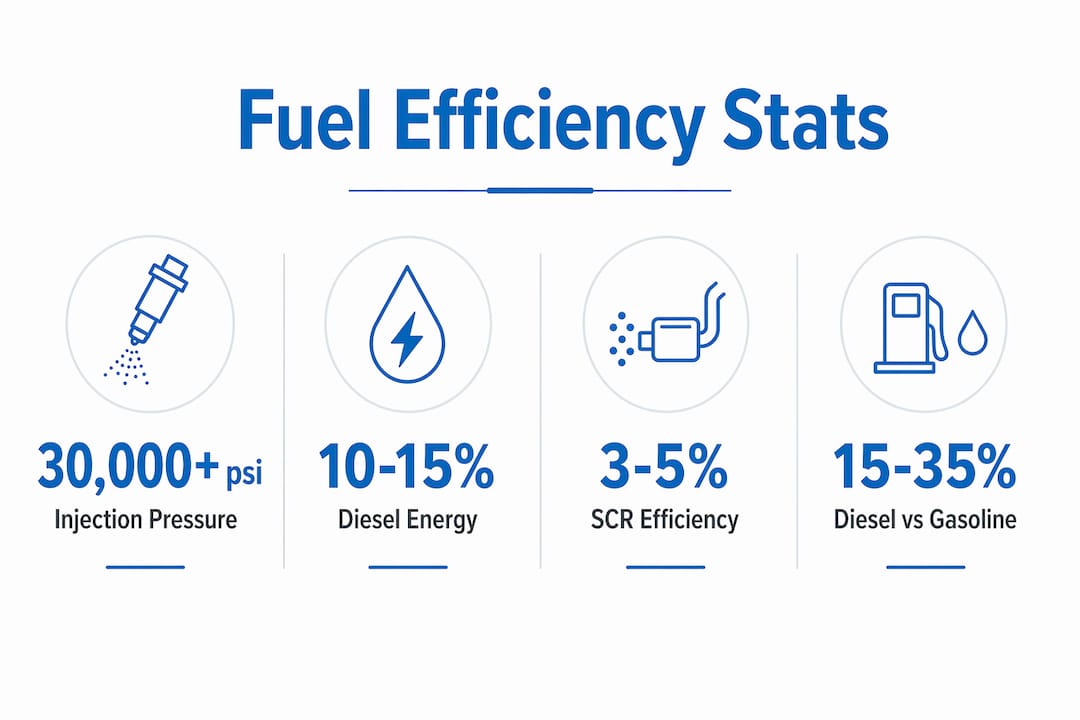
Diesel fuel contains roughly 10–15% more energy per gallon than gasoline. That energy density, combined with compression ignition, gives diesel engines a 15–35% fuel efficiency advantage over equivalent gasoline engines. That gap translates directly into fewer fill-ups and lower fuel spend per route for fleet operators.
Brake thermal efficiency (BTE) is the standard industry measure for how well a diesel engine converts fuel energy into useful mechanical work. Most production diesel engines operate in the 40–45% BTE range. System-level integration of injection, air management, and combustion design can push BTE to or above 50% under optimized conditions. That number matters because every percentage point of BTE improvement reduces fuel consumption without changing the engine's workload.
Used diesel engines built after 2010 carry most of these advances from the factory. Selecting the right post-2010 unit means you inherit years of combustion engineering without paying new-engine prices.
SCR and DEF systems: what do they do for fuel economy?
Selective catalytic reduction (SCR) and diesel exhaust fluid (DEF) are aftertreatment technologies that reduce nitrogen oxide (NOx) emissions at the tailpipe. Most fleet operators think of them purely as emissions controls. That framing misses their biggest operational benefit.
SCR and DEF enable aggressive combustion tuning by handling NOx cleanup downstream rather than inside the cylinder. Without SCR, engineers must retard injection timing and reduce combustion temperatures to limit NOx formation. Both moves hurt fuel economy. With SCR in place, the engine can run at its thermally ideal combustion point, and the aftertreatment system handles the emissions side.
The result is measurable. Diesel engines equipped with SCR and DEF systems achieve 3–5% better fuel economy and reduce NOx emissions by up to 76% in highway applications. For a fleet running 100,000 miles per year per truck, a 3% fuel savings compounds into significant annual cost reductions.
- SCR systems require DEF fluid at roughly 2–3% of diesel consumption by volume.
- DEF quality matters. Contaminated DEF degrades SCR catalyst performance and triggers fault codes that derate engine power.
- Post-2010 engines with SCR are the sweet spot for used diesel purchases combining efficiency and compliance.
- Engines without SCR must use more conservative combustion tuning, which costs fuel economy.
Pro Tip: When buying a used diesel engine, confirm the SCR catalyst condition before purchase. A worn or contaminated catalyst forces the engine management system to pull back combustion efficiency to stay within NOx limits.
What mechanical advances improve diesel engine fuel efficiency?
Modern used diesel engines carry several combustion system advances that directly affect fuel economy. Understanding them helps fleet operators evaluate which used engine generation delivers the best return.
High-pressure common-rail injection
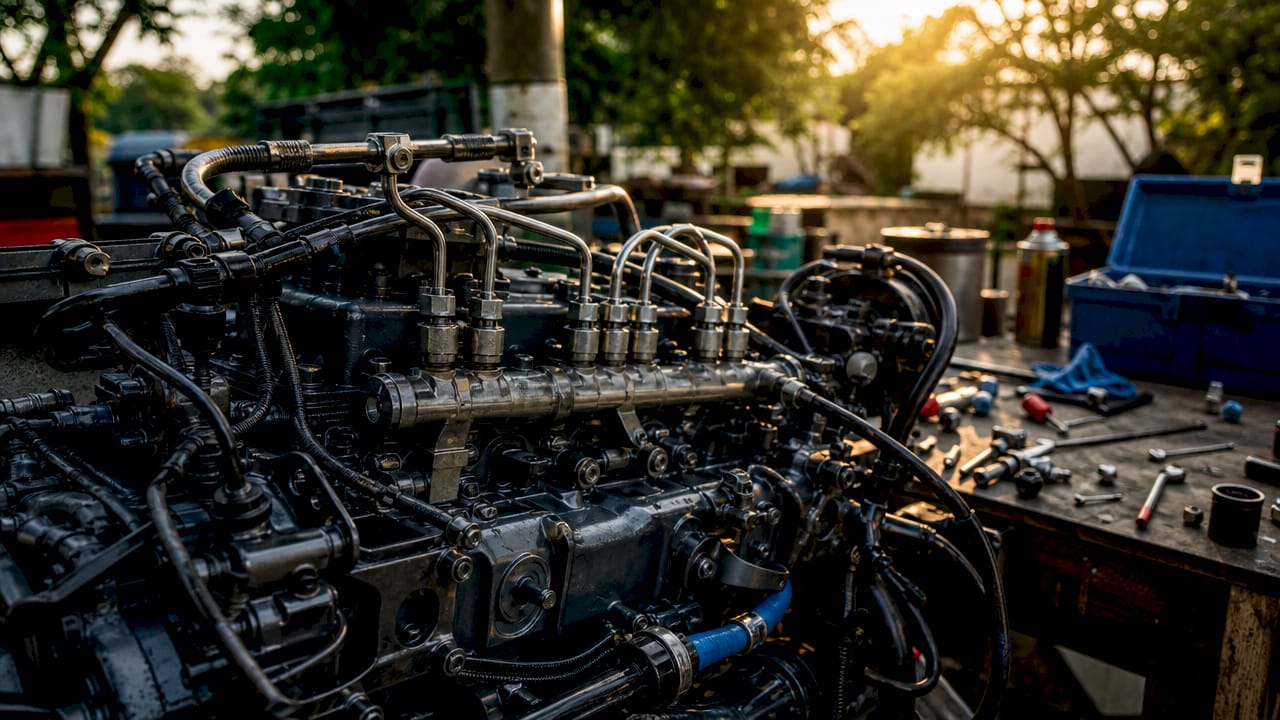
Common-rail fuel injection systems deliver fuel at pressures exceeding 30,000 psi. That pressure atomizes fuel into finer droplets, which mix with air more completely and burn more cleanly. Better atomization reduces unburned fuel losses and improves combustion completeness. Engines built after 2007 almost universally use common-rail systems.
Variable geometry turbochargers
Variable geometry turbochargers (VGTs) adjust their vane angle to match boost pressure to engine load across the full RPM range. A fixed turbocharger is only efficient at one operating point. A VGT keeps the air-to-fuel ratio near ideal whether the truck is climbing a grade or cruising at highway speed. That consistency reduces fuel waste across varied driving conditions.
Combustion chamber and nozzle design
Piston bowl geometry and injector nozzle configuration control how fuel and air mix inside the cylinder. ML-optimized nozzle spray angles can improve BTE by approximately 0.8–1% over baseline designs. That improvement sounds small, but at fleet scale it adds up to real fuel savings annually.
Replacing standard injectors with optimized multi-hole nozzle configurations enhances combustion completeness and improves fuel economy, particularly when running biodiesel blends. Five-hole nozzle designs distribute the fuel spray more evenly across the combustion chamber, which reduces hot spots and cooling losses.
Higher compression ratios improve thermal efficiency but increase heat transfer to the cylinder walls, which is called cooling loss. Offset orifice nozzles reduce cooling losses by improving flame distribution across the piston face. That keeps more heat energy in the working gas rather than losing it through the cylinder walls.
Pro Tip: If you are upgrading injectors on a used diesel engine, match the nozzle hole count and spray angle to your fuel type. A nozzle optimized for B20 biodiesel will perform differently on straight diesel.
How can fleet operators maximize fuel savings with used diesel engines?
Fuel efficiency gains from a used diesel engine depend on more than the engine itself. The surrounding systems determine whether the engine operates at its designed efficiency point or fights against poor integration.
- Prioritize system-level purchases. Buying an engine block alone and mating it to mismatched peripherals limits efficiency gains. Where possible, source the engine with its original turbocharger, EGR cooler, and SCR system intact. Single-component upgrades have limited effect compared to integrated system replacements.
- Inspect and service the SCR and DEF system. Maintaining SCR and DEF systems is the single most important maintenance task for sustaining fuel efficiency and emissions compliance in used diesel engines. A degraded catalyst forces conservative combustion tuning and costs fuel economy.
- Upgrade injector nozzles when rebuilding. If the engine is being rebuilt before installation, replacing worn injectors with five-hole nozzle configurations delivers immediate combustion efficiency gains, especially on fleets running biodiesel blends.
- Monitor cooling losses. High compression engines lose efficiency through excessive heat transfer to cylinder walls. Offset orifice nozzles and proper piston-to-wall clearances reduce this loss.
- Match the engine to the operational profile. High-mileage fleet operations extract the most value from diesel's efficiency advantage. Short-haul, stop-and-go routes reduce the thermal efficiency benefit because the engine spends more time at cold or partial load.
Driver behavior compounds the mechanical efficiency picture. Consistent highway speeds, reduced idle time, and proper load management can add several percentage points of real-world fuel economy on top of the engine's rated efficiency.
Pro Tip: Track fuel consumption per route, not just per fill-up. Route-level data reveals which operational patterns are costing efficiency and where driver coaching or load adjustments will have the most impact.
How does diesel fuel efficiency compare to gasoline and alternative fuel engines?
Diesel holds a clear fuel efficiency advantage over gasoline in fleet applications. The roughly 20% efficiency advantage diesel maintains over gasoline is the primary driver of lower total cost of ownership for high-mileage fleets, even when diesel fuel prices run higher at the pump.
| Fuel type | Typical efficiency advantage | Best use case |
|---|---|---|
| Diesel vs. gasoline | 15–35% higher efficiency | Long-haul, high-mileage routes |
| Diesel vs. CNG | Comparable or slight diesel edge | Varies by route and fuel access |
| Diesel with B20 biodiesel | Near-equivalent to straight diesel | Fleets with sustainability targets |
The efficiency gap narrows in specific scenarios. Modern gasoline direct injection engines and hybrid powertrains have closed ground on diesel in light-duty and urban applications. For heavy-duty commercial trucks running long routes, diesel still wins on energy density and thermal efficiency.
Biodiesel blends up to B20 (20% biodiesel, 80% petroleum diesel) run in most diesel engines without modification and reduce lifecycle carbon emissions without meaningful fuel economy penalties. Higher blend ratios require injector and seal compatibility checks.
The key variable is operational profile. Fleets running fewer than 15,000 miles per year per vehicle see less financial benefit from diesel's efficiency advantage because the fuel savings do not offset the higher upfront cost of diesel engines. High-mileage operations above 100,000 miles per year per truck see the strongest return.
Key Takeaways
Fuel efficiency in used diesel engines is maximized through system-level integration of SCR, injection, and turbocharging, not through single-component swaps.
| Point | Details |
|---|---|
| SCR and DEF drive efficiency | SCR-equipped engines achieve 3–5% better fuel economy by enabling ideal combustion tuning. |
| BTE is the core metric | System-level integration can push brake thermal efficiency to or above 50% in optimized diesel engines. |
| Nozzle design matters | Five-hole injector nozzles improve combustion completeness and reduce fuel waste, especially with biodiesel blends. |
| Diesel leads in high-mileage fleets | Diesel's 15–35% efficiency advantage over gasoline delivers the strongest ROI on routes above 100,000 miles per year. |
| Maintenance preserves gains | SCR and DEF system upkeep is the most critical maintenance task for sustaining fuel economy and compliance. |
What I have learned about fuel efficiency and used diesel engines
A perspective from Carl
Fleet operators consistently underestimate how much the surrounding system matters when they buy a used diesel engine. I have seen fleets drop significant money on a quality used engine block, then mate it to a worn turbocharger and a degraded SCR catalyst. The engine never reaches its efficiency potential. The fuel savings they expected never show up. The engine gets blamed when the real problem is the integration.
The second thing most operators miss is the injector nozzle opportunity. When a used engine goes in for a rebuild before installation, upgrading to a five-hole nozzle configuration is one of the highest-return modifications available. The cost is modest. The combustion improvement is immediate. If the fleet runs any biodiesel blend, the gain is even more pronounced.
SCR and DEF maintenance is where I see the most compliance and efficiency failures in real-world fleets. Operators treat DEF as an afterthought until a fault code appears. By then, the engine has already been running in a derated, fuel-inefficient mode for weeks. Build DEF quality checks and catalyst inspections into your regular PM schedule, not your reactive maintenance list.
The diesel efficiency advantage over gasoline is real, but it is not automatic. You earn it through proper system selection, disciplined maintenance, and matching the engine to the routes where diesel's thermal efficiency actually has room to express itself.
— Carl
Used diesel engines for fuel-efficient fleets at Nationwideheavytruckparts
Fleet operators who want the efficiency benefits covered in this article need engines that are already equipped with SCR systems, quality injectors, and intact turbochargers. Finding that combination in a used engine requires a supplier who inspects and tests each unit before it ships.
Nationwideheavytruckparts carries a daily-changing inventory of tested used diesel engines, including Cummins diesel engines, Detroit diesel engines, and CAT engines suited for high-mileage fleet applications. Every engine comes with a standard warranty and same-day shipping. Browse the full used truck engine inventory to find the right SCR-equipped unit for your fleet's fuel efficiency goals.
FAQ
What is brake thermal efficiency in a diesel engine?
Brake thermal efficiency (BTE) measures how much of the fuel's energy a diesel engine converts into useful mechanical work. System-level integration of injection, turbocharging, and combustion design can push BTE to or above 50% in optimized diesel engines.
Do SCR and DEF systems actually improve fuel economy?
Yes. SCR and DEF systems allow engines to run at their most thermally efficient combustion settings, delivering 3–5% better fuel economy compared to engines without aftertreatment. The fuel economy gain comes from removing the need to retard injection timing for NOx control.
How much more fuel-efficient is diesel than gasoline for fleet trucks?
Diesel engines deliver a 15–35% fuel efficiency advantage over equivalent gasoline engines. High-mileage fleet operations above 100,000 miles per year see the strongest financial return from that efficiency gap.
Can biodiesel blends affect fuel efficiency in used diesel engines?
B20 biodiesel blends run in most diesel engines without modification and produce near-equivalent fuel economy to straight diesel. Optimized five-hole injector nozzles improve combustion completeness with biodiesel blends and can reduce fuel consumption compared to standard nozzle configurations.
What is the most important maintenance task for diesel fuel efficiency?
Maintaining the SCR catalyst and DEF fluid quality is the most critical task. A degraded SCR system forces conservative combustion tuning that directly reduces fuel economy and risks emissions compliance violations.