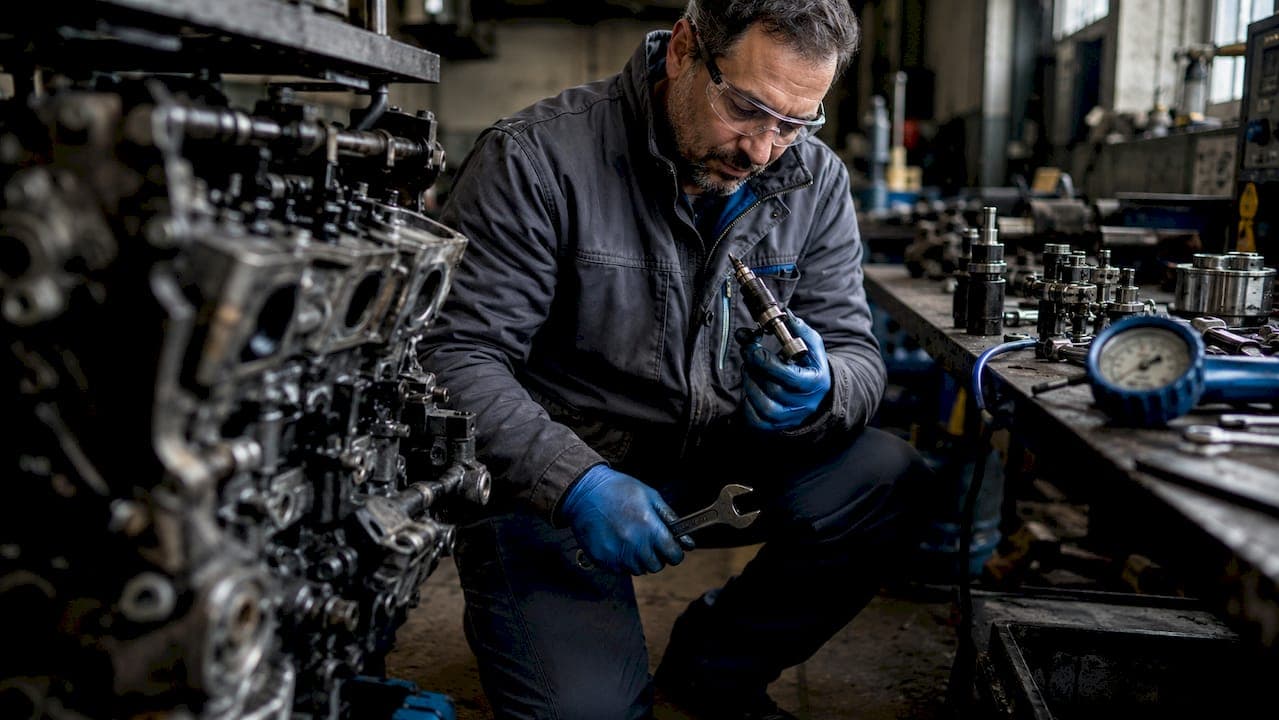
Fuel injectors are precision-engineered components that regulate fuel delivery to a diesel engine's combustion chamber, and their role in diesel performance extends far beyond simple fuel dispensing. The fuel injection system functions as the engine's practical control center, shaping combustion quality, failure modes, and emissions compliance simultaneously. Modern diesel injectors control atomization, injection timing, pressure, and quantity with tolerances measured in microseconds and microns. For diesel professionals and enthusiasts, understanding how injectors drive power output, fuel economy, and emissions is the foundation of every smart engine decision.
How do diesel fuel injectors affect engine power and efficiency?
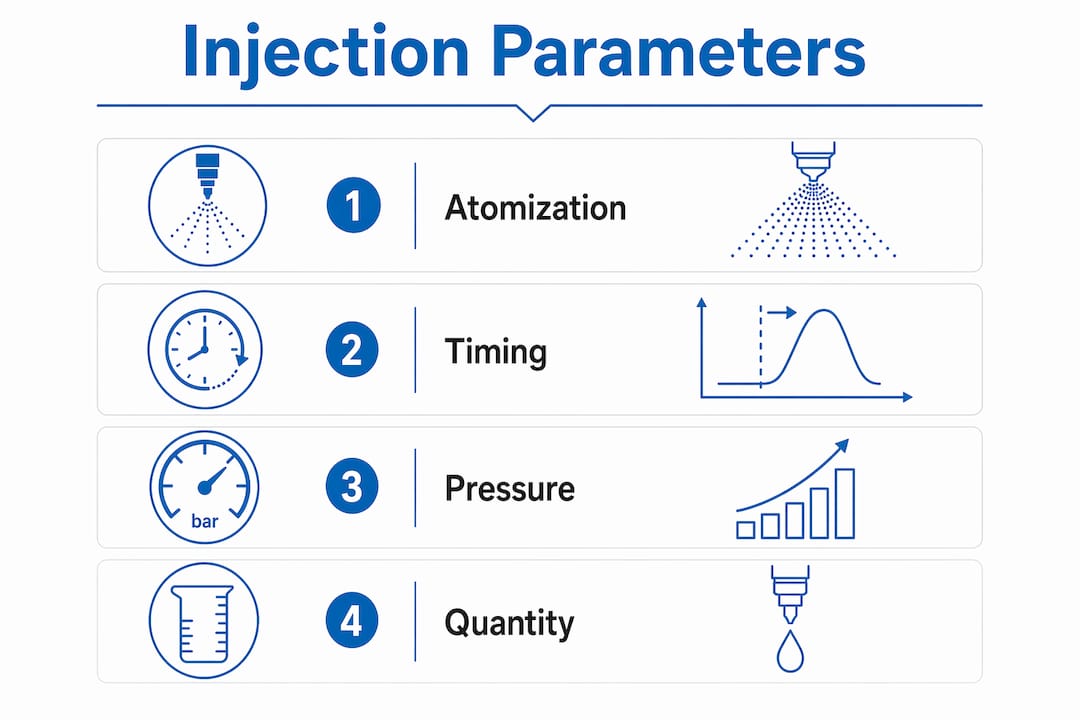
Diesel injector function centers on four controllable parameters: atomization, timing, pressure, and quantity. Each one directly translates to measurable changes in combustion quality and engine output. Get any one of them wrong, and the entire combustion event degrades.
Atomization is the first critical variable. Fuel atomization converts liquid diesel into a fine mist that mixes thoroughly with compressed air, enabling complete combustion. Larger droplets burn incompletely, producing soot and wasting fuel energy. Finer atomization at higher pressures directly raises thermal efficiency.
Injection timing determines when the fuel charge enters the combustion chamber relative to piston position. Early injection increases combustion duration and can raise cylinder pressure beyond safe limits. Late injection reduces power and raises exhaust temperatures. Pilot injection timing is particularly critical: improper pilot timing causes diesel knock and efficiency loss regardless of main injection pressure.
Injection pressure governs spray penetration and droplet size. Common-rail systems operate between 10,000 and 30,000 psi, enabling the fine atomization required for emissions compliance and fuel economy. Higher pressure produces finer droplets but also increases mechanical stress on injector hardware.
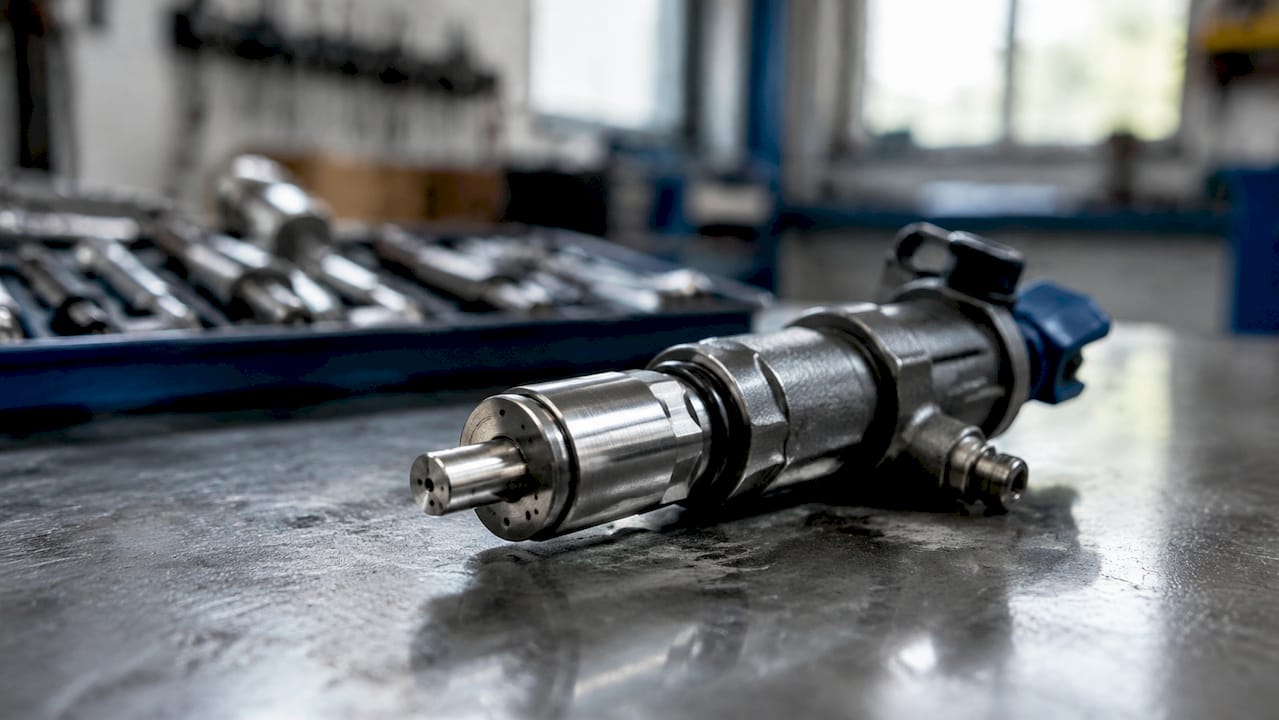
Injection quantity controls the fuel-to-air ratio per cycle. Precise quantity management prevents rich combustion, which produces black smoke and carbon deposits, and lean combustion, which causes misfires and power loss.
Modern diesel engines use multiple injection events per cycle rather than a single fuel pulse:
- Pilot injection: A small pre-charge that warms the combustion chamber, reduces ignition delay, and cuts noise
- Main injection: The primary fuel charge that generates torque and power
- Post injection: A small charge after the main event that aids diesel particulate filter regeneration and reduces soot
Pro Tip: Never adjust main injection pressure without recalibrating pilot injection timing. Increasing pressure without adjusting timing increases engine stress and noise, risking damage despite higher fuel delivery.
What are the latest diesel injector technologies?
Modern high-performance diesel injectors are no longer mechanical spray nozzles. They are electronically controlled, pressure-managed systems that execute multiple injection events per combustion cycle with microsecond precision.
Common-rail injection systems
Common-rail technology stores fuel at a constant high pressure in a shared rail, then delivers it to each injector on demand. This decouples injection pressure from engine speed, giving the engine control unit full authority over every injection parameter at any RPM. Operating pressures between 10,000 and 30,000 psi produce the fine atomization that reduces soot and meets modern emissions standards. The Cummins ISB 6.7, for example, uses a common-rail fuel system that directly supports its EPA compliance and performance ratings.
Piezoelectric injectors
Piezoelectric actuators replace traditional solenoid valves in premium injector designs. They respond in roughly a quarter of the time a solenoid requires, enabling more injection events per cycle and finer control over each pulse. This speed advantage supports rate shaping, which is the ability to control the pressure curve during injection rather than simply opening and closing the nozzle. Rate shaping is more critical than peak injection pressure for avoiding harmful cylinder pressure spikes and engine damage.
Ultra-high pressure injection
Research shows that injection pressures up to 1,000 bar reduce particulate matter and increase thermal efficiency. The trade-off is accelerated wear on injector tips, needle valves, and high-pressure pumps. Fleet operators running ultra-high pressure systems need shorter injector service intervals to avoid catastrophic failure.
The four key technology advances in modern diesel injectors ranked by performance impact:
- Common-rail high-pressure delivery: Decouples pressure from engine speed for consistent atomization across the RPM range
- Piezoelectric actuation: Enables faster, more precise injection events than solenoid-based designs
- Rate shaping: Controls the injection pressure curve to prevent cylinder pressure spikes and knock
- Multiple injection strategies: Pilot, main, and post injections balance power, noise, and emissions simultaneously
"Fuel injectors are no longer mere fuel dispensers. They are essential emissions control devices managing multiple injection cycles to balance power and environmental demands." — pioneerdieselparts.com
How do injector configurations and fuel types affect performance?
Injector nozzle design and fuel chemistry interact directly. The number of holes in an injector nozzle determines spray pattern, penetration depth, and air-fuel mixing quality. Fuel type affects viscosity, lubricity, and combustion characteristics, all of which change how an injector must be calibrated.
Nozzle hole count comparison
| Nozzle configuration | Spray pattern | Best application | Emissions trade-off |
|---|---|---|---|
| 3-hole | Wide, deep penetration | Low-speed, high-torque engines | Higher NOx at low load |
| 4-hole | Balanced coverage | General-purpose diesel engines | Moderate soot and NOx |
| 5-hole | Fine, distributed mist | High-efficiency and dual-fuel engines | Lowest soot, best BTE |
A 5-hole nozzle configuration in dual-fuel diesel engines achieved a peak brake thermal efficiency of 33% and a brake specific fuel consumption of 0.215 g/kWh at 5 kW brake power. That result confirms that nozzle geometry is a primary lever for efficiency gains, not just an afterthought in injector selection.
Dual-fuel and alternative fuel injection
Hydrogen-diesel dual-fuel systems represent the leading edge of alternative fuel injection research. Optimized liquid fuel injection pressure at approximately 205.59 bar in a hydrogen-diesel system achieved a brake thermal efficiency of 24.36% with 73.98% liquid fuel replacement. That level of fuel substitution has direct implications for fleet operating costs and carbon reduction targets.
Biodiesel blends require recalibrated injection timing because biodiesel has higher viscosity and different combustion kinetics than petroleum diesel. Running biodiesel through injectors calibrated for straight diesel produces timing errors that raise NOx emissions and reduce power. The importance of injector calibration cannot be overstated when switching fuel types.
What maintenance practices prevent diesel injector failure?
Injector maintenance is not optional on modern high-pressure diesel systems. At pressures up to 30,000 psi, microscopic contamination causes erosion and sticking that degrades spray patterns and injection timing within thousands of miles. Injector contamination at ultra-high pressures makes fuel filter maintenance the single most critical preventive step for protecting injector performance.
The most common signs of injector degradation in diesel engines:
- Rough idle or misfires: A sticking or clogged injector delivers inconsistent fuel quantities, causing uneven cylinder firing
- Loss of power under load: Reduced spray quality from a worn nozzle tip lowers combustion efficiency and torque output
- Increased fuel consumption: A leaking injector drips fuel between injection events, raising consumption without adding power
- Black or white smoke: Black smoke signals rich combustion from an over-fueling injector; white smoke indicates incomplete combustion from poor atomization
- Elevated exhaust temperatures: Degraded atomization forces longer combustion duration, raising exhaust gas temperatures above safe limits
Improperly matched injectors force compensatory operation in other subsystems, increasing ownership cost, decreasing durability, and degrading operator perception. This means a single failed injector does not just hurt one cylinder. It stresses the turbocharger, exhaust aftertreatment system, and engine control unit simultaneously.
Pro Tip: Replace fuel filters at or before the manufacturer's recommended interval, and use only fuel that meets ASTM D975 specifications. Contaminated fuel is the leading cause of premature injector failure on common-rail systems.
For fleet operators managing Detroit Diesel engines, injector service schedules should align with the OEM's high-pressure pump inspection intervals, since both components share the same fuel supply and contamination risks.
A complete diesel DEF system walkthrough is also worth reviewing alongside injector maintenance, since aftertreatment system health directly affects how the ECU manages post-injection events for DPF regeneration.
Key Takeaways
Fuel injectors control every dimension of diesel engine performance, from combustion efficiency and power output to emissions compliance and long-term hardware durability.
| Point | Details |
|---|---|
| Injectors control combustion quality | Atomization, timing, pressure, and quantity each directly determine power output and fuel economy. |
| Common-rail pressure range matters | Systems operating at 10,000–30,000 psi deliver the atomization required for modern emissions compliance. |
| Nozzle configuration drives efficiency | A 5-hole nozzle achieves peak brake thermal efficiency of 33%, outperforming 3-hole and 4-hole designs. |
| Calibration is non-negotiable | Switching fuel types or raising injection pressure without recalibration raises emissions and risks engine damage. |
| Contamination is the top failure cause | Fuel filter maintenance at ASTM D975 fuel quality standards protects injectors at ultra-high operating pressures. |
What 15 years of diesel work taught me about injectors
Most diesel professionals focus on turbochargers and fuel pumps when chasing performance. The injector gets treated as a commodity swap item. That is the wrong mental model, and it costs operators real money.
The injector is where every upstream system decision lands. The high-pressure pump, the common rail, the ECU calibration, the fuel quality protocol: all of it means nothing if the injector tip is worn, the nozzle holes are partially blocked, or the pilot injection timing is off by a few degrees. I have seen well-maintained Mack MP8 engines running rough because a single injector's spray pattern had degraded enough to throw off the combustion balance across all six cylinders.
The other thing professionals underestimate is rate shaping. Most conversations about injector upgrades focus on peak pressure numbers. But controlling the pressure curve during injection, not just the peak, is what separates a smooth-running engine from one that knocks under load. Piezoelectric injectors earn their premium price through rate shaping capability, not just response speed.
My honest recommendation: treat injector calibration as a scheduled maintenance item, not a reactive repair. If you are running alternative fuel blends or have modified the turbo or intercooler, get the injectors recalibrated to match. The performance gains from upstream modifications are only realized if the injectors are delivering fuel at the correct timing and quantity for the new operating conditions.
— Carl
Find quality diesel engine components at Nationwideheavytruckparts
Fuel injector performance starts with the quality of the engine platform underneath it. Nationwideheavytruckparts stocks a daily-changing inventory of tested and inspected commercial truck engines, including platforms from Cummins, Detroit Diesel, Mack, and Caterpillar, each backed by a standard warranty. Whether you are sourcing a replacement engine with a known-good fuel system or need a platform for an injector upgrade build, the inventory at Nationwideheavytruckparts covers the full range of heavy-duty diesel needs. Same-day shipping means less downtime for your fleet. Browse the current selection of truck engines for sale and find the right foundation for your next diesel build or repair.
FAQ
What is the primary role of fuel injectors in a diesel engine?
Fuel injectors atomize diesel fuel into a fine mist, control injection timing, and regulate fuel quantity per combustion cycle. These functions directly determine combustion efficiency, power output, and emissions levels.
How does injection pressure affect diesel performance?
Higher injection pressure produces finer fuel atomization, which improves combustion completeness and reduces soot. Common-rail systems operate at 10,000–30,000 psi, but pressures above 1,000 bar accelerate injector hardware wear and require shorter service intervals.
What are the signs of a failing diesel fuel injector?
The most common signs are rough idle, loss of power under load, increased fuel consumption, black or white exhaust smoke, and elevated exhaust gas temperatures. Any one of these symptoms warrants immediate injector inspection.
Why does injector calibration matter when changing fuel types?
Biodiesel and alternative fuel blends have different viscosity and combustion characteristics than petroleum diesel. Running these fuels through injectors calibrated for standard diesel causes timing errors, power loss, and elevated NOx emissions.
How often should diesel fuel injectors be serviced?
Service intervals depend on operating pressure, fuel quality, and engine platform. On common-rail systems running at 20,000 psi or higher, fuel filters should be replaced at or before the OEM interval, and injectors should be inspected for wear at every major engine service.