
A compatible used diesel engine is defined as a replacement powerplant that matches your vehicle's make, model, year, engine code, emissions configuration, and drivetrain requirements. Getting that match right is the difference between a truck back on the road in days and a costly rebuild that drags on for weeks. Used diesel engines cost between $1,800 and $9,500, compared to $8,000 to $15,000 for new long blocks. That price gap makes the used market the first call for most fleet managers and owner-operators. Brands like Cummins, Detroit Diesel, and Duramax dominate the heavy truck segment, and knowing which specific variant you need before you call a supplier saves time, money, and frustration.
What specs do you need before you search for a used diesel engine?
Your vehicle identification number is the single most reliable starting point. The VIN decodes your truck's exact engine family, model year, emissions tier, and drivetrain configuration in one string. Guessing from memory or a parts catalog alone leads to ordering the wrong block.
Pull these details before contacting any supplier:
- Vehicle make, model, and year (e.g., 2015 Freightliner Cascadia)
- Engine displacement and configuration (e.g., 14.8L inline-6)
- Engine code or family (e.g., Cummins ISX15, Detroit DD15, Powerstroke 6.7L)
- Drivetrain type (2WD or 4WD, axle ratio)
- Emissions equipment (DPF, EGR, SCR presence and tier level)
- Horsepower and torque rating required for your application
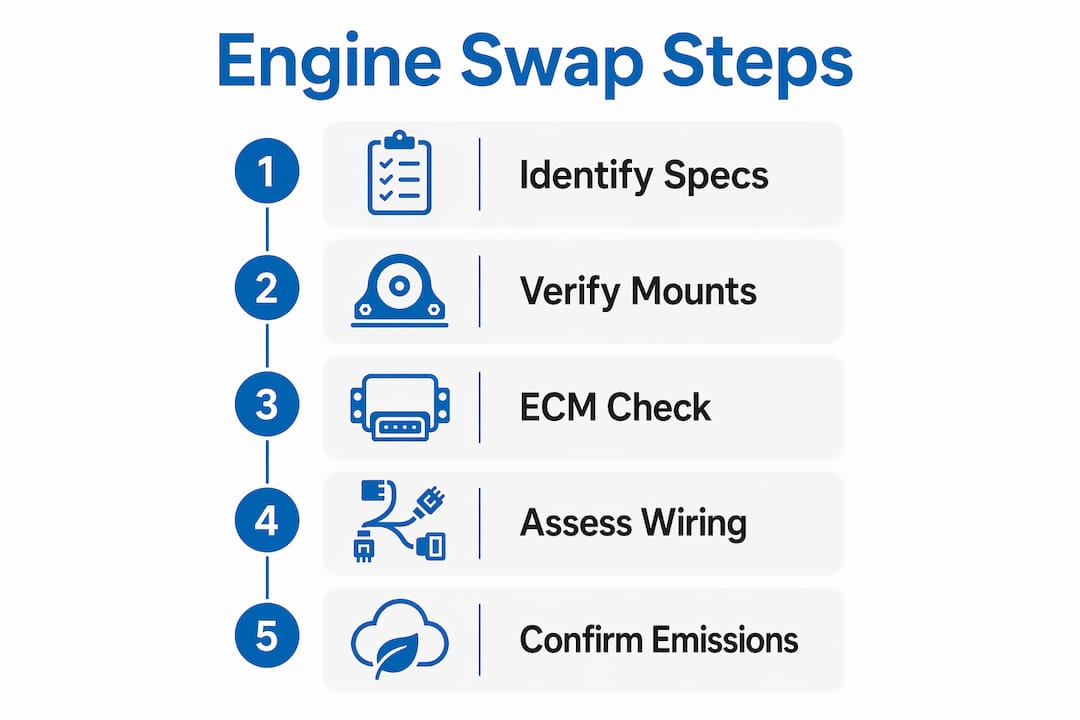
Used diesel swaps work across multiple model years, but wiring, mounting, and ECM compatibility must be verified for each combination. A 2014 Cummins ISX15 does not automatically bolt into a 2017 chassis without cross-checking harness connectors and ECU calibration files.
Pro Tip: Photograph the engine data plate on your current motor before you pull it. That plate carries the exact CPL (Control Parts List) number for Cummins engines or the DDEC calibration code for Detroit units, and suppliers use those numbers to confirm a direct match.
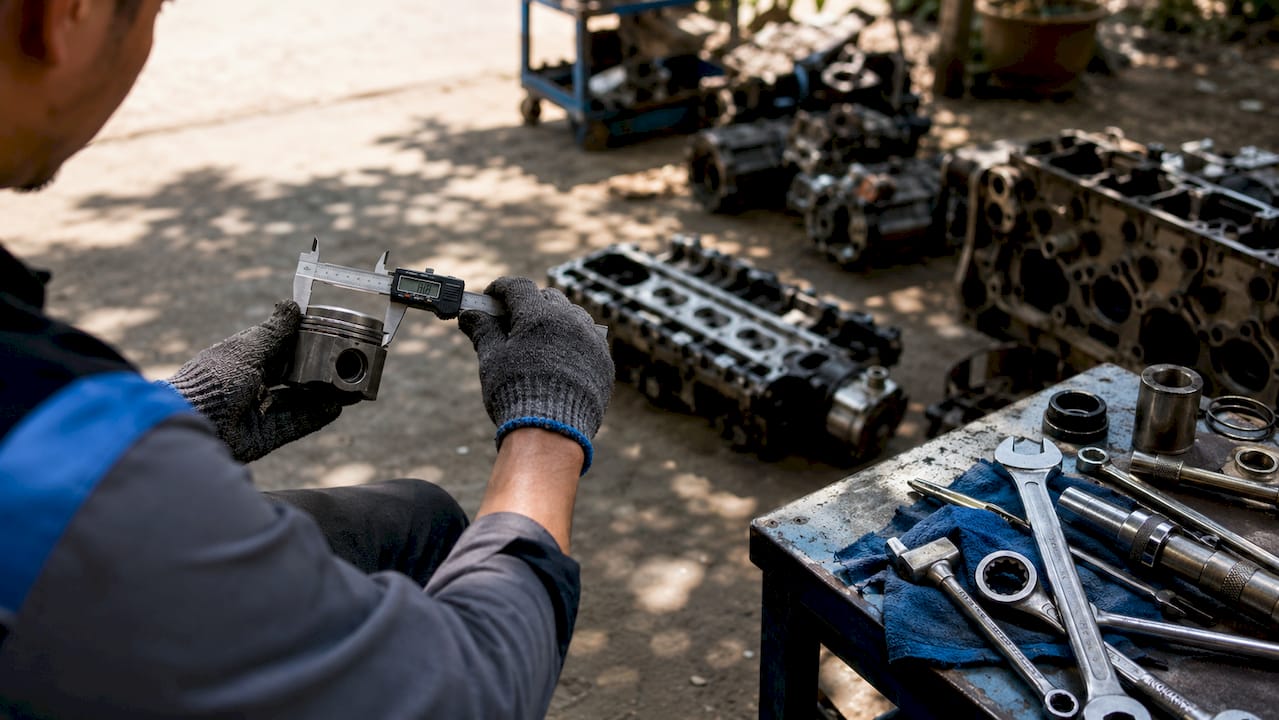
Which compatibility factors matter most for a diesel engine swap?
Engine swaps fail most often because of electronics, not mechanical fit. Selecting donor engines that include original wiring harnesses and ECUs is the single best way to avoid what technicians call the "electronics nightmare." Modern diesel engines communicate with ABS, transmission controllers, and instrument clusters through a shared CAN bus network. Swap the engine without the matching electronics and you face fault codes that no amount of reprogramming will fully clear.
Here are the four compatibility layers to verify in order:
- Mechanical fit. Confirm bell housing pattern, motor mount spacing, and oil pan clearance for your chassis. A Cummins ISX and a Detroit DD15 share similar footprints in Class 8 trucks, but mounting bolt patterns differ.
- Emissions equipment. DPF, EGR, and SCR components vary by engine and model year, and swapping a pre-emissions engine into a post-2010 chassis creates legal and inspection problems immediately.
- Electronics and ECM. The ECM must match the engine's injector trim codes and fuel map. Mismatched ECMs cause hard starts, poor fuel economy, and derate conditions.
- Legal compliance. A diesel swap must use an engine from the same or newer model year as the chassis and from the same vehicle class. Violating this rule creates liability during roadside inspections and state emissions tests.
Donor engines are more cost-effective than crate engines because they arrive with accessory brackets, sensors, wiring harnesses, and ECUs already attached. A crate engine ships bare. That means sourcing every peripheral part separately, which adds cost and installation time.
Pro Tip: Ask your supplier specifically whether the engine comes with the ECM, injector harness, and turbo. If those three items are included, your installation complexity drops significantly.
One forward-looking factor most buyers overlook is biofuel compatibility. Fleets running biodiesel or renewable diesel blends need engines with compatible fuel system seals and injection timing calibrations. Confirming this at purchase protects your investment as fuel regulations tighten.
Where to find reliable used diesel engine suppliers
The used diesel market splits into three main source types: salvage yards, specialized engine dealers, and online verified platforms. Each carries different risk levels and different levels of documentation.
| Source Type | Typical Condition Verification | Warranty Availability | Best For |
|---|---|---|---|
| Salvage yards | Visual inspection only | Rarely offered | Budget buyers, known-good pulls |
| Specialized engine dealers | Run-tested, documented mileage | Often included | Fleet managers, reliability buyers |
| Online verified platforms | Varies widely | Depends on seller | Price comparison, rare units |
Video testing under load is the gold standard for verifying engine condition before purchase. A video run shows oil pressure at idle and under throttle, exhaust smoke color, and audible knock or rattle. No static photo or mileage claim replaces that footage.
Sellers who provide test videos give buyers transparency and reduce purchase risk substantially. If a supplier refuses to provide a run video for a unit priced above $3,000, treat that as a red flag.
Key things to confirm with any used diesel engine supplier:
- Documented mileage. Mileage and documented history directly influence price and expected lifespan. Ask for odometer records or ECM hour data.
- VIN match. Request the donor vehicle's VIN to verify the engine's origin and confirm it matches your application.
- Warranty terms. A standard warranty covering at least 30 days of operation protects you against immediate failures. Longer coverage signals supplier confidence.
- Emissions documentation. Confirm the engine's emissions tier matches your chassis requirements before shipping.
For used Cummins ISX engines or Detroit diesel units, working with a supplier who specializes in heavy truck powertrains gives you access to staff who already know the common compatibility pitfalls for each model year.
What is the step-by-step process to buy and install a compatible engine?
A clear process prevents the two most common failures: buying the wrong engine and installing it without the right support parts.
- Collect all vehicle data. Pull the VIN, engine data plate photo, current mileage, emissions tier, and drivetrain specs before making any calls. Write them down in one place.
- Contact suppliers with specifics. Give the supplier your engine code, model year, and emissions configuration upfront. Vague requests produce vague answers and wrong shipments.
- Request video verification. Ask for a cold-start video and a load-run video. Review oil pressure readings, exhaust color, and listen for abnormal noise. Blue smoke signals oil burning. White smoke at operating temperature signals coolant intrusion.
- Confirm all included components. Verify the ECM, wiring harness, turbocharger, and injectors are included before finalizing price. Missing parts add $500 to $2,000 to your total cost.
- Plan shipping and handling. Heavy diesel engines weigh 1,400 to 2,800 pounds. Confirm the supplier uses freight carriers with liftgate service and proper crating. Damage during shipping is a common and avoidable problem.
- Test post-installation. After installation, run the engine at idle for 20 minutes before loading it. Check for oil leaks, coolant leaks, and fault codes. Clear any stored codes from the previous vehicle and run a full diagnostic scan.
Pro Tip: Before the new engine arrives, have your shop pull the transmission and inspect the clutch or torque converter. Replacing a worn clutch after the engine is already installed costs twice the labor.
Troubleshooting common post-swap issues is faster when you keep the donor vehicle's ECM calibration file. Some shops can compare the original calibration to the installed unit and identify mismatches that cause derate conditions or poor fuel economy.
Key Takeaways
Finding a compatible used diesel engine requires matching engine code, emissions equipment, and electronics before purchase, not after delivery.
| Point | Details |
|---|---|
| Start with your VIN | Decode your VIN to confirm engine family, emissions tier, and drivetrain before contacting suppliers. |
| Choose donor over crate | Donor engines include harnesses, ECMs, and sensors, reducing installation time and cost. |
| Demand video proof | Request cold-start and load-run videos to verify oil pressure, exhaust color, and noise before buying. |
| Verify mileage and warranty | Documented mileage and a standard warranty are non-negotiable for any purchase above $2,000. |
| Check legal compliance | The replacement engine must be from the same or newer model year as your chassis to pass inspection. |
What I've learned after years of diesel engine sourcing
The biggest mistake I see buyers make is calling a supplier with only the truck's year and make. That is not enough information. Two trucks with identical body styles can carry completely different engine families, emissions tiers, and ECM architectures depending on the trim level and build date. I have watched shops order the wrong block twice before getting it right, and each wrong order costs three to five days of downtime.
The second mistake is chasing the lowest price without asking about what is included. A $2,200 engine that ships without the ECM and harness will cost $4,500 by the time you source those parts separately. A $3,800 engine that arrives complete and run-tested is almost always the better buy.
The detail that separates good suppliers from bad ones is documentation. Any supplier worth working with can tell you the donor vehicle's VIN, the engine's recorded mileage, and the emissions tier within minutes of your call. If they cannot, move on. The truck engines available from reputable heavy truck specialists are tested, documented, and backed by warranty for exactly this reason.
One last thing: do not skip the biofuel compatibility check if your fleet runs B20 or higher blends. Older fuel system seals degrade with high biodiesel concentrations, and that failure shows up six months after installation, not six days.
— Carl
Why Nationwideheavytruckparts makes sourcing easier
Nationwideheavytruckparts carries a daily-changing inventory of tested heavy truck diesel engines, including Cummins, Detroit Diesel, Mack, Caterpillar, and International units. Every engine goes through inspection and testing before it ships, and each sale comes with a standard warranty. Their team knows the compatibility details for major engine families and can confirm fitment for your specific chassis before you commit. Same-day shipping means your truck is not sitting idle while you wait. If you are ready to find your replacement engine, Nationwideheavytruckparts has the inventory, the documentation, and the support to get you back on the road fast.
FAQ
What does "compatible used diesel engine" mean?
A compatible used diesel engine matches your vehicle's engine code, emissions configuration, mounting specs, and electronics. Compatibility goes beyond physical fit and includes ECM, wiring harness, and legal emissions compliance.
How do I verify a used diesel engine's condition remotely?
Request a cold-start video and a load-run video from the seller. These show oil pressure, exhaust color, and any audible issues, giving you front-line verification before purchase.
Is a donor engine better than a crate engine for a swap?
Donor engines are more cost-effective because they include the ECM, wiring harness, sensors, and accessory brackets. Crate engines ship bare, requiring you to source and pay for every peripheral part separately.
What mileage is acceptable for a used diesel engine?
Acceptable mileage depends on the engine family and maintenance history. Documented service records and verified ECM hour data matter more than the odometer number alone. Always ask for both.
Do I need to match the engine year to my truck's year?
The replacement engine must be from the same or newer model year as your chassis. Using an older engine creates legal compliance issues during roadside inspections and state emissions testing.