
Efficient heavy truck parts inventory management is defined as the practice of tracking, stocking, and replenishing parts at levels that keep vehicles running without carrying excess cost. Fleet managers who fail to get this right pay for it twice: once in emergency freight bills and again in vehicle downtime. 40–60% of fleet maintenance delays trace directly to parts gaps like wrong stock levels or missing reorder points. That single statistic explains why inventory control for truck parts deserves the same attention as driver scheduling or fuel management. The goal is not a perfectly full shelf. The goal is the right part, in the right quantity, at the right moment.
How to manage heavy truck parts inventory: the essential foundation
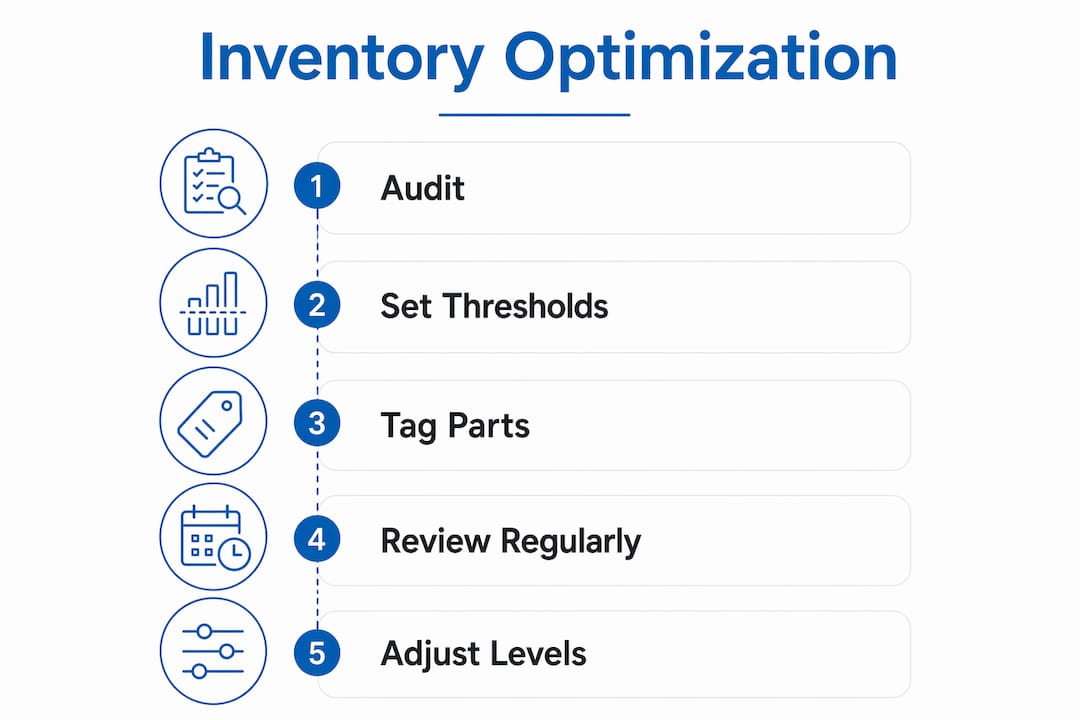
The first step to managing any inventory system is knowing exactly what you have. Physical audits are not optional. Software implementation fails when dirty or incomplete data gets imported into a new system. Count every part, verify every part number, and reconcile what is on the shelf against what is in the records before you touch a single software setting.
Once your baseline is clean, a digital inventory system becomes genuinely useful. The core data points every fleet manager needs to track for each part are:
- Part number and description: Standardize naming conventions across all locations to prevent duplicate entries.
- Vendor and lead time: Know which supplier ships in two days and which takes two weeks.
- Reorder point: The quantity at which a new order must be placed to avoid a stockout.
- Unit cost and carrying cost: Track both to understand the true cost of holding inventory.
- Usage history: How many of this part did you consume last month, last quarter, last year?
Integration with your maintenance workflow matters as much as the data itself. When a work order closes, the system should automatically deduct the parts used. Without that link, your records drift from reality within weeks. Parts stored on mobile service trucks are a particular risk. Without strict digital logging tied to GPS tracking and work order systems, inventory shrinkage on mobile units increases significantly and silently.
Pro Tip: Run a full physical audit every six months, not just at year-end. Fleets that audit quarterly catch discrepancies before they become expensive.

How can fleet managers optimize stock levels with min/max thresholds?
Min/max stock control is the practice of setting a minimum quantity that triggers a reorder and a maximum quantity that caps how much you hold. The concept is simple. Applying it correctly to a heavy truck fleet is not.
A minimum level for a common wear item like air filters on a 20-truck fleet running regional routes might be 10 units. The maximum might be 30. But those numbers only hold if your usage rate, lead time, and seasonal demand stay constant. They rarely do. Here is how to set and maintain accurate thresholds:
- Calculate average daily usage. Pull 90 days of consumption data per part. Divide total units used by days in the period.
- Factor in lead time. Multiply average daily usage by your supplier's lead time in days. That number is your safety stock floor.
- Add a seasonal buffer. Brake components wear faster in winter. Cooling system parts fail more in summer. Build that pattern into your maximum.
- Account for vehicle age. Older trucks consume more wear parts. Segment your min/max by vehicle age bracket, not just by part number.
- Review thresholds quarterly. Inventory management is a dynamic cycle, not a one-time setup. Usage patterns shift as routes change and trucks age out of the fleet.
The most common mistake fleet managers make is setting thresholds once and forgetting them. Dead stock accumulates when you hold parts for trucks you no longer operate. Stockouts happen when a vehicle model gets added to the fleet without updating the reorder points for its specific components.
Pro Tip: Tag each part record with the vehicle models it applies to. When a truck leaves the fleet, your system flags the associated parts for review instead of letting them sit until the next audit.
How does AI-driven forecasting improve parts inventory accuracy?
AI-integrated inventory management moves fleet parts control from reactive to predictive. Instead of waiting for a stockout to trigger a reorder, the system analyzes historical failure rates, telematics data, and seasonal trends to forecast demand before a shortage occurs.
The results are measurable. AI-integrated fleets report 78% fewer emergency parts orders and 25% leaner inventory carrying costs within the first year of adoption. Those are not marginal gains. Fewer emergency orders means fewer situations where emergency procurement costs run 40–80% above negotiated pricing.
Key capabilities that AI-driven systems bring to heavy truck parts management include:
- Predictive reorder triggers: The system places orders automatically when projected demand exceeds current stock, accounting for lead time.
- Telematics integration: Engine hours, mileage, and fault codes feed directly into failure probability models for components like injectors, turbos, and clutch assemblies.
- Work order linkage: Parts consumption records update in real time as technicians close jobs, keeping forecasting models current.
- Anomaly detection: The system flags unusual consumption spikes that may indicate a recurring mechanical issue rather than normal wear.
The integration process typically layers AI software over your existing ERP or fleet management platform via API connection. The critical prerequisite remains the same as with any digital tool: clean, verified baseline data. AI forecasting built on inaccurate stock records produces inaccurate predictions. Garbage in, garbage out applies here as directly as anywhere in data management.
What strategies improve multi-site parts inventory visibility?
Multi-site fleets face a problem that single-location operations do not. Each yard tends to manage its own parts independently, which creates two simultaneous failures: one location runs out of a part while another holds six months of excess stock of the same item. 20–40% of standard MRO inventory in heavy-duty fleets is excess or obsolete. That excess is not evenly distributed. It concentrates at sites that order defensively because they cannot see what other locations hold.
Centralized digital dashboards solve this by giving every location visibility into the full network's stock. The practical workflow looks like this:
| Step | Action | Outcome |
|---|---|---|
| Centralize records | Connect all sites to one inventory platform | Single view of network-wide stock |
| Set transfer rules | Define when inter-site transfer beats a new order | Reduces duplicate purchasing |
| Track transfers digitally | Log every movement with part number and quantity | Prevents shrinkage during transit |
| Review obsolescence monthly | Flag parts with zero usage over 90 days | Reduces dead stock carrying cost |
Transferring parts between internal sites is consistently cheaper and faster than placing a new vendor order. The barrier is visibility. Without a centralized dashboard, managers at each site do not know what their counterparts hold, so they order new stock instead of requesting a transfer.
Pro Tip: Assign one person at each site as the inventory coordinator. That person owns transfer requests and obsolescence reviews. Shared responsibility without a named owner means the task gets skipped.
How to implement core management and prevent profit leakage
Core management is the process of tracking reusable components, called cores, through their full lifecycle: removed from a vehicle, returned to a vendor, and credited back to your account. Alternators, starters, turbochargers, and fuel injectors all carry core deposits. Those deposits add up fast across a large fleet.
Manual core tracking leads to missed credits and lost profits. The failure mode is predictable: a technician pulls a failed alternator, sets it on a shelf, and it sits there until it gets thrown away or lost. The vendor deposit, which may be $150 to $400 per unit, never comes back. Multiply that across dozens of units per year and the loss becomes significant.
Best practices for core management include:
- Tag every core at removal. Label it with the part number, removal date, and associated work order before it leaves the technician's hands.
- Designate a core return area. A dedicated physical space prevents cores from mixing with scrap or getting misplaced.
- Automate return tracking in your ERP. ERP systems centralize visibility and replace manual tracking with automated credit reconciliation, ensuring deposits are claimed.
- Reconcile credits monthly. Compare vendor credit memos against your core return log. Discrepancies should trigger a vendor inquiry, not a write-off.
Key Takeaways
Effective heavy truck parts inventory control requires clean baseline data, dynamic stock thresholds, and centralized visibility across all sites to prevent both stockouts and excess carrying costs.
| Point | Details |
|---|---|
| Audit before digitizing | Run a full physical count and verify all part records before importing data into any software system. |
| Set dynamic min/max levels | Review stock thresholds quarterly using actual usage data, vehicle age, and seasonal failure patterns. |
| Use AI for forecasting | AI-integrated systems reduce emergency orders significantly and cut inventory carrying costs within the first year. |
| Centralize multi-site visibility | A shared dashboard lets sites transfer parts internally instead of placing redundant vendor orders. |
| Track every core | Automate core return logging and reconcile vendor credits monthly to recover deposits that manual tracking misses. |
What I've learned from watching fleets get inventory wrong
Fleet managers tend to treat inventory as a solved problem once the shelves are stocked and the software is running. That assumption is where the money starts leaking. I've seen well-funded fleets with modern ERP systems still running 30% excess stock because nobody updated the min/max thresholds after retiring a truck model two years prior. The software was doing exactly what it was told. It was just being told the wrong thing.
The physical audit step gets skipped more than any other. Managers assume their existing records are close enough. They are almost never close enough. One fleet I worked with discovered 14 part numbers in their system that no longer existed in any physical form. Those phantom records were inflating their apparent stock levels and masking real shortages.
My honest recommendation: treat inventory as a living process with a quarterly review cycle built into the calendar. Assign ownership. Name the person responsible for threshold reviews, core reconciliation, and obsolescence checks. Accountability turns a process into a habit. For fleet managers sourcing replacement parts, having a reliable supplier with a daily-changing inventory, like Nationwideheavytruckparts, matters as much as the internal system you build around it. You can have perfect processes and still get stuck waiting on a part that your supplier cannot ship.
— Carl
Parts you can count on when your inventory runs short
Fleet inventory systems reduce stockouts, but they do not eliminate them. When a critical component is not on your shelf and a truck is down, sourcing speed determines how long that asset sits idle. Asset idling costs exceed $2,000 per day for a $300,000 vehicle. Every hour matters.
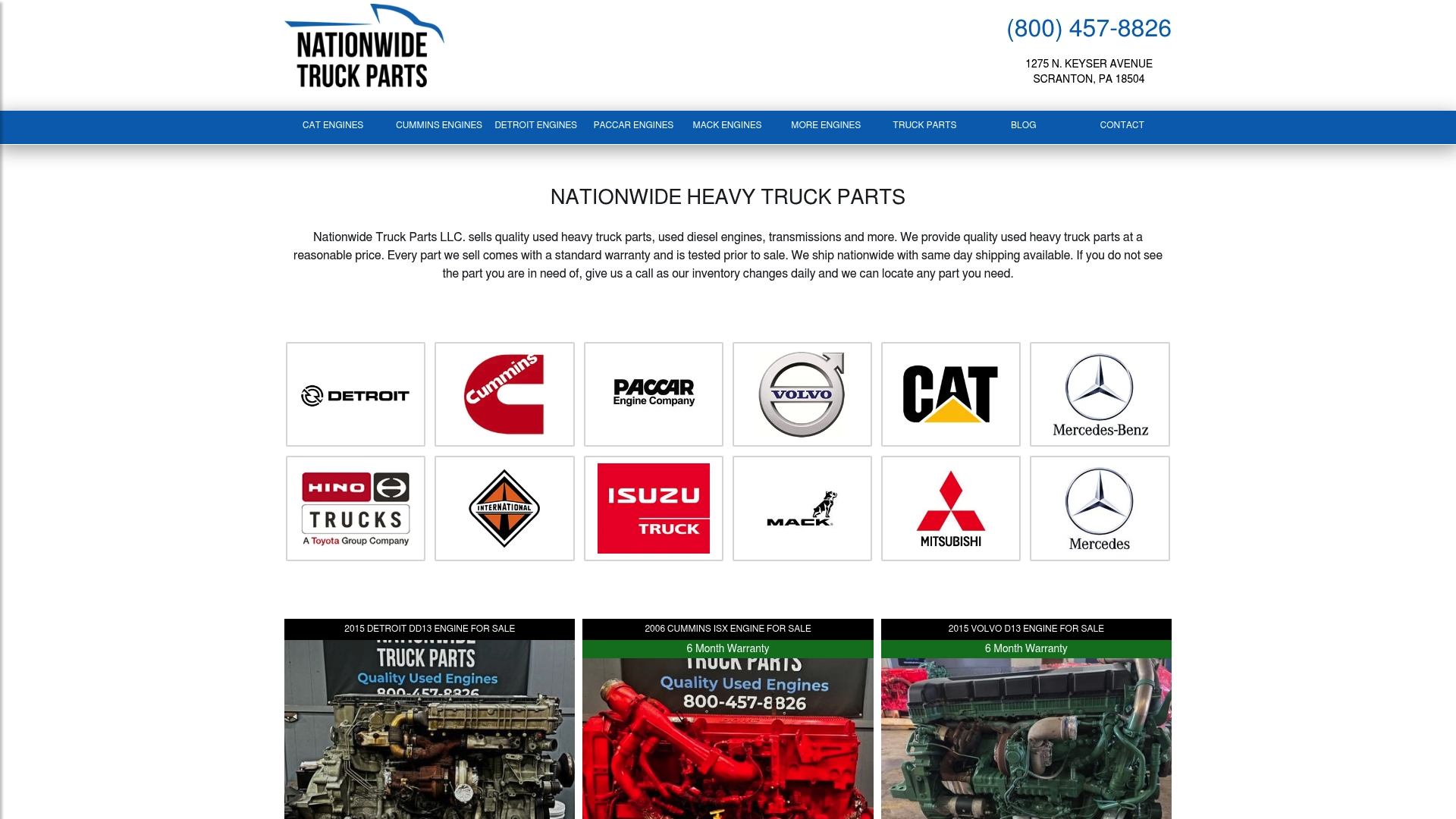
Nationwideheavytruckparts carries a daily-changing inventory of tested, inspected heavy truck parts backed by a standard warranty. Fleet managers can source used diesel engines across major brands, including CAT, Cummins, and Detroit Diesel, along with truck transmissions built for heavy-duty applications. Same-day shipping means a part ordered in the morning can be moving toward your shop before the end of the business day. When your internal stock falls short, Nationwideheavytruckparts is built to close that gap fast.
FAQ
What causes the most fleet maintenance delays related to parts?
Wrong stock levels and missing reorder points account for 40–60% of fleet maintenance delays. Fixing those two data points in your inventory system has the largest single impact on uptime.
How often should min/max stock levels be reviewed?
Min/max thresholds should be reviewed at least quarterly. Usage patterns shift with route changes, seasonal demand, and vehicle age, so static thresholds become inaccurate within months.
What data do I need before implementing inventory software?
A verified physical audit of all current stock is required before any software import. Inaccurate baseline records produce inaccurate system outputs regardless of how capable the software is.
What is core management in heavy truck fleets?
Core management is the process of tracking reusable components removed from vehicles, returning them to vendors, and recovering the associated deposits. Automating this process through an ERP system prevents the missed credits that manual tracking consistently produces.
How does multi-site inventory visibility reduce costs?
Centralized dashboards let fleet managers transfer parts between locations instead of placing new vendor orders. This eliminates redundant purchasing and reduces the excess and obsolete stock that siloed site management creates.