
Sourcing diesel engines for multiple trucks is defined as the process of identifying, evaluating, and procuring compatible heavy-duty diesel powerplants across a fleet from qualified suppliers. Fleet professionals managing more than a handful of trucks face a specific challenge: every engine purchase multiplies the cost of a bad decision. Getting this right means understanding which engine models fit your trucks, which diesel engine suppliers meet commercial-grade quality standards, and how to structure procurement so you are not paying retail prices for bulk needs. Brands like Cummins, Detroit Diesel, and Volvo dominate the commercial fleet market for good reason, and knowing why helps you source truck engines with confidence.
What diesel engine models and specs best suit multiple truck fleets?
The four engines that appear most often in North American heavy-duty fleets are the Cummins X15, Detroit DD15, Volvo D13, and PACCAR MX-13. Each covers the 400–600 hp range that long-haul and regional distribution trucks require. Choosing one engine family across your fleet simplifies parts stocking, technician training, and warranty management.
The Detroit Gen 6 lineup launches in january 2027 for the DD13 and DD15, with the DD16 following in january 2028. These engines are engineered for full 2027 emissions compliance and deliver 425–605 hp with 1,750–2,050 lb-ft of torque. That power range covers everything from regional box trucks to heavy line-haul applications. Fleet operators planning multi-year procurement cycles should factor Gen 6 availability into their engine replacement timelines now.
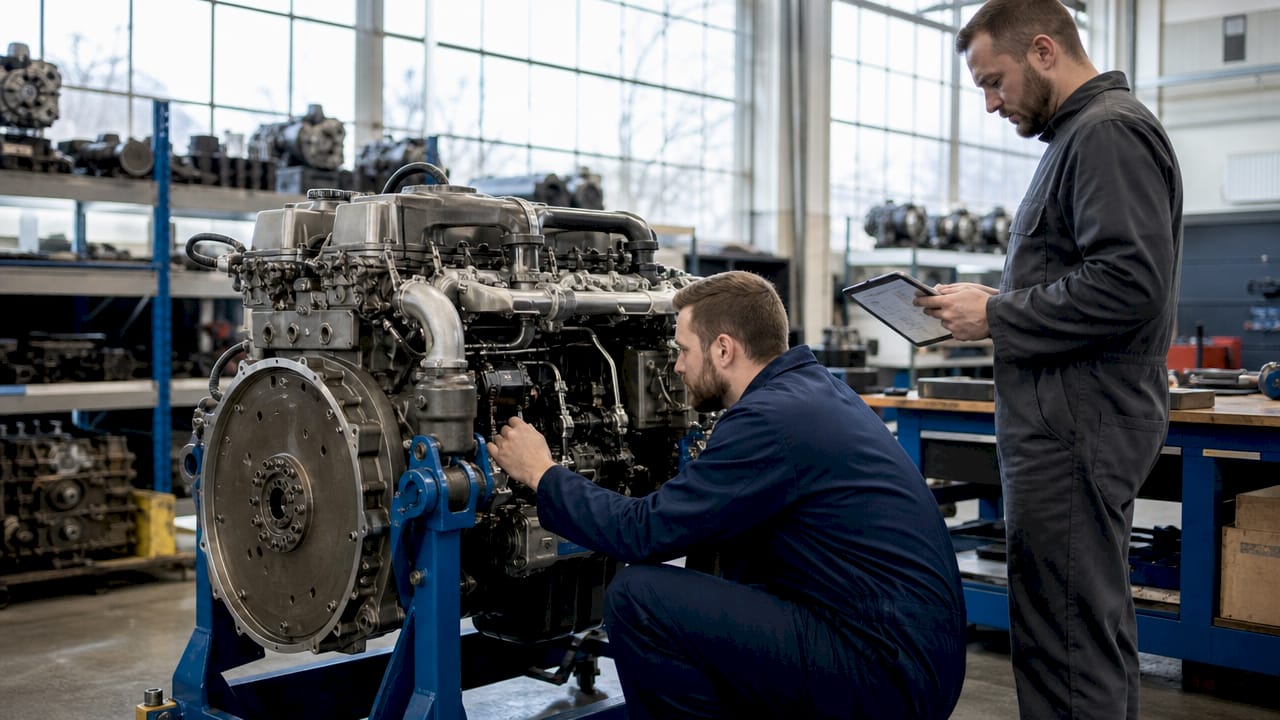
Volvo's new 13-liter platform delivers fuel savings up to 4% compared to its predecessor and supports alternative fuels including HVO, biodiesel, and green hydrogen. That makes it a strong choice for fleets with net-zero commitments. The industry is moving toward fuel-agnostic engines capable of running on renewable fuels to meet net-zero goals by 2040. Buying into that platform today protects your fleet from a costly engine swap later.
| Engine | Power Range | Torque | Key Strength |
|---|---|---|---|
| Cummins X15 | 400–605 hp | 1,450–2,050 lb-ft | Long-haul reliability, resale value |
| Detroit DD15 | 455–505 hp | 1,650–1,850 lb-ft | Fuel efficiency, integrated drivetrain |
| Volvo D13 | 425–500 hp | 1,650–1,850 lb-ft | Alternative fuel readiness |
| PACCAR MX-13 | 405–510 hp | 1,450–1,850 lb-ft | Kenworth/Peterbilt factory fit |
Pro Tip: Cummins X15 engines command a resale premium of $5,000–$15,000 over competing OEM engines when trucks are 3–5 years old. If your fleet turns over equipment on that cycle, the Cummins premium pays back at resale.
How to evaluate and select reliable diesel engine suppliers for multiple units
Supplier quality varies more than most fleet managers expect. Top-tier suppliers provide full supply chain documentation, component inspection records, and clear distinction between factory-new assemblies and rebuilt units. Lower-tier suppliers often skip standardized testing protocols entirely. That gap shows up as unplanned downtime, not as a line item on the purchase order.
When you evaluate diesel engine suppliers for multiple units, focus on these criteria:
- Testing documentation: Ask for dyno test results and compression readings on every engine, not just a sample.
- Rebuild vs. new assembly: Confirm whether the engine is a factory-new build, a remanufactured unit, or a used pull. Each category carries different risk and pricing.
- Warranty terms: A credible supplier backs each unit with a written warranty. Verbal assurances do not protect your fleet.
- Parts availability: Verify that the supplier stocks or can source common wear items for the engine families they sell.
- Delivery lead time: For multiple truck engines, staggered delivery schedules matter. Confirm the supplier can meet your installation timeline.
- References: Ask for contact details of fleet customers who have purchased five or more units. Call them.
Domestic suppliers generally offer faster logistics and easier warranty claims. International sourcing demands careful scrutiny of the supply chain, clear distinction between new builds and rebuilds, and verified quality protocols. The cost savings from overseas procurement can disappear quickly if one engine fails and you are waiting weeks for a warranty resolution.
Pro Tip: Request a sample engine before committing to a bulk order. One physical inspection tells you more than any catalog description.
What procurement strategies optimize cost when buying engines for multiple trucks?
Bulk purchasing from a single supplier is the fastest way to reduce per-unit cost on heavy-duty diesel engines. Suppliers price volume orders differently than single-unit purchases, and consolidating your order gives you negotiating leverage on shipping, warranty terms, and installation support. The key is structuring the deal before you commit, not after.
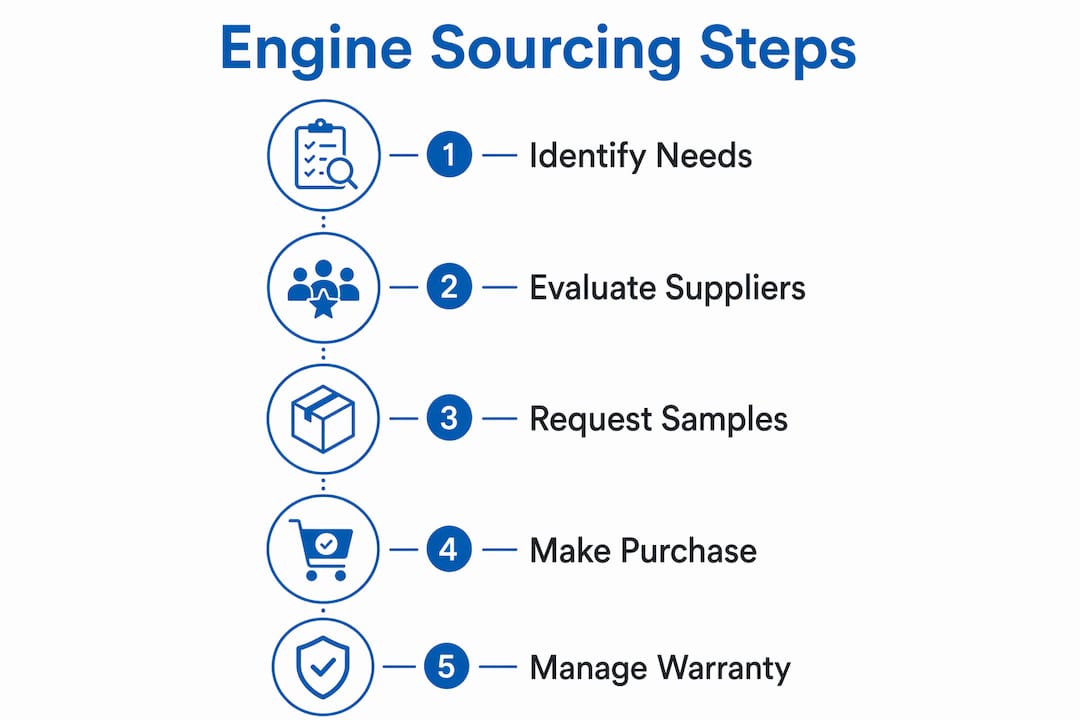
Follow these steps to plan a multi-unit engine procurement:
- Audit your fleet first. List every truck by make, model, year, and current engine. Identify which units need replacement within 12 months and which can wait 24–36 months.
- Standardize your engine selection. Pick one or two engine families that cover your truck lineup. Mixed fleets with four different engine types cost more to maintain.
- Get three supplier quotes. Compare pricing, warranty length, testing documentation, and delivery lead time side by side.
- Negotiate a service contract. Suppliers who sell multiple units will often include extended warranty coverage or priority parts support if you ask during the initial negotiation.
- Stagger delivery dates. Receiving all engines at once strains your installation capacity. Schedule deliveries to match your shop's throughput.
- Confirm payment terms. Net-30 or Net-60 terms on large orders protect your cash flow during installation.
Authorized dealers for Cummins, Detroit Diesel, and Volvo offer factory-backed support and certified technicians. Third-party suppliers like Nationwideheavytruckparts often provide better pricing on used diesel engines for sale with comparable warranty coverage. The right choice depends on whether your priority is factory certification or cost per unit.
How to ensure diesel engine compatibility across a truck fleet
Physical fitment is only the first compatibility check. Engine swaps require ECU/ECM software compatibility checks to confirm proper operation. A replacement engine that bolts in cleanly can still fail to communicate with the truck's chassis systems if the software versions do not match. This is the most common and most expensive mistake fleet managers make during multi-truck engine replacements.
Run through these compatibility checks before any engine installation:
- Physical mounting: Confirm bell housing pattern, engine mount spacing, and accessory drive locations match the chassis.
- ECU/ECM software version: The engine control module must match the truck's chassis control systems. Mismatches cause fault codes, derated performance, and failed emissions tests.
- Emissions certification: Verify the replacement engine meets the emissions standard the truck was originally certified under. Installing a non-compliant engine creates legal liability.
- Cooling system capacity: Confirm the truck's radiator and cooling lines handle the replacement engine's heat rejection rating.
- Exhaust aftertreatment: Check that the DPF, SCR, and DEF system are compatible with the replacement engine's exhaust output.
Many fleets overlook ECU/ECM software compatibility, causing costly integration problems during engine swaps. The fix is straightforward: require the supplier to provide the engine's software version number before purchase and verify it against your truck's chassis documentation.
What are the top maintenance practices for multiple sourced diesel engines?
Standardized maintenance intervals are the single biggest factor in keeping a mixed-engine fleet running reliably. When you source engines from different model years or different suppliers, each unit may carry different oil change intervals, filter specifications, and coolant requirements. Building a single maintenance matrix that maps each engine to its correct service schedule prevents the most common fleet maintenance errors.
Warranty management across multiple sourced engines requires the same discipline. Keep a physical or digital file for each engine that includes the purchase date, supplier warranty terms, mileage at installation, and all service records. Suppliers will deny warranty claims without documentation. That file is your protection.
Cummins' Holset HE300VG turbocharger is one example of a quality component that improves engine responsiveness and efficiency when properly maintained. Turbocharger failures are often traced to oil change neglect, not component defects. Consistent service intervals prevent the majority of premature failures.
Pro Tip: Set up a shared digital log for every engine in your fleet, recording mileage, oil changes, fault codes, and repairs. When a warranty claim arises, that log is the difference between a paid claim and a denied one.
Key takeaways
The most reliable way to source diesel engines for multiple trucks is to standardize on one or two engine families, verify supplier documentation before purchase, and confirm ECU/ECM software compatibility before any installation.
| Point | Details |
|---|---|
| Standardize engine selection | Choose one or two engine families to reduce parts costs and simplify technician training. |
| Verify supplier documentation | Require dyno test results, rebuild history, and written warranty terms before committing to any order. |
| Check ECU/ECM compatibility | Confirm software version matching before purchase to avoid costly integration failures after installation. |
| Plan procurement in stages | Stagger deliveries to match shop capacity and negotiate service contracts during the initial bulk order. |
| Future-proof your fleet | Consider Detroit Gen 6 and Volvo's new 13-liter platform for emissions compliance and alternative fuel readiness. |
What I have learned sourcing engines for fleets
The biggest mistake I see fleet operators make is treating engine sourcing as a purchasing problem when it is actually a systems problem. You are not buying a part. You are integrating a powertrain into a vehicle that has its own software, emissions certification, and maintenance history. Every shortcut in the sourcing process shows up later as a shop problem.
Supplier reliability has improved over the past several years, but the gap between top-tier and bottom-tier suppliers has widened at the same time. The best suppliers now offer documented testing, clear rebuild histories, and real warranty support. The worst suppliers have gotten better at looking like the best ones on paper. The only way to tell the difference is to ask for references and actually call them.
The ECU/ECM compatibility issue catches more fleets than any other single problem. I have seen trucks sit in a shop for two weeks because the replacement engine's software version was incompatible with the chassis. The engine fit perfectly. It just would not talk to the truck. That is a $5,000 problem that a 10-minute software version check would have prevented.
My honest advice: pick one engine family, find one supplier who can document their quality process, and build a relationship before you need to place a large order. The fleets that source engines well are not the ones who found the cheapest price. They are the ones who built a supply chain before the emergency happened.
— Carl
Nationwideheavytruckparts: your source for fleet diesel engines
Fleet managers who need to find diesel engines across multiple trucks need a supplier with inventory depth, documented quality checks, and fast shipping. Nationwideheavytruckparts carries Cummins diesel engines, Detroit Diesel engines, and Mack diesel engines with daily-changing inventory and same-day shipping on qualifying orders.
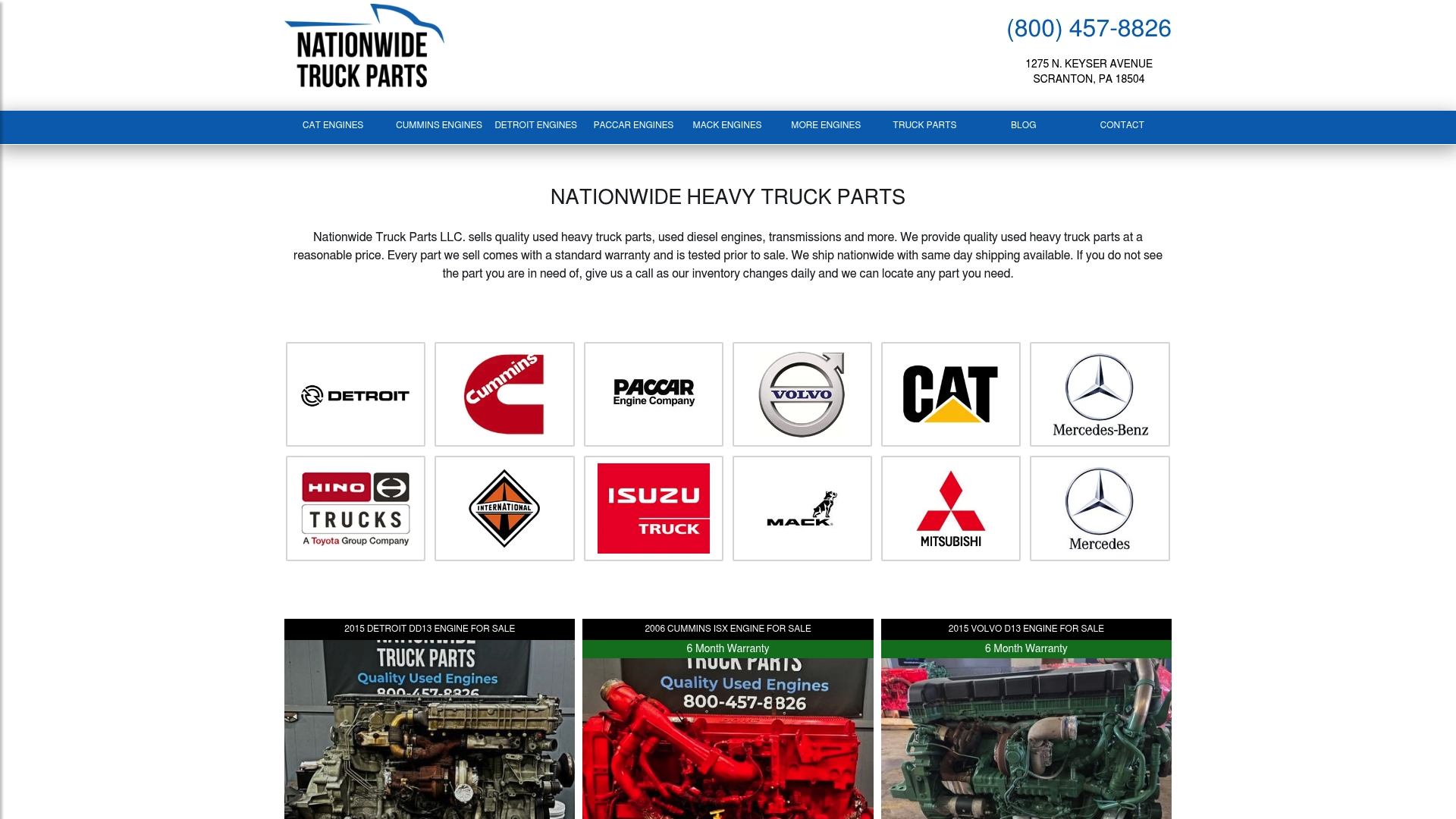
Every engine goes through thorough testing and inspection before it ships, and each unit is backed by a standard warranty. Whether you are replacing one engine or sourcing across an entire fleet, Nationwideheavytruckparts provides the documentation and support that bulk orders require. Contact the team directly to discuss volume pricing and coordinated delivery schedules for your fleet.
FAQ
What engine brands work best for heavy-duty truck fleets?
Cummins, Detroit Diesel, and Volvo are the most widely used brands in North American heavy-duty fleets. Cummins X15 engines carry a strong resale premium and are preferred for long-haul reliability.
How do I verify ECU/ECM compatibility before buying a replacement engine?
Request the engine's software version number from the supplier and compare it against your truck's chassis documentation. A mismatch causes fault codes and derated performance even when the engine bolts in correctly.
Is it better to buy new or rebuilt diesel engines for a fleet?
Rebuilt engines from verified suppliers with documented testing protocols offer strong value for fleet use. The key is confirming the rebuild standard and warranty terms in writing before purchase.
What is the Detroit Gen 6 engine and when is it available?
Detroit Gen 6 engines (DD13 and DD15) launch in january 2027, with the DD16 following in january 2028. They deliver 425–605 hp and are engineered for full 2027 emissions compliance.
How many engines should I standardize on across my fleet?
One or two engine families is the practical limit for most fleets. Standardizing reduces parts inventory costs, simplifies technician training, and makes warranty management significantly easier.