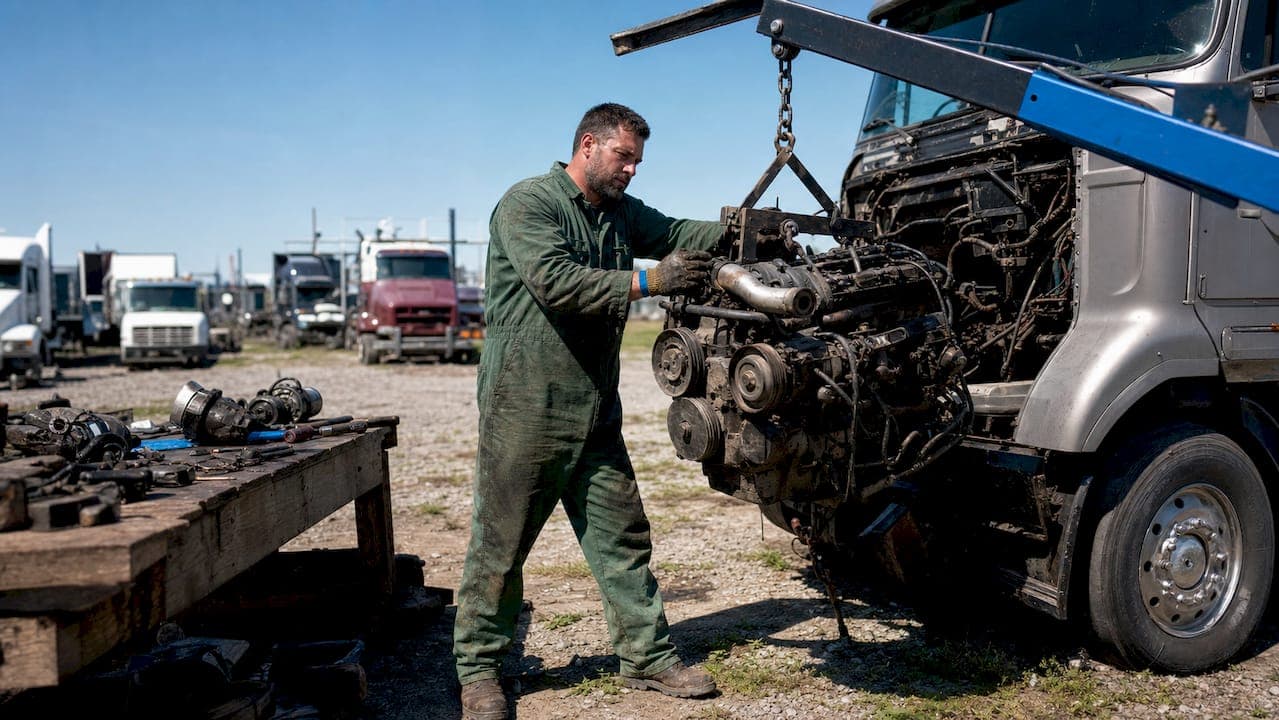
Truck engine replacement is the process of removing a worn or damaged engine and installing a new, remanufactured, or rebuilt unit to restore a truck's operational reliability and performance. Understanding how truck engine replacement works gives fleet managers and owner-operators a clear framework for controlling costs, minimizing downtime, and making smarter decisions about their assets. The process spans diagnostic evaluation, parts procurement, physical removal, installation, and post-installation testing. Each stage carries real cost and time implications that directly affect fleet uptime and profitability.
What are the main steps in the truck engine replacement process?
Engine replacement follows a defined sequence. Skipping or rushing any stage creates downstream problems that cost more to fix than the time saved.
-
Diagnostic evaluation. A certified technician performs a full engine diagnostic using tools like Cummins INSITE or Detroit Diesel Diagnostic Link to confirm the engine is beyond repair. Compression tests, oil analysis, and fault code reviews all feed into this decision. The goal is to rule out a repair that would be cheaper and faster.
-
Replacement engine selection. Once replacement is confirmed, you choose between a new OEM unit, a remanufactured engine, a rebuilt engine, or a quality used engine. Each option carries different cost, warranty, and lead time implications. Brands like Cummins, Detroit Diesel, Caterpillar, and Mack dominate the heavy-duty market.
-
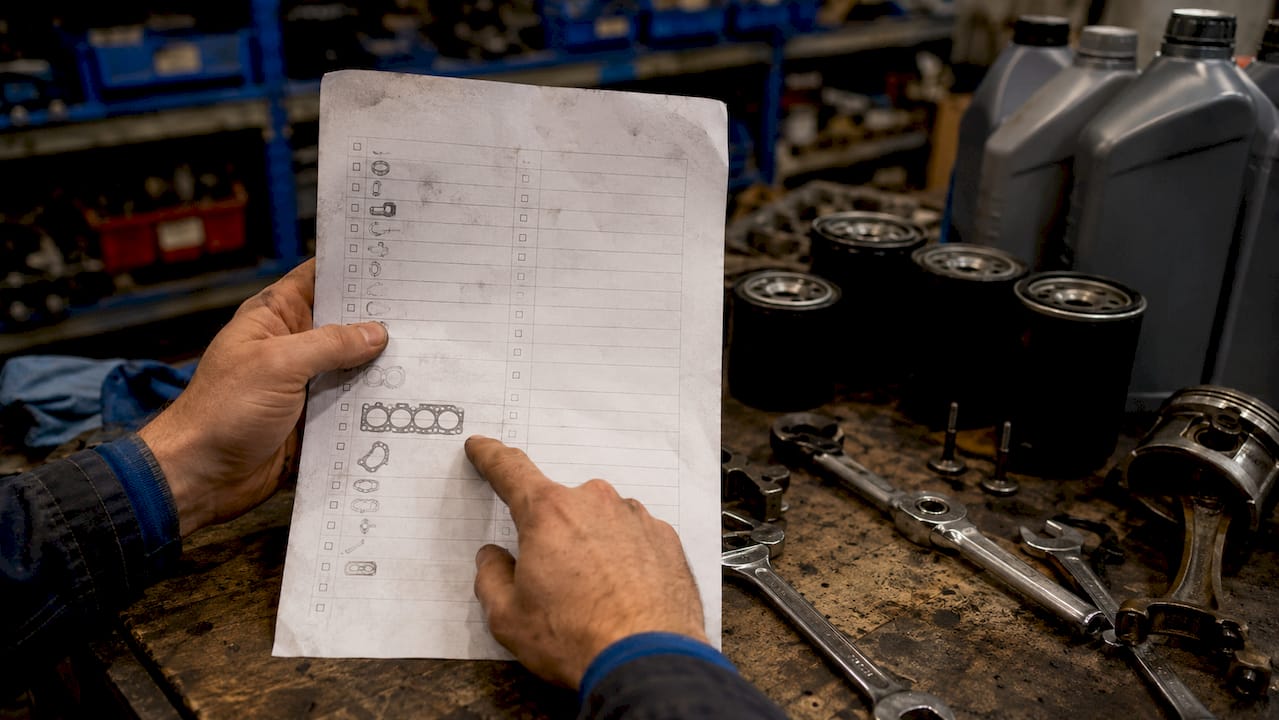
Parts and components procurement. This step is where most delays happen. You need the replacement engine plus all ancillary components: gaskets, fluids, filters, belts, and any system-specific parts like air compressors or wiring harnesses. Parts availability is the primary bottleneck in engine replacements, often causing longer delays than labor complexity itself.
-
Engine removal. The shop drains all fluids, disconnects the electrical harnesses, removes the exhaust and intake systems, and separates the engine from the transmission. On a Class 8 truck, this alone can take the better part of a full workday.
-
Installation and integration. The replacement engine is mounted, all ancillary systems are reconnected, and the cooling system is flushed and refilled. Technicians verify torque specs on all critical fasteners and confirm that the new engine's ECM (engine control module) is properly programmed for the truck's configuration.
-
Post-installation testing and break-in. The truck runs through a controlled break-in protocol, typically 500 miles of varied load cycles, before returning to full-duty service. Oil pressure, coolant temperature, and fuel system performance are monitored closely during this phase.
Pro Tip: Pre-order every gasket, fluid, filter, and ancillary part before the truck enters the shop. Pre-ordering all parts before scheduling reduces downtime by 2–3 days on a typical engine swap.
How do engine replacement options compare in cost, time, and lifespan?
The four main replacement paths differ significantly in upfront cost, expected service life, and total time out of service. Choosing the wrong option for your situation is one of the most expensive mistakes a fleet manager can make.
| Option | Estimated Cost | Typical Downtime | Expected Service Life |
|---|---|---|---|
| New OEM Engine | $40,000–$55,000 installed | 3–5 days | 800,000+ miles |
| Remanufactured Engine | $40,000–$55,000 installed | 3–5 days | 500,000–700,000 miles |
| Out-of-Frame Overhaul | $25,000–$35,000 | 5–10 days | 400,000–600,000 miles |
| Quality Used Engine | $10,000–$20,000 installed | 3–5 days | Varies by history |
A new or remanufactured engine installed in a Class 8 truck typically runs $40,000–$55,000. That number reflects both parts and labor at a professional shop. A full out-of-frame overhaul costs $25,000–$35,000 and can deliver 400,000 to 600,000 miles of additional service life when followed by proper maintenance.
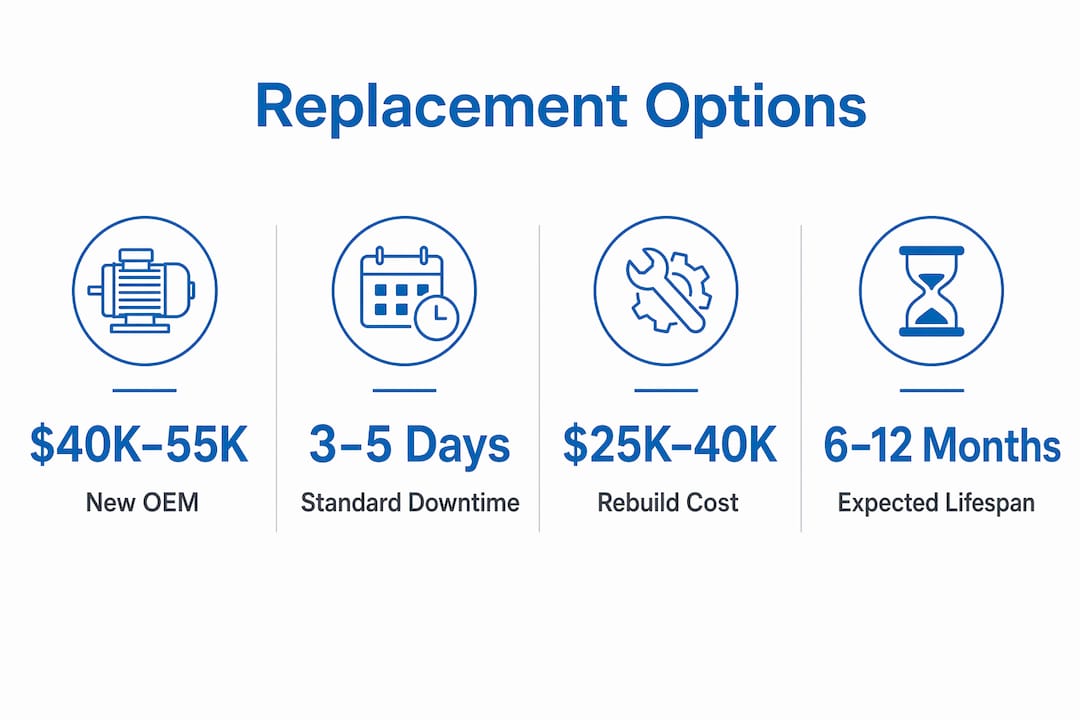
Standard replacements take 3–5 working days. Complex installations involving emissions system integration, transmission matching, or cooling upgrades can stretch to 7–10 days. Every extra day off the road is lost revenue, so downtime is a real cost that belongs in your ROI calculation.
The fuel economy angle matters too. New or remanufactured engines deliver 8–12% better fuel economy compared to worn originals. On a truck running 100,000 miles per year at current diesel prices, that improvement pays back a meaningful portion of the replacement cost within the first two years.
Key factors that shift ROI in favor of a higher-cost option:
- Warranty coverage. Remanufactured engines from brands like Cummins ReCon or Detroit Diesel Reman carry warranties comparable to new units. Used engines typically carry 30–90 day warranties.
- Emissions compliance. Newer engine generations meet current EPA and CARB standards. Older used units may not, creating regulatory exposure.
- Resale value. A truck with a documented new or remanufactured engine commands a higher resale price than one with an unknown used unit.
When should you replace an engine instead of repairing it?
The repair-versus-replace decision is where fleet managers lose the most money by acting on instinct rather than data. Two financial thresholds cut through the noise.
The first threshold: when annual maintenance costs exceed 15–18% of the new truck purchase price, replacement becomes the financially sound choice. On a truck that cost $150,000 new, that threshold is $22,500–$27,000 per year in maintenance spending.
The second threshold is the 50% rule. If combined repair costs exceed 50% of the truck's post-repair market value, you should consider replacing the truck entirely rather than just the engine. This rule prevents throwing good money after bad on a chassis that has other deferred problems waiting to surface.
Beyond the numbers, watch for these signals:
- Multiple major component failures occurring within the same 12-month window
- Engine oil consumption exceeding one quart per 1,000 miles
- Persistent fault codes that return after repair, particularly on Cummins ISX or Detroit DD15 platforms
- Emissions system failures that require repeated DPF or EGR intervention
Avoid evaluating repairs in isolation. Component failure stacking, where one major failure follows another within months, is a stronger signal for replacement than any single repair cost. A $4,000 turbo repair looks reasonable in isolation. Add a $6,000 injector job three months later and a $9,000 head gasket failure after that, and the picture changes entirely.
Pro Tip: Use a telematics platform like Samsara or Geotab to track engine fault codes and maintenance costs per truck. Seeing the full cost history in one view makes the replacement decision obvious rather than emotional.
What are the biggest challenges in minimizing downtime during replacement?
Downtime during an engine swap is rarely caused by labor. It is almost always caused by parts. Planning around this reality is the single most effective way to keep trucks moving.
The most common pitfalls and how to avoid them:
- Incomplete parts kits. Ordering the engine without pre-ordering gaskets, seals, filters, and fluids means the truck sits waiting for a $40 part while a $45,000 engine sits on the shop floor.
- Air compressor mismatch. Matching the air compressor during an engine swap is critical to maintain braking system functionality. An incompatible compressor creates a safety risk that will ground the truck again immediately after the swap.
- Wiring harness incompatibility. Engine generations within the same brand family do not always share harness configurations. Confirm harness compatibility before the engine ships, not after it arrives.
- Transmission alignment. The replacement engine's flywheel housing must match the transmission bell housing. Mismatches require adapter plates that add cost and time.
- Emissions system integration. Modern engines require proper calibration of the DEF (diesel exhaust fluid) system, DPF (diesel particulate filter), and SCR (selective catalytic reduction) catalyst. Skipping this step triggers fault codes and failed emissions inspections.
Successful engine swaps depend on compatible air compressors, wiring harnesses, cooling system upgrades, and transmission matching, not just the engine block itself. Treat the swap as a system integration project, not a parts swap.
Key takeaways
A successful truck engine replacement requires matching the right engine type to your cost threshold, downtime tolerance, and compliance requirements before the truck ever enters the shop.
| Point | Details |
|---|---|
| Follow the full replacement sequence | Skipping diagnostic, parts prep, or break-in steps creates costly downstream failures. |
| Cost drives option selection | New and reman engines run $40,000–$55,000; overhauls run $25,000–$35,000 with different service life trade-offs. |
| Use the 50% rule | If combined repairs exceed half the truck's post-repair value, replace the truck, not just the engine. |
| Pre-order all ancillary parts | Pre-ordering gaskets, fluids, and filters before scheduling cuts downtime by 2–3 days. |
| System compatibility is non-negotiable | Air compressors, wiring harnesses, and emissions systems must match the replacement engine before installation begins. |
Engine replacement is a fleet reset, not just a repair
Engine replacement is a performance reset. That framing matters because it changes how you calculate the return on the investment.
When I look at how fleet managers approach this decision, the ones who struggle are almost always evaluating the engine cost in isolation. They see $45,000 and compare it to a $9,000 repair bill and choose the repair. What they are not counting is the fuel penalty from a worn engine, the regulatory risk from an out-of-compliance emissions system, and the resale value they are burning through every month they defer the decision.
The fleets that manage this well treat engine replacement as a scheduled capital event, not an emergency response. They track fault codes, monitor oil consumption trends, and set a replacement trigger before the engine fails catastrophically. A catastrophic failure costs more in towing, emergency labor rates, and lost contract revenue than a planned replacement ever would.
Engine replacement serves as a force multiplier to reset performance, improve fuel compatibility, and ensure emissions compliance. That is the right way to think about it. You are not just fixing a broken truck. You are resetting a revenue-generating asset to near-new operating standards.
One more thing: do not overlook the value of sourcing from a supplier who tests and inspects every unit before it ships. A warranty on paper means nothing if the engine arrives with undisclosed wear. Verified testing documentation is worth paying for.
— Carl
Find the right replacement engine for your truck
When you are ready to source a replacement engine, the quality of the part and the speed of delivery determine how quickly your truck gets back to work. Nationwideheavytruckparts carries a daily-changing inventory of tested and inspected diesel engines for the most common heavy-duty platforms, including Cummins diesel engines, Detroit Diesel engines, CAT engines, and Mack truck engines. Every unit is backed by a standard warranty and ships the same day when in stock.
Whether you need a remanufactured unit for a long-haul Class 8 or a tested used engine to keep a regional truck running, Nationwideheavytruckparts makes it straightforward to find the right part at a competitive price. Browse the full commercial truck engine inventory and get your truck back on the road without unnecessary delays.
FAQ
How long does a truck engine replacement take?
Standard heavy-duty engine replacement takes 3–5 working days. Complex installations involving emissions system integration or transmission matching can take 7–10 days.
What is the cost of a truck engine replacement in 2026?
A new or remanufactured engine installed in a Class 8 truck costs $40,000–$55,000. A full out-of-frame overhaul runs $25,000–$35,000 depending on engine condition and shop labor rates.
Is a remanufactured engine as good as a new one?
Remanufactured engines from brands like Cummins ReCon and Detroit Diesel Reman are rebuilt to OEM specifications and carry comparable warranties. They typically deliver 500,000–700,000 miles of service life with proper maintenance.
When does the 50% rule apply to engine replacement?
The 50% rule applies when combined repair costs exceed half of the truck's post-repair market value. At that point, replacing the truck is more financially sound than replacing only the engine.
Can you replace a truck engine without replacing the transmission?
Yes, but you must confirm that the replacement engine's flywheel housing matches the existing transmission bell housing. Mismatches require adapter plates and add cost and labor time to the project.