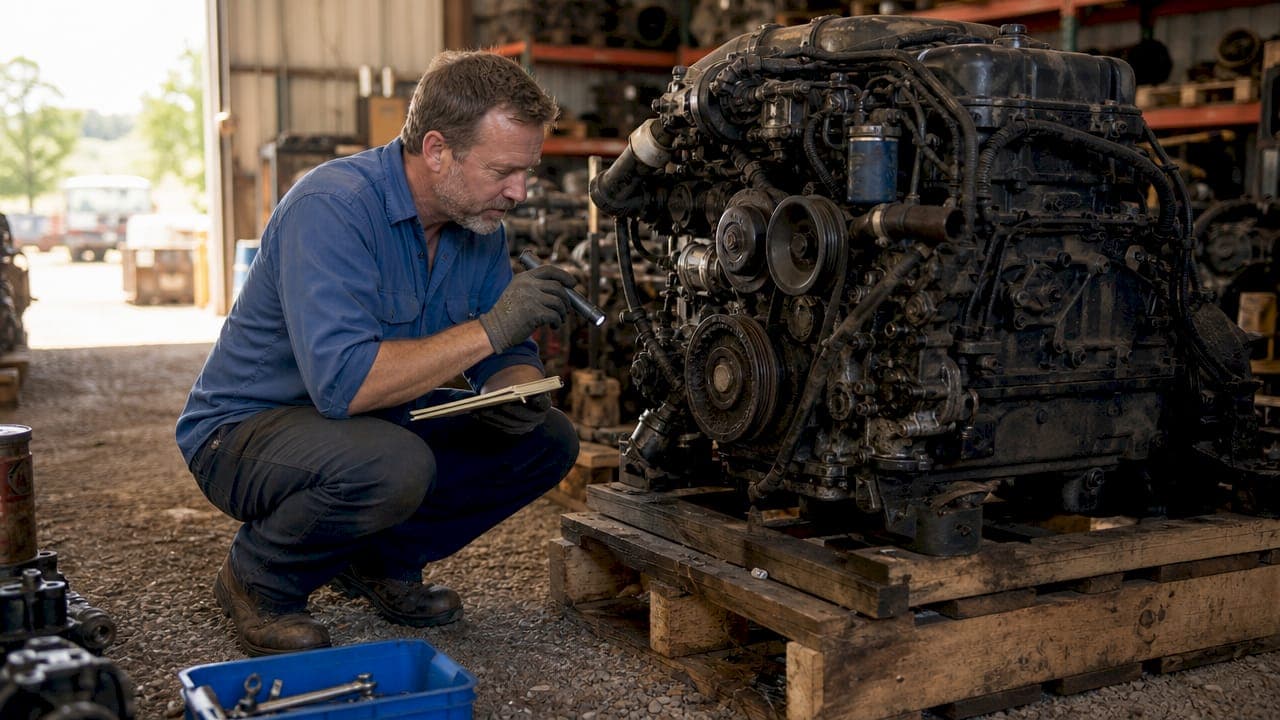
A used diesel engine buying checklist is a step-by-step evaluation framework that protects buyers from costly mistakes by confirming engine identity, mechanical condition, emissions compliance, and seller credibility before any money changes hands. Skipping even one step on this pre-owned diesel engine checklist can turn a $3,000 purchase into a $15,000 repair bill. This guide covers every critical checkpoint, from VIN verification to compression testing to cost comparison, so you can buy with confidence whether you're an individual owner or a fleet manager.
1. How to verify a used diesel engine's identity and history
Engine identity verification is the first and most skipped step in any diesel engine buying guide. Without it, you may buy an engine that doesn't match your application, carries hidden debt, or has a fraudulent title.
Start with these identity checks:
- Decode the VIN to confirm engine displacement, model year, and engine code. Cross-reference the VIN on the block, the title, and any documentation the seller provides.
- Request full maintenance records. Mileage alone isn't definitive; maintenance records drive reliability assessment far more than odometer readings.
- Run an NMVTIS check. Confirming no outstanding liens or salvage branding protects you from title washing, a practice where a damaged title is re-registered in another state to hide its history.
- Verify the seller's authority to sell. Ask for a bill of sale, government-issued ID, and proof of ownership. If the seller can't produce these, walk away.
- Check for any active recalls tied to the engine's VIN through the NHTSA database.
A clean paper trail is not a formality. It is your legal protection and your first indicator of how well the previous owner cared for the engine.
2. Checklist for physical and mechanical inspection of used diesel engines

Visual inspection catches obvious problems. Diagnostic testing catches the ones that will destroy your budget six months after installation.
Visual inspection points:
- Inspect the engine block and cylinder head for cracks, warping, or signs of heat damage.
- Check the oil cap and dipstick for milky or frothy residue, which signals coolant contamination.
- Examine the turbocharger for shaft play, oil leaks at the seals, and damaged compressor blades.
- Look at intake and exhaust manifolds for cracks, rust, and broken mounting studs.
- Inspect all hoses, gaskets, and seals for dry rot, swelling, or active leaks.
- Check the fuel injectors and fuel lines for external staining or seepage.
Diagnostic tests to run:
| Test | What It Measures | Cost Estimate |
|---|---|---|
| Compression test | Cylinder health and ring/valve condition | $100–$150 |
| Oil analysis | Wear metals, contamination, viscosity | $25–$30 |
| Leak-down test | Combustion seal integrity | Included in PPI |
| Visual PPI | Overall condition, fluid levels, leaks | $300–$500 total |
Diesel engines typically run 300–400 PSI during compression testing. A variation greater than 10% across cylinders signals ring or valve problems that will require a rebuild.
A professional pre-purchase inspection costs $300–$500 and takes 2–4 hours. That investment routinely saves buyers $5,000–$15,000 in unexpected repairs. No serious buyer skips it.
Pro Tip: Request oil analysis results before agreeing to any price. The presence of aluminum, iron, or copper particles in the oil tells you exactly which components are wearing out, before you own the problem.
3. Ensuring emissions compliance when buying used diesel engines
Emissions compliance is a legal requirement, not a preference. Diesel emissions standards apply over the engine's entire useful life, meaning a used engine must still meet the certification it was originally built to.
Emissions compliance checklist:
- Confirm the engine's emissions family label, located on the valve cover or engine block. This label identifies the certified emissions configuration.
- Verify that the engine has not been modified to remove or bypass emissions controls such as EGR, DPF, or SCR systems. Tampering is illegal under federal law and carries significant fines.
- Check whether the engine meets the emissions standards for your state. California Air Resources Board (CARB) regulations are stricter than federal EPA standards and apply to any engine operated in California.
- Confirm deterioration factors. The engine must demonstrate compliance not just when new, but across its projected service life.
- Ask the seller for any emissions test records or certificates tied to the engine.
Non-compliant engines create serious resale problems. An engine that fails emissions certification cannot be legally installed in a regulated jurisdiction. Catching this before purchase saves you from owning an engine you cannot legally use.
4. Comparing costs: used vs. remanufactured vs. new diesel engines
Price is the most visible factor in any diesel engine purchase, but it is not the only one. Understanding what each tier actually delivers helps you make a smarter budget decision.
| Engine Type | Typical Price Range | Key Consideration |
|---|---|---|
| New long block | $8,000–$15,000 | Full OEM warranty, zero wear |
| Remanufactured | $5,500–$9,000 | Rebuilt to spec, limited warranty |
| Used (verified) | $1,800–$4,500 | Lowest cost, condition-dependent |
Price ranges vary significantly based on engine size, model, verified mileage, and warranty terms. A used Cummins ISX will price differently than a used Detroit DD15, even at similar mileage.
The real cost of a used engine is purchase price plus inspection plus any immediate repairs. A $2,500 engine with a clean compression test and full maintenance records is a better value than a $1,800 engine with no documentation. Reputable suppliers often provide fully refurbished used engines with replaced seals, bearings, and consumables, which closes the gap between used and remanufactured performance.
Pro Tip: Always ask what the warranty covers and for how long. A 90-day parts warranty on a used engine is standard. Anything less should lower your offer price.
Remanufactured engines make sense when you need near-new reliability and can absorb the higher upfront cost. Used engines make sense when documentation is solid, inspection results are clean, and the price reflects actual condition.
5. Negotiation and final purchase tips for used diesel engines
Inspection results are your most powerful negotiating tool. A failed compression test or evidence of oil contamination is not a reason to walk away automatically. It is a reason to renegotiate the price to reflect the repair cost.
Red flags that should stop the deal:
- Seller refuses third-party inspection or diagnostic testing. Experienced buyers treat this refusal as a direct reliability risk.
- VIN on the block does not match the title or documentation.
- No maintenance records and no explanation for the gap.
- Price is significantly below market without a clear reason.
- Seller pressures you to decide quickly or pay cash only.
Plan your logistics before you agree to a price. Confirm whether the seller includes delivery or whether you arrange pickup. Clarify what components come with the engine, such as the turbo, exhaust manifold, or accessories, since missing parts add cost.
Request a written warranty before finalizing the purchase. Even a short warranty signals that the seller stands behind the engine. If the seller won't provide one, price that risk into your offer.
Key takeaways
A used diesel engine purchase requires verified documentation, diagnostic testing, and emissions compliance checks to protect your investment and avoid costly failures.
| Point | Details |
|---|---|
| Verify identity first | Confirm VIN, title, and maintenance records before any inspection or negotiation. |
| Test before you buy | Compression testing at 300–400 PSI and oil analysis reveal hidden mechanical problems. |
| Check emissions compliance | Used engines must still meet their original certified emissions configuration under federal law. |
| Compare total cost | Factor in inspection, repairs, and warranty terms, not just the purchase price. |
| Walk away from red flags | Sellers who refuse third-party testing or lack documentation are a financial risk. |
What I've learned buying used diesel engines over the years
The single biggest mistake buyers make is treating the purchase price as the total cost. It never is. The $300 compression test feels like an unnecessary expense until it reveals a cracked cylinder head that would have cost $4,000 to fix after installation.
Documentation matters more than mileage. Well-maintained diesel engines regularly exceed 300,000–500,000 miles without major issues. A 250,000-mile engine with complete service records is a safer buy than a 150,000-mile engine with no history at all. The records tell you how the previous owner treated the engine under load, in cold starts, and during oil change intervals.
Emissions compliance trips up buyers more than any other single issue, especially in states with CARB regulations. I've seen buyers install an otherwise solid engine only to fail a state inspection because the EGR system had been deleted. That's not a cheap fix. Check the emissions family label before you negotiate, not after.
The best deals come from sellers who are transparent about condition and willing to support third-party verification. That willingness is itself a quality signal. Sellers who hide behind "as-is" language and refuse testing are telling you something important about what they know and won't say.
— Carl
Nationwideheavytruckparts: quality-tested diesel engines ready to ship
Nationwideheavytruckparts stocks a daily-changing inventory of used heavy truck diesel engines, each inspected and tested before it ships. Every engine comes backed by a standard warranty, so you know exactly what you're getting before it arrives at your shop.
Whether you need a used Cummins ISX, a Detroit Diesel engine, or a specific model for a fleet application, Nationwideheavytruckparts carries the documentation and inspection records to back up every sale. Same-day shipping means less downtime and faster returns to service. Browse the full selection of truck engines for sale and find the engine your operation needs today.
FAQ
What does a used diesel engine buying checklist include?
A used diesel engine buying checklist covers VIN verification, maintenance record review, physical inspection, compression and oil analysis testing, emissions compliance confirmation, and seller credential checks. Each step reduces the risk of buying a mechanically compromised or legally non-compliant engine.
How many miles is too many for a used diesel engine?
Mileage alone does not determine reliability. Diesel engines with over 200,000 miles can still perform well if maintenance records confirm consistent service intervals and diagnostic tests show healthy compression readings.
What compression reading should a used diesel engine show?
Healthy diesel engines read between 300–400 PSI during compression testing. A variation greater than 10% across cylinders indicates ring or valve wear that requires repair.
Do used diesel engines need to meet emissions standards?
Yes. Federal regulations require that used diesel engines comply with their original certified emissions configuration throughout their useful life. Engines with deleted or modified emissions systems may be illegal to install in regulated states.
Is a professional inspection worth the cost on a used diesel engine?
A professional pre-purchase inspection costs $300–$500 and typically prevents $5,000–$15,000 in unexpected repair costs. For any used engine purchase above $2,000, the inspection pays for itself many times over.