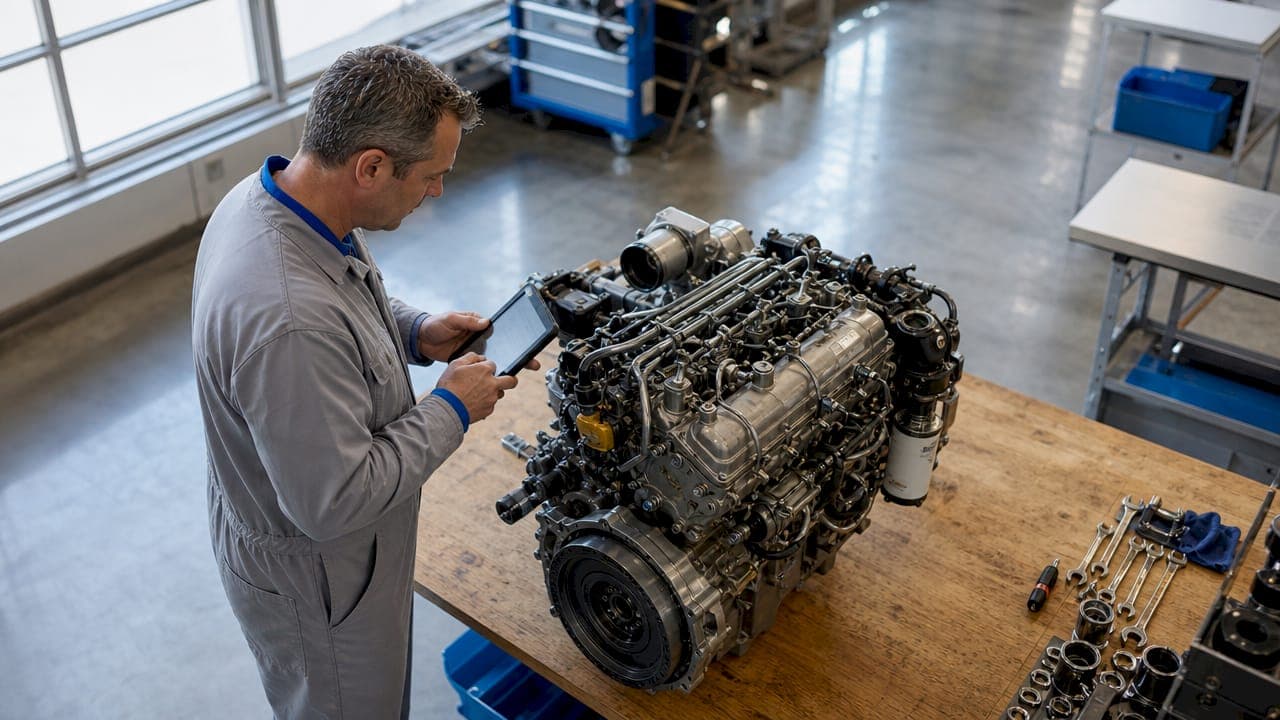
A used diesel engine is a second-hand engine removed directly from another vehicle and sold as-is, after only basic functional testing such as compression and oil pressure checks, with no internal rebuilding or component-level refurbishment. The term "used engine" is the standard industry label distinguishing these units from rebuilt or remanufactured engines, and understanding that distinction determines whether you get the right part at the right price. Whether you are replacing a failed powerplant in a Kenworth T680 or sourcing a spare for a construction fleet, knowing exactly what a used diesel engine is shapes every decision that follows.
What is a used diesel engine, and how is it defined?
A used diesel engine, by industry definition, is pulled from a donor vehicle and resold without disassembly, internal inspection, or replacement of worn components. Technicians typically run a compression test, check oil pressure, and confirm the engine starts before it ships. Nothing inside the block is touched unless a visible external defect demands it.
This matters because buyers sometimes assume "used" implies some level of restoration. It does not. A used diesel engine from a Freightliner Cascadia with 280,000 miles is sold with those 280,000 miles still on every bearing, piston ring, and valve seat. The engine's condition reflects its previous owner's maintenance habits, not a shop's refurbishment work. That reality creates both the appeal and the risk of buying used.
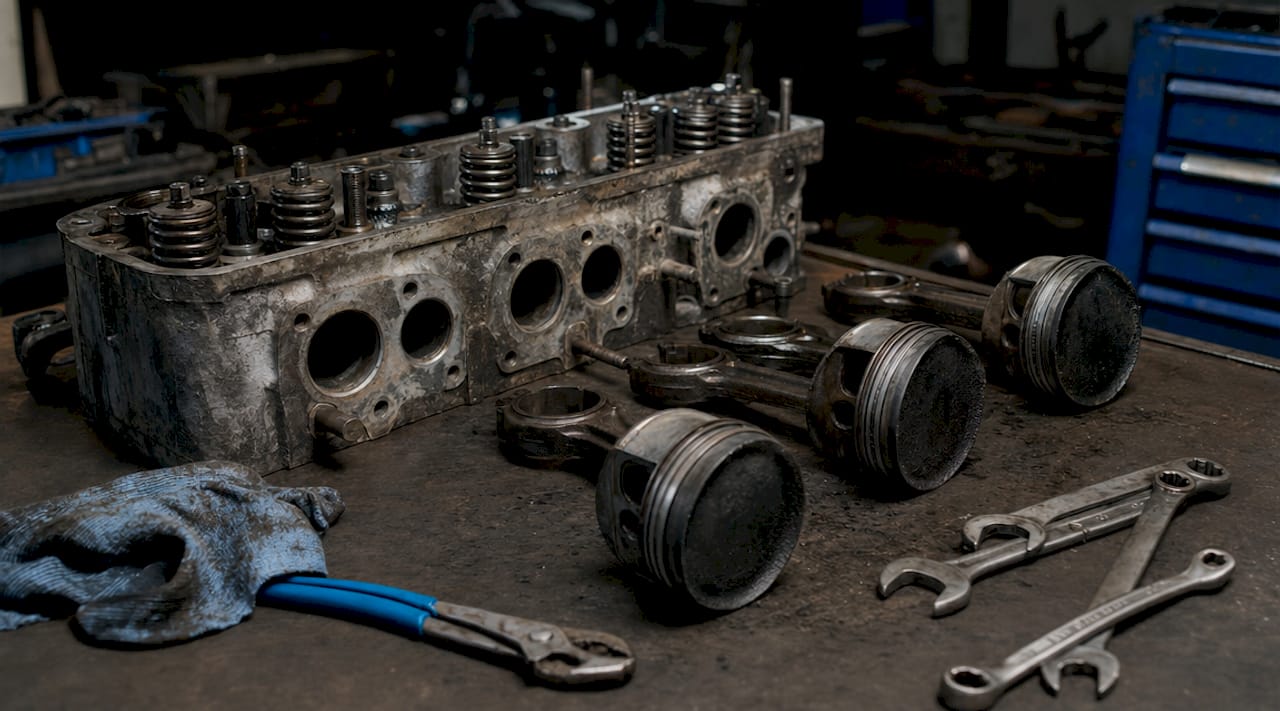
The most common applications for used diesel engines include direct replacement in Class 6 through Class 8 trucks, agricultural equipment, marine vessels, and stationary generators. Fleet managers and independent owner-operators both rely on them when a quick, budget-conscious repair is the priority over long-term performance guarantees.
How do used diesel engines compare to rebuilt and remanufactured?
Buyers frequently confuse three distinct categories: used, rebuilt, and remanufactured. Industry terminology clarity is not a minor detail. Each category carries a different risk profile, price point, and warranty expectation.
Remanufactured engines go through an industrial restoration process. The engine core is fully disassembled, cleaned, inspected, re-machined to original tolerances, and fitted with new critical components before undergoing load testing. Remanufacturing restores used cores to same-as-new condition with documented technical standards and full warranties. A remanufactured Cummins ISX15 or Detroit Diesel DD15 effectively starts its service life over.
Rebuilt engines fall in the middle. A rebuild involves disassembly and replacement of worn parts, but the process and quality standards vary widely by shop. There is no universal certification for rebuilt engines, so quality depends entirely on the rebuilder's skill and parts budget.
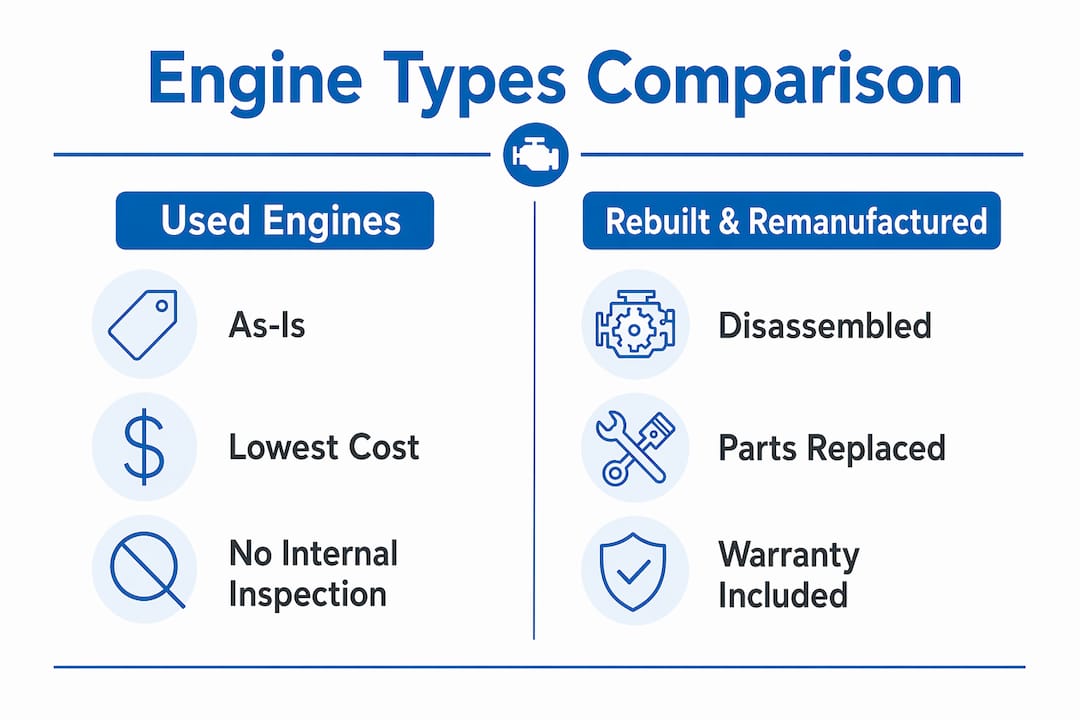
Used engines are sold without disassembly or detailed testing, making their internal condition genuinely uncertain. The table below summarizes the key differences.
| Category | Internal inspection | Typical warranty | Relative cost | Risk level |
|---|---|---|---|---|
| Used | None | 30 to 90 days | Lowest | Highest |
| Rebuilt | Partial | 90 days to 1 year | Moderate | Moderate |
| Remanufactured | Full, documented | 1 to 3 years | Highest | Lowest |
Pro Tip: When comparing options, always ask the supplier whether the warranty covers parts only or parts and labor. A 90-day parts-only warranty on a used engine still leaves you paying shop rates for installation if something fails.
What are the benefits and drawbacks of buying a used diesel engine?
The decision to buy used comes down to matching the engine's risk profile to your actual needs. Here is a clear breakdown of what you gain and what you accept.
Primary advantages:
- Cost savings are the top driver. Used diesel engines typically cost $1,800 to $4,500, compared to $5,500 to $9,000 for remanufactured units and $8,000 to $15,000 for new long blocks. That gap funds a lot of preventive maintenance.
- Faster availability. Used engines often ship same-day or within 48 hours from suppliers with large rotating inventories, while remanufactured cores can take weeks to process.
- Proven design. A used Caterpillar C15 or International DT466 with documented mileage is a known quantity. You are not dealing with a new platform's early production issues.
- Diesel engines with good maintenance regularly exceed 300,000 to 500,000 miles total. A used engine at 150,000 miles may have 150,000 or more miles of useful life remaining, making it a legitimate long-term option when sourced carefully.
Primary drawbacks:
- Unknown service history. Used engines often lack mileage records or documented maintenance, so buyers depend entirely on the supplier's testing standards and honesty.
- Higher repair risk. Used engines carry greater risk of unexpected failures shortly after installation, which can erase the upfront cost savings quickly.
- Limited warranty coverage. Most used engine warranties run 30 to 90 days, offering a narrow window to discover problems.
- Variable wear patterns. Two engines with identical mileage can be in dramatically different condition depending on whether the previous operator ran synthetic oil on schedule or neglected service intervals entirely.
Used engines make the most sense for budget repairs on older equipment, short-term fleet coverage while a primary unit is remanufactured, or situations where the vehicle's remaining value does not justify a premium engine investment.
How much does a used diesel engine cost?
Pricing for used diesel engines follows three main variables: engine displacement, mileage, and brand reputation. Larger displacement engines from premium brands command higher prices even in used condition.
| Engine model | Typical used price range | Common application |
|---|---|---|
| Cummins ISB 6.7L | $1,800 to $3,200 | Medium-duty trucks, buses |
| International DT466 | $2,000 to $3,800 | School buses, medium-duty |
| Detroit Diesel Series 60 | $2,500 to $4,500 | Class 8 long-haul trucks |
| Caterpillar C15 | $3,000 to $4,500 | Heavy-duty Class 8 trucks |
| Cummins ISX15 | $3,200 to $4,500 | Heavy-duty Class 8 trucks |
These figures reflect typical used diesel price ranges in the current market. Prices shift based on regional availability, current scrap metal values, and seasonal demand spikes during harvest or construction seasons.
When you compare used diesel engine prices against remanufactured alternatives, the savings are real but conditional. A $3,500 used Detroit Diesel DD15 looks attractive until you factor in a potential $2,000 injector replacement or head gasket repair within the first 60 days. Buyers who want to save money buying a used diesel engine should treat the purchase price as a starting point, not a final cost. Budget an additional 15 to 20 percent for post-installation diagnostics and minor repairs. You can browse current truck engines for sale to get a live read on what specific models are trading for right now.
How to inspect a used diesel engine before you buy
Inspection is where buyers either protect themselves or expose themselves to costly surprises. A used diesel engine that starts and idles is not necessarily a good engine. Here is a practical inspection sequence.
- Request a compression test report. Every cylinder should read within 10 percent of the manufacturer's specification. A cylinder reading 20 percent below spec signals worn rings or valve issues.
- Demand a leak-down test. Leak-down testing identifies cylinder sealing problems that a compression test alone can miss. Air escaping through the intake indicates valve wear; air in the crankcase indicates ring wear. This test takes 30 minutes and can save you thousands.
- **Inspect the oil. ** Pull the dipstick and look for milky or frothy oil, which signals coolant contamination and a likely head gasket failure. Dark, gritty oil suggests extended drain intervals and accelerated wear.
- Check for external leaks. Examine the block, head, and rear main seal area for oil seepage. Minor seepage is common on high-mileage engines; active dripping is a red flag.
- Verify the ECM data if available. Many modern diesel engines store fault codes and idle hours in the ECM. A supplier who can pull and share this data is demonstrating transparency. One who refuses is not.
- Confirm the engine family matches your application. A Cummins ISX12 and an ISX15 share a family name but differ in displacement, emissions calibration, and mounting points. Verify the CPL number, not just the model name.
Pro Tip: Bring a qualified diesel mechanic to any in-person inspection. A two-hour inspection fee is cheap insurance against a $4,000 mistake. If you are buying remotely, ask the supplier for a video of the cold start and a written compression test report before you commit.
Reviewing the DEF system walkthrough for technicians is also worth your time if the engine you are considering is a 2010 or newer emissions-compliant unit. DEF system condition directly affects whether the engine will pass inspection and run legally in your application.
Key takeaways
A used diesel engine offers the lowest entry cost in the market, but buyers who skip proper inspection and supplier vetting consistently pay more in the long run than those who invest in due diligence upfront.
| Point | Details |
|---|---|
| Used engine definition | Removed from a donor vehicle and sold as-is after basic testing, with no internal rebuilding. |
| Cost advantage | Used diesel engines typically cost $1,800 to $4,500, far below remanufactured or new alternatives. |
| Inspection is non-negotiable | Compression and leak-down tests reveal internal wear that a simple start test will never catch. |
| Supplier integrity matters | Service history is often unavailable, so the supplier's testing standards are your primary quality control. |
| Match engine to use case | Used engines suit budget repairs and short-term needs; remanufactured units are better for long-term fleet reliability. |
What I've learned from years of watching buyers get this wrong
Most buyers who regret a used diesel engine purchase made the same mistake: they optimized for price and ignored process. They found the cheapest Cummins ISX they could locate, skipped the compression test because the engine "ran fine," and then discovered a cracked head or spun bearing within 30 days of installation.
The buyers who consistently get good outcomes do two things differently. First, they treat the supplier relationship as the most important variable in the transaction. A supplier who tests every engine, provides written compression results, and backs the sale with a real warranty is worth $500 more than one who does not. Second, they match the engine choice to the actual job. A used engine with 200,000 documented miles is a perfectly rational choice for a truck that will run regional routes for two more years before retirement. It is a poor choice for a truck going back into full-time long-haul service.
The used engine market rewards buyers who understand what they are actually purchasing. A used diesel engine is not a shortcut. It is a calculated trade-off between upfront cost and residual risk. Make that trade-off with clear eyes, a compression test report in hand, and a supplier who stands behind the part. That combination produces good outcomes far more reliably than price alone ever will.
— Carl
Find tested used diesel engines at Nationwideheavytruckparts
Nationwideheavytruckparts stocks a daily-changing inventory of used heavy truck diesel engines, including Cummins, Detroit Diesel, Caterpillar, and International models, each tested for compression and oil pressure before shipping. Every engine comes backed by a standard warranty, and same-day shipping gets your equipment back in service without the delays that kill productivity.
Whether you need a Cummins diesel engine for a Class 8 replacement or a Detroit Diesel engine for a fleet repair, Nationwideheavytruckparts carries the specific model you need at a price that makes the numbers work. Visit Nationwideheavytruckparts.com to search current inventory by engine family, model, and mileage range.
FAQ
What is the used diesel engine definition in simple terms?
A used diesel engine is a pre-owned engine removed from another vehicle and sold without internal rebuilding, tested only for basic functions like compression and oil pressure before resale.
How long does a used diesel engine last?
Diesel engines regularly reach 300,000 to 500,000 miles with proper maintenance. A used engine at 150,000 miles can realistically deliver another 150,000 or more miles if it passes compression and leak-down testing and receives consistent service.
What are the biggest signs of a good used diesel engine?
Strong, even compression readings across all cylinders, clean oil with no coolant contamination, no active external leaks, and a supplier-provided leak-down test report are the clearest indicators of a sound used diesel engine.
How do I compare used diesel engine prices effectively?
Compare engines of the same displacement, model family, and approximate mileage range across multiple suppliers. Factor in warranty terms and shipping costs, not just the sticker price, since a cheaper engine with no warranty can cost more overall if it fails within 60 days.
Are used diesel engines worth buying for commercial fleets?
Used diesel engines are worth buying for fleet applications when the vehicle's remaining service life is two to three years or less, when a remanufactured unit is unavailable quickly, or when the repair budget does not support a premium option. For long-term fleet assets, remanufactured engines offer better total cost of ownership.