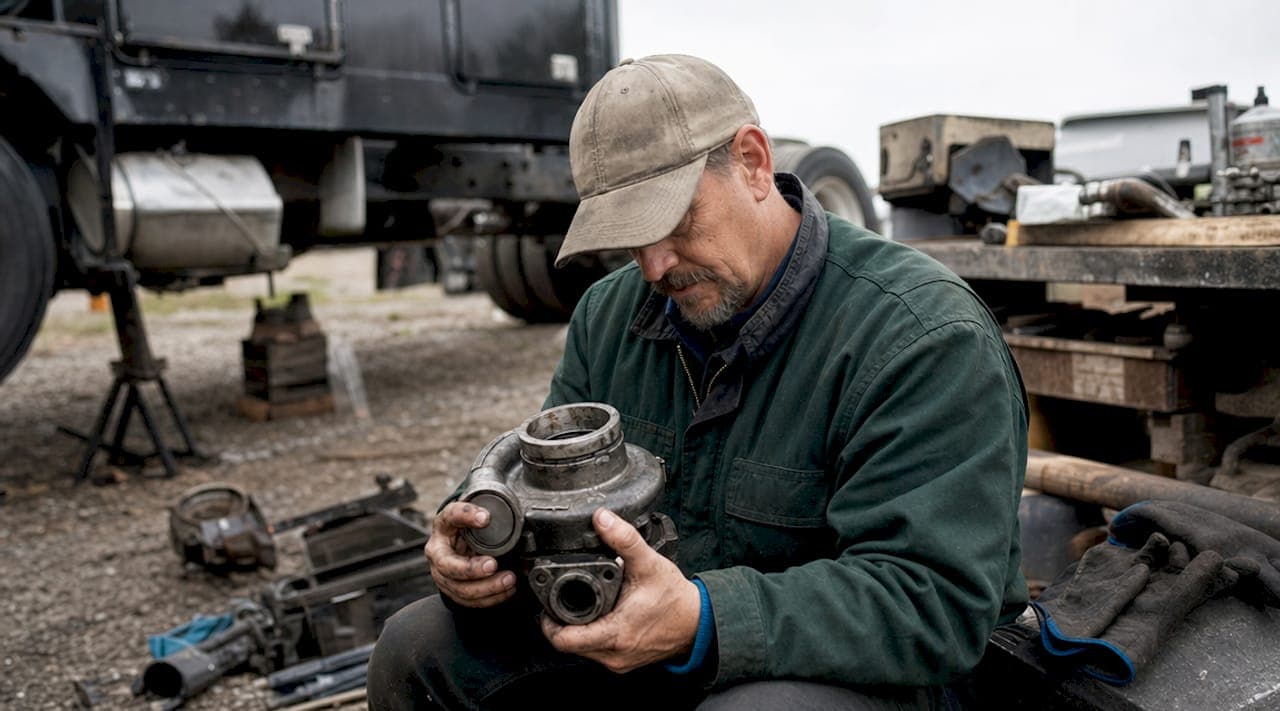
Used truck parts give independent truckers a direct path to cutting repair costs by 30 to 60 percent compared to new OEM components, without sacrificing the reliability needed to stay on the road. That figure comes from 2026 industry data on refurbished and used parts, and it explains why so many owner-operators treat the used parts market as a core business strategy rather than a last resort. Companies like Eco Commercial Solutions and Rusted Nuts Mechanical Services have both documented how risk-managed sourcing of used components keeps total cost of ownership predictable. For independent truckers operating on tight margins, the benefits of used truck parts go well beyond the sticker price. This article breaks down the real reasons why independent truckers choose used parts, how to evaluate quality, and how to buy with confidence.
How do used truck parts compare with new OEM and remanufactured parts?
The three main options in the heavy truck parts market are new OEM parts, certified remanufactured parts, and used or salvage parts. Each carries a different cost, availability profile, and risk level.
New OEM parts from manufacturers like Cummins, Detroit Diesel, CAT, Mack, and Paccar offer the highest predictability. They come with full warranties, known specifications, and manufacturer support. The tradeoff is cost and lead time. Supply chain disruptions have made OEM lead times unpredictable, and the price premium is significant for an independent trucker paying out of pocket.

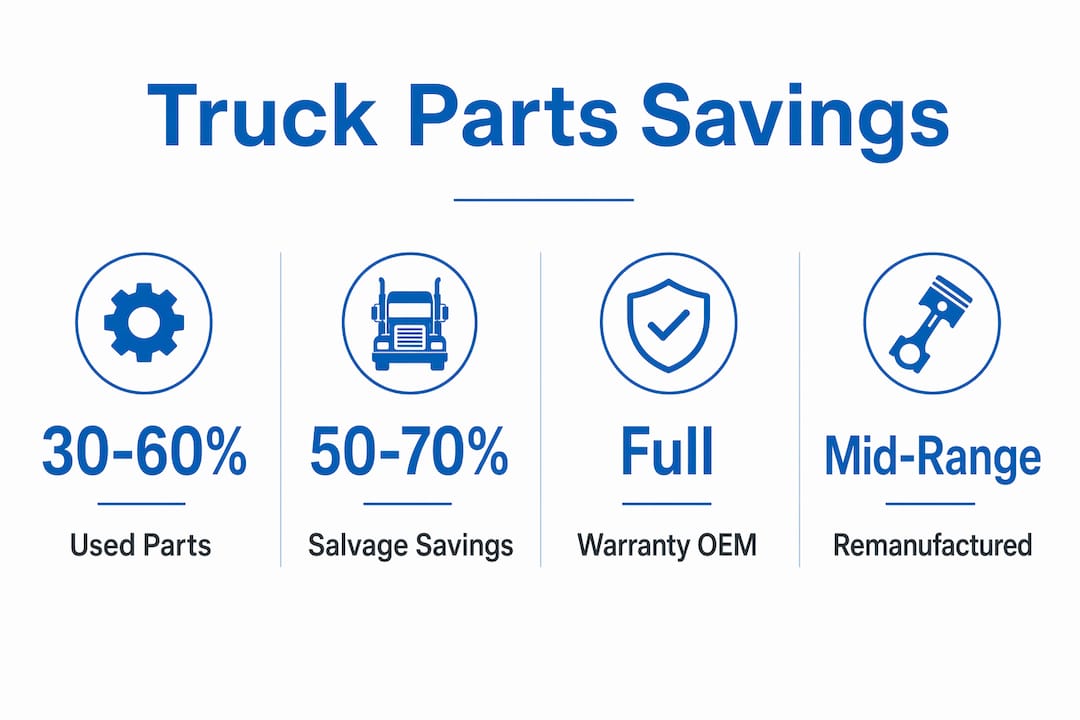
Used or salvage parts sit at the opposite end of the spectrum. Savings of 50 to 70 percent are common on components like turbochargers and drivetrain parts compared to new equivalents. The condition varies widely, which is why sourcing from suppliers who inspect and grade parts matters more than the price tag alone.
Certified remanufactured parts occupy the middle ground. Quality grades like Silver, Gold, and Platinum give buyers a standardized way to evaluate what they are getting, and warranties on remanufactured parts often mirror new OEM coverage. This option appeals to truckers who want cost savings without fully accepting the uncertainty of unknown-history used parts.
The market has already voted. Aftermarket and remanufactured parts hold 46.9% of the heavy-duty truck replacement market as of Q2 2026. That share reflects widespread acceptance of non-OEM parts across the industry, not just among budget-conscious independents.
| Part type | Cost vs. new OEM | Warranty | Best use case |
|---|---|---|---|
| New OEM | Baseline (100%) | Full manufacturer warranty | Safety-critical, emissions-regulated systems |
| Certified remanufactured | 40 to 60% of OEM cost | Graded warranty (Silver/Gold/Platinum) | Engines, transmissions, major drivetrain |
| Used or salvage | 30 to 50% of OEM cost | Varies by supplier | Turbos, body parts, brackets, non-critical components |
What benefits do independent truckers gain from choosing used truck parts?
The financial case for used parts is straightforward, but the operational benefits are just as compelling for an owner-operator managing every repair decision alone.
Lower upfront repair costs directly protect cash flow. An independent trucker replacing a turbocharger on a Peterbilt or Kenworth can spend $2,000 or more on a new OEM unit. A quality used turbo from a verified low-mileage donor truck can bring that number down to $600 to $900. That difference funds fuel, insurance, or the next maintenance interval.
Faster parts availability reduces downtime. A truck sitting in a shop is not generating revenue. Used parts suppliers with large inventories can often ship the same day, while new OEM orders for less common components can take days or weeks. For an independent trucker without a fleet backup vehicle, every day off the road has a direct dollar cost.
Environmental sustainability is a genuine advantage, not just a marketing point. Used parts reduce manufacturing demand and waste by keeping functional components in circulation. This aligns with circular economy principles that are increasingly relevant to freight customers and regulators alike.
Extended part lifespan through smart buying is possible when you source from suppliers who test and inspect inventory. A used engine with 200,000 miles remaining on a 600,000-mile block is not a compromise. It is a calculated purchase that delivers real value.
- Cost savings of 30 to 60 percent on most components versus new OEM pricing
- Same-day or next-day shipping from suppliers with large rotating inventories
- Access to discontinued parts that are no longer available new from the manufacturer
- Reduced environmental footprint through parts reuse and waste reduction
- Ability to repair older trucks economically, extending the working life of paid-off equipment
Pro Tip: When buying used turbos, intercoolers, or fuel system components, ask the supplier for the donor truck's make, model year, and approximate mileage. A part pulled from a 2018 Freightliner with 180,000 miles is a very different purchase than one with unknown history.
How do independent truckers evaluate and mitigate risks when buying used parts?
Part selection is a risk management decision, not just a price comparison. Balancing cost savings with operational safety is the core discipline that separates smart buyers from truckers who end up paying twice.
The first step is categorizing parts by criticality. Not every component carries the same failure risk.
- Safety-critical systems including brakes, steering components, wheel hubs, and suspension parts require OEM or certified remanufactured parts. A failure in any of these systems creates liability and endangers lives. OEM parts are the standard for warranty compliance and emissions-regulated components.
- Major mechanical systems like engines and transmissions are strong candidates for certified remanufactured parts with graded warranties. Used engines from reputable suppliers with documented testing are also viable when the history is verifiable.
- Low-risk components such as body panels, trim pieces, brackets, mirrors, and lighting fixtures are ideal for used purchases. The failure consequence is low, and the savings are immediate.
- Verify donor vehicle history before committing to any used mechanical part. Donor truck mileage and incident history directly predict the condition of the part you are buying. A cosmetically clean part from a high-mileage truck that suffered a cooling system failure is a hidden risk.
- Establish clear return and warranty terms with every supplier before purchase. A supplier unwilling to offer any return policy on a tested part is a red flag. Reputable suppliers stand behind their inventory.
The total cost of a used part includes labor, potential downtime if it fails early, shipping, and the cost of the part itself. The cheapest sticker price is not always the cheapest outcome. Factor in the supplier's testing process and return policy before deciding.
Pro Tip: Build a simple checklist for every used part purchase: part number match confirmed, donor vehicle history documented, supplier return policy in writing, and shipping timeline confirmed. Running this checklist takes five minutes and eliminates most bad purchases.
What practical steps help you buy used parts with confidence?
Buying used truck parts confidently is a repeatable process. Truckers who do it well treat it like any other business procedure, with consistent steps and preferred suppliers.
- Start with the exact part number. Cross-reference the OEM part number against the supplier's inventory before anything else. Fitment errors are the most common and most avoidable mistake in used parts buying.
- Request detailed photos before payment. Ask for images of wear surfaces, connectors, mounting points, and any visible damage. A supplier who cannot provide photos within a few hours is not organized enough to trust with a critical component.
- Ask about inspection and testing procedures. Suppliers like Nationwideheavytruckparts test and inspect parts before listing them. Knowing whether a used engine has been compression-tested or a transmission has been bench-tested changes the risk profile of the purchase entirely.
- Build relationships with two or three preferred suppliers. Repeat customers get faster service, better communication, and sometimes access to parts before they hit the general inventory. This matters most when you need a part quickly to minimize downtime.
- Use cross-reference tools for compatibility. Many suppliers maintain cross-reference databases that match parts across truck brands and model years. A used Cummins engine that fits multiple chassis configurations gives you more sourcing options and better pricing leverage.
The shift toward used and refurbished parts is a strategic move toward cost predictability, reducing dependence on volatile OEM pricing and supply delays. Independent truckers who build a reliable sourcing process gain a genuine competitive advantage over those who default to dealer pricing on every repair.
Key takeaways
Independent truckers who source used parts through verified suppliers with documented testing and clear return policies consistently achieve 30 to 60 percent cost savings without compromising operational reliability.
| Point | Details |
|---|---|
| Cost savings are substantial | Used parts save 30 to 60 percent versus new OEM, with turbos and drivetrain parts saving up to 70 percent. |
| Risk categorization protects you | Reserve OEM or certified remanufactured parts for safety-critical systems; use salvage parts for low-risk components. |
| Donor history is non-negotiable | Always verify mileage and incident history before buying any used mechanical component. |
| Total cost beats sticker price | Factor in labor, downtime risk, and return policy before choosing the cheapest option. |
| Supplier relationships pay off | Repeat business with tested-inventory suppliers reduces downtime and improves parts access. |
What I've learned about used parts after years in the trucking supply chain
The conventional wisdom used to be that used parts were a gamble you took when you had no other choice. That framing is wrong, and it costs independent truckers real money every year.
Used parts procurement is a controlled business process when you treat it that way. The truckers I have seen succeed with it are not cutting corners. They are applying the same discipline to parts sourcing that they apply to route planning or fuel management. They know which components are safe to buy used, they have two or three suppliers they trust, and they run a consistent evaluation process on every purchase.
The risk is real but manageable. A used engine from a supplier who compression-tests every unit and backs it with a warranty is not a gamble. It is a calculated purchase with a known risk profile. The trucker who buys a used CAT C15 from a verified supplier with 200,000 miles of documented remaining life is making a smarter financial decision than the one who finances a new OEM unit at dealer markup.
What I would tell any independent trucker starting out with used parts: build your checklist, find one supplier who tests their inventory, and start with low-risk components to build confidence. The savings compound quickly, and the process becomes second nature. The warranty and compliance considerations are worth understanding before you buy, but they are not a reason to avoid the used parts market entirely.
— Carl
How Nationwideheavytruckparts helps independent truckers save on repairs
Independent truckers looking for quality used and remanufactured parts without the guesswork have a direct resource in Nationwideheavytruckparts. Every part in their inventory goes through inspection and testing before it ships, and each comes backed by a standard warranty so you know exactly what you are buying.
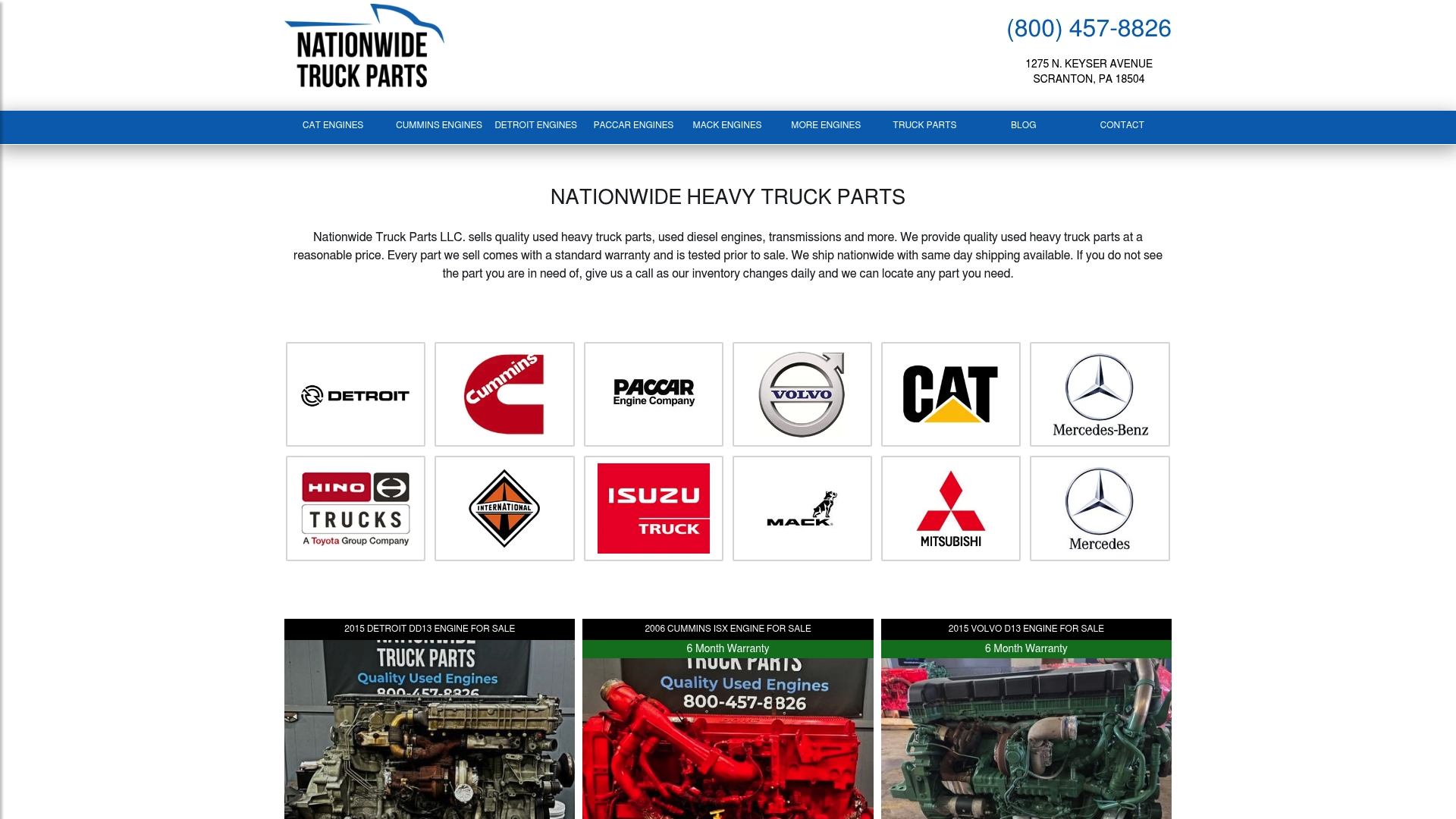
Their inventory covers the engine brands independent truckers rely on most, including CAT, Detroit Diesel, Cummins, Mack, and Paccar. Whether you need a used truck engine for a major rebuild or a replacement transmission to get back on the road fast, Nationwideheavytruckparts ships same-day and keeps inventory rotating daily. For owner-operators who cannot afford extended downtime, that combination of tested parts, warranty coverage, and fast shipping is exactly what the used parts market should look like.
FAQ
How much can independent truckers save with used parts?
Used truck parts save 30 to 60 percent compared to new OEM parts on most components, with savings reaching 50 to 70 percent on items like turbochargers and drivetrain parts. The actual savings depend on the part, the supplier, and the condition grade.
Are used truck parts reliable enough for daily commercial use?
Used parts from suppliers who inspect, test, and grade their inventory are reliable for most non-safety-critical applications. Certified remanufactured parts with Silver, Gold, or Platinum grading carry warranties that mirror new OEM coverage and are suitable for major systems like engines and transmissions.
Which truck parts should never be bought used?
Safety-critical components including brakes, steering parts, and emissions-regulated systems should use OEM or certified remanufactured parts. These components carry liability and compliance requirements that used salvage parts cannot reliably satisfy.
How do I find reputable used truck parts suppliers?
Look for suppliers who provide documented part history, inspection records, and a written return or warranty policy. Nationwideheavytruckparts, for example, tests every part before listing it and offers same-day shipping, which are both indicators of a supplier who stands behind their inventory.
What is the difference between used and remanufactured truck parts?
Used parts are pulled from donor vehicles and sold after inspection, while remanufactured parts are fully disassembled, cleaned, rebuilt to specification, and tested to meet or exceed OEM standards. Remanufactured parts cost more than used but less than new OEM, and they carry standardized quality grades and warranties.