
Used engines cost less than new because you are paying for an existing powerplant core rather than absorbing the full expense of new manufacturing, raw materials, and machining. A brand-new diesel engine for a heavy-duty truck requires casting, forging, and precision machining from scratch, costs that disappear entirely when you buy a used unit pulled from a salvage yard or fleet disposal. Remanufactured engines, a related category, typically run 25% to 50% cheaper than new, while straight used engines land even lower. For truck owners and fleet managers facing a blown Cummins ISX or a worn Detroit DD15, understanding why used engines cost less than new is the first step toward making a smart, budget-conscious replacement decision in 2026.
What key factors cause used engines to cost less than new
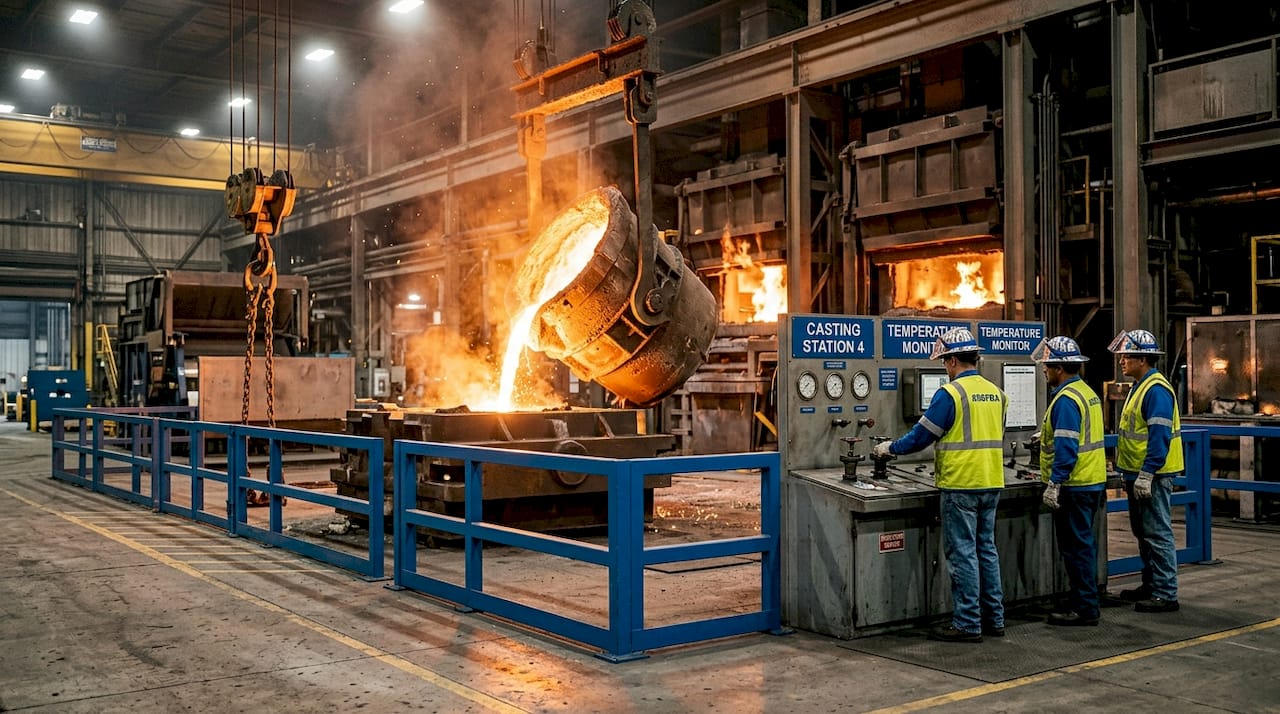
The single biggest driver of the price gap is avoided manufacturing cost. A new diesel engine requires sourcing raw steel and aluminum, casting engine blocks, machining cylinder bores to tight tolerances, and assembling hundreds of precision components. Every one of those steps carries labor, tooling, and energy costs that get baked into the sticker price. When you buy a used engine, none of that applies. You are purchasing a core that already exists, already has its materials shaped, and already has its internal geometry established.
Materials scientists and engineers use the term "embedded energy" to describe the energy already spent transforming raw ore into a finished engine block. Remanufactured parts retain this embedded energy and avoid new casting and machining entirely, which is why the savings are so consistent across engine families. A used engine captures the same benefit without the additional labor of a full remanufacturing process, pushing the price even lower.
Supply and demand in the salvage market also plays a direct role. When a fleet retires a truck with a mechanically sound engine, that unit enters the secondary market at a fraction of its original cost. Salvage yards and parts brokers price used engines based on what the market will bear, not on what it cost to manufacture them. This means a Paccar MX-13 or a CAT C15 that originally cost $20,000 or more new can surface in the used market for a fraction of that figure, simply because the seller's cost basis is acquisition and storage rather than production.
Core charge programs add another layer to the economics. Without reliable core supply, remanufacturing becomes unsustainable and prices rise. Refundable core deposits incentivize buyers to return worn units, keeping the supply of rebuildable cores flowing and holding remanufactured prices below new. Used engines benefit from this same ecosystem because salvage cores feed both the straight used market and the reman supply chain simultaneously.
Pro Tip: When comparing prices, always ask the seller whether a core charge applies. Some used engine listings include a refundable deposit that can add $300 to $1,500 to your upfront cost, even though you get it back when you return the old unit.
How do used, remanufactured, and new engines compare in price and quality?
Price bands across engine categories tell a clear story. Used engine upfront prices in the 2026 aftermarket run roughly $800 to $2,500 for four-cylinder engines, $1,500 to $4,000 for V6 units, and $2,500 to $7,000 or more for V8 and large diesel configurations. Remanufactured V8 engines typically run $5,000 to $9,000, while new equivalents land between $10,000 and $18,000. That spread is not trivial for a fleet manager running tight margins.
The table below summarizes the three categories across the dimensions that matter most to a budget-conscious buyer:
| Category | Typical price range | Warranty | Reliability profile |
|---|---|---|---|
| Used (take-out) | $800–$7,000+ | Limited or none | Variable, history-dependent |
| Remanufactured | $5,000–$9,000 | 1–3 years typical | Controlled, predictable |
| New (OEM/crate) | $10,000–$18,000+ | Full OEM warranty | Highest, factory spec |
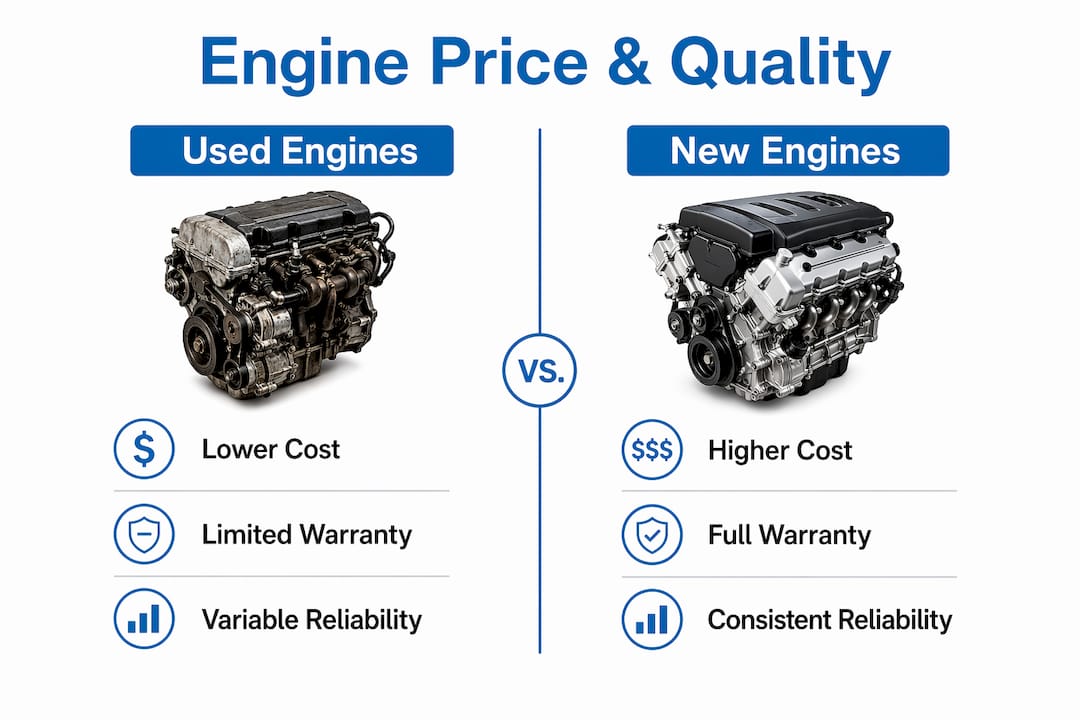
Warranty coverage is where the categories diverge most sharply in practical terms. A new OEM engine from Cummins, Detroit Diesel, or Volvo carries a full manufacturer warranty that covers parts and labor for a defined period. Remanufactured engines from reputable suppliers typically carry one to three years of coverage. Used take-out engines often come with a short-term seller warranty of 30 to 90 days, or no warranty at all. That gap matters when you are running a truck 150,000 miles a year.
Reliability is not a fixed property of used engines as a category. A low-mileage used Hino diesel pulled from a wrecked truck with a clean service record can outperform a poorly remanufactured unit from a cut-rate shop. The variable is documentation and testing, not the category label itself. Remanufactured parts offer better quality predictability than simple used take-outs because they go through controlled rebuilding processes with defined tolerances. Used engines can match that reliability, but only when the seller provides compression test results, oil analysis, and a verifiable mileage history.
Pro Tip: For high-mileage trucks where downtime is expensive, a remanufactured engine often provides a better risk-cost balance than a cheap used unit. The price premium over used is real, but so is the peace of mind from a multi-year warranty.
What hidden costs affect the total economics of a used engine purchase?
The sticker price of a used engine is only one number in a larger equation. Downtime is the cost that most buyers underestimate. Including downtime can reduce the rebuild-versus-replace cost differential from roughly $20,000 to as little as $11,000, depending on how many revenue-generating miles the truck loses while sitting in the shop. For an owner-operator running a single truck, every day off the road is lost income.
Several hidden cost factors deserve attention before you commit to a used engine purchase:
- Diagnostic time after installation. A used engine without documentation may require additional troubleshooting after install. Sensors, injectors, or turbochargers that were marginal in the donor vehicle may fail quickly in your application, adding labor hours you did not budget for.
- Compatibility and emissions compliance. Older used diesel engines may not meet current emissions standards for your operating region. Retrofitting or recertifying an engine adds cost and complexity that can erase the upfront savings.
- Labor rates for heavy-duty diesel. Diesel engine installation in a Class 6 through Class 8 truck typically runs 10 to 20 hours of shop time. At $120 to $180 per hour at a commercial diesel shop, labor alone can add $1,200 to $3,600 to your total cost regardless of which engine category you choose.
- Used engines without documentation risk higher troubleshooting and downtime costs after installation, which can offset the low upfront price entirely.
High-utilization trucks face a compounded version of this problem. In trucks with 150,000-plus miles per year usage, downtime cost reduces the economic gap between used and new and can favor a ready-to-install remanufactured or new unit. A $4,000 used engine that takes three weeks to source, install, and debug may cost more in total than a $9,000 remanufactured engine that ships in two days and drops in cleanly.
The financially sensible choice depends on your truck's utilization rate, your access to a skilled diesel technician, and the documentation quality of the used engine you are considering. For a secondary truck or a low-mileage application, a well-sourced used engine is a strong value. For a primary revenue unit running hard miles, the calculus shifts toward remanufactured or new.
What should budget-conscious buyers consider before purchasing a used diesel engine?
Buying a used diesel engine for a heavy-duty truck is not a single decision. It is a process with several checkpoints that determine whether you get a bargain or a liability. Follow these steps to protect your investment:
- Verify mileage and service history. Request documentation from the seller. A used Cummins ISX or Detroit DD13 with 200,000 miles and a clean service record is a different proposition than one with 500,000 miles and no paperwork.
- Demand compression and leak-down test results. Any reputable seller of used diesel engines should be able to provide compression test data. Low compression on one or more cylinders signals internal wear that will shorten the engine's life in your truck.
- Request oil analysis if available. Oil analysis from the donor vehicle's last service interval reveals bearing wear, coolant contamination, and fuel dilution. This single document can tell you more about an engine's internal condition than a visual inspection.
- Understand the warranty terms in writing. A 30-day warranty and a 90-day warranty are not the same thing. Get the coverage terms in writing before you pay, and confirm what the seller will do if the engine fails after installation.
- Factor in 2026 market conditions. Used engine prices are rising in 2026 due to increased demand for older vehicle repairs, limited salvage inventory, and higher shipping costs. Waiting for prices to drop is not a reliable strategy in the current market.
Pro Tip: Ask your diesel technician to review the engine's test documentation before you buy, not after. A 30-minute review of compression data and oil analysis by someone who knows what to look for can save you thousands in post-install repairs.
Key takeaways
Used engines cost less than new because buyers avoid manufacturing expenses entirely, purchasing a core that retains embedded energy and materials at a fraction of original production cost.
| Point | Details |
|---|---|
| Core economics drive savings | Used engines skip casting, machining, and assembly costs, cutting prices 30% to 65% below new. |
| Remanufactured is the middle ground | Reman engines offer controlled quality and multi-year warranties at 50% to 70% of new engine cost. |
| Downtime shrinks the price gap | A $4,000 used engine with three weeks of downtime can cost more total than a $9,000 reman unit. |
| Documentation determines reliability | Compression tests and oil analysis separate a bargain used engine from a future repair bill. |
| 2026 prices are trending up | Tight salvage inventory and rising demand mean buying sooner rather than later protects your budget. |
The real cost of "cheap" is always in the details
I have watched truck owners make the same mistake repeatedly. They see a $3,500 used Volvo D13 and compare it directly to a $9,000 remanufactured unit, decide the math is obvious, and buy the used engine. Three weeks later, they are back in the shop chasing an injector issue that the donor vehicle's previous owner knew about and never disclosed. The total bill ends up north of $6,000, and the truck was off the road for a month.
The upfront price of a used engine is real, and the savings are real. But the number that actually determines whether you made a smart decision is the total cost over the first 12 months of operation, including labor, diagnostics, and lost revenue from downtime. For a secondary truck or a low-utilization application, a well-documented used engine from a supplier who tests and inspects their inventory is genuinely the best financial move. For a primary revenue unit, I would push hard toward a remanufactured engine with a documented warranty, even at a higher sticker price.
The suppliers who deserve your business are the ones who can hand you a compression test report and a mileage history before you ask for it. Transparency at the point of sale is the single best predictor of what your experience will look like six months after installation. If a seller cannot tell you where the engine came from and what condition it was in when it left the donor vehicle, that silence is the most expensive thing about the deal.
— Carl
Find tested used diesel engines at Nationwideheavytruckparts
Nationwideheavytruckparts stocks a daily-changing inventory of used, remanufactured, and new heavy-duty diesel engines, covering popular platforms including Cummins, Detroit, Paccar, CAT, Volvo, Mack, Hino, and Isuzu. Every engine goes through inspection and testing before it ships, and each unit comes backed by a standard warranty so you know exactly what you are getting before the engine hits your shop floor. Same-day shipping means your truck spends less time on a lift and more time generating revenue. Browse the full inventory of truck engines for sale or visit Nationwideheavytruckparts directly to search by make, model, and engine family.
FAQ
Why are used engines so much cheaper than new ones?
Used engines skip the manufacturing costs of casting, machining, and assembling new components. Buyers pay for an existing core rather than the full production expense, which cuts prices 30% to 65% below new engine cost.
Are used diesel engines reliable for heavy-duty trucks?
Reliability depends on documentation and testing, not the category label. A used diesel engine with verified mileage, compression test results, and a clean oil analysis can deliver strong performance. An undocumented unit carries significantly higher risk.
How much does a used diesel engine cost in 2026?
Used engine prices in 2026 range from roughly $800 to $2,500 for smaller four-cylinder engines and $2,500 to $7,000 or more for large V8 and heavy-duty diesel configurations. Prices are trending upward due to tight salvage inventory.
What is the difference between a used engine and a remanufactured engine?
A used engine is a take-out unit sold as-is from a donor vehicle. A remanufactured engine is rebuilt to controlled tolerances using a qualifying core, typically carrying a one to three year warranty and priced between used and new.
When does buying a used engine make the most financial sense?
A used engine makes the most sense for secondary or low-utilization trucks where downtime costs are manageable and the buyer can verify the engine's condition through documentation and testing before purchase.