
Used engines are a proven method for extending the operational life of fleet vehicles by replacing worn powerplants at a fraction of new-engine cost. Fleet managers who understand how used engines extend fleet life gain a direct advantage in controlling total cost of ownership, reducing downtime, and keeping trucks earning revenue longer. The industry recognizes three distinct engine replacement categories: used, rebuilt, and remanufactured. Each carries different cost profiles, warranty coverage, and service life expectations. Nationwide Truck Parts supplies tested, warrantied used diesel engines with same-day shipping, making engine swaps faster and more predictable for fleets of any size.
How do used engines extend fleet life?
Used engines extend fleet life by restoring a truck's primary power source without requiring a full vehicle replacement. When a diesel engine fails or degrades beyond economical repair, the chassis, cab, suspension, and drivetrain often remain structurally sound. Replacing only the engine preserves that remaining asset value. This is the core logic behind fleet life optimization strategies: keep the truck working as long as the frame and cab justify the investment.
The three engine categories fleet managers work with are used, rebuilt, and remanufactured. Each serves a different need.
| Engine Type | Typical Cost (Parts) | Service Life | Warranty |
|---|---|---|---|
| Used (pull-out) | $10,000–$20,000 | 200,000–400,000 miles | Limited |
| Rebuilt (in-frame) | Variable | Depends on block condition | Limited |
| Remanufactured | Higher upfront | Factory-spec life | Nationwide coverage |
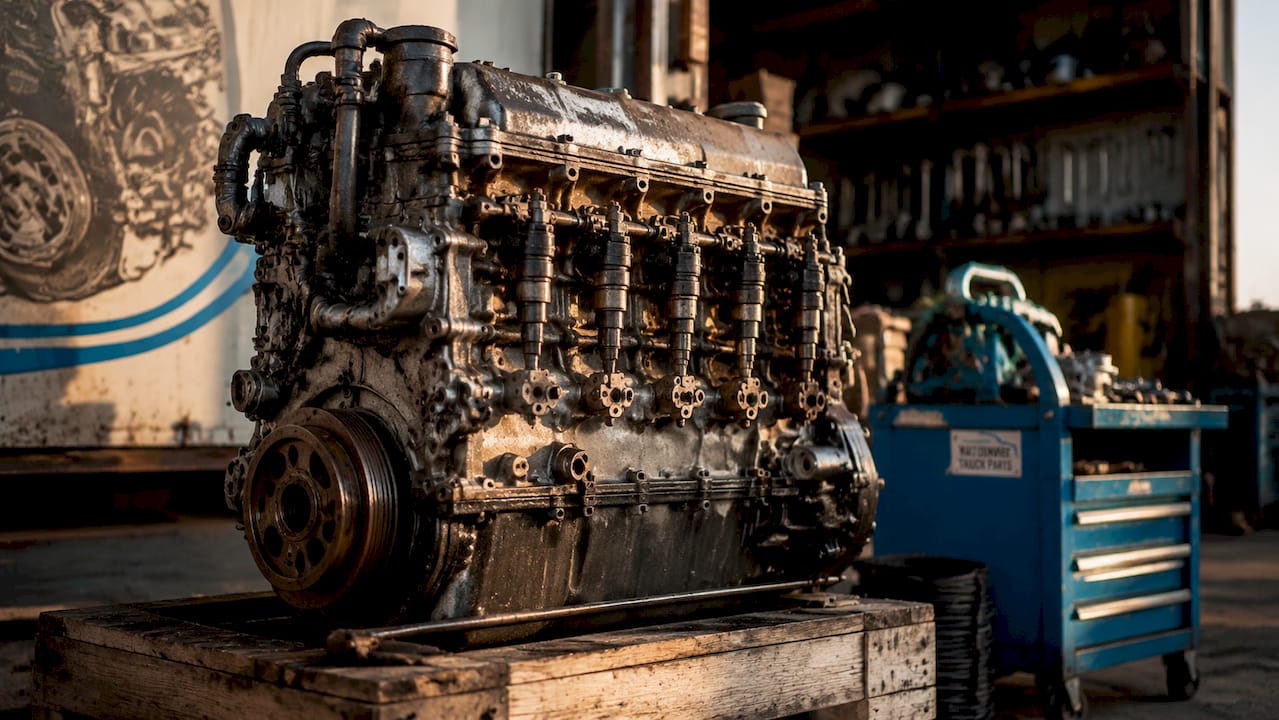
Used engines are pull-out units from low-mileage or salvage trucks. They cost less upfront and install quickly. Used engine swaps generally cost $10,000–$20,000 in parts plus $4,000–$7,000 in labor, with downtime running 3–7 days. That service life of 200,000–400,000 miles makes them a strong fit for trucks with several good years left on the chassis.
Remanufactured engines go through a full industrial restoration to original factory specifications. They carry nationwide warranties and deliver more predictable performance over time. Rebuilt engines involve in-frame work on the existing block, which costs less upfront but carries more uncertainty. After approximately three major in-frame rebuilds, the engine block may become too compromised for further work, making a full replacement the only viable path.
Pro Tip: Always request documented mileage and pull records for any used engine. A unit from a fleet-maintained truck with consistent oil change history is worth more than a low-price engine with no service records.
How do used engines reduce downtime and operating costs?
Downtime is the hidden cost that makes cheap repairs expensive. Industry-average downtime costs run $760 per hour, which means a truck sitting for 10 extra days costs far more than the price difference between a used engine and a rebuild.
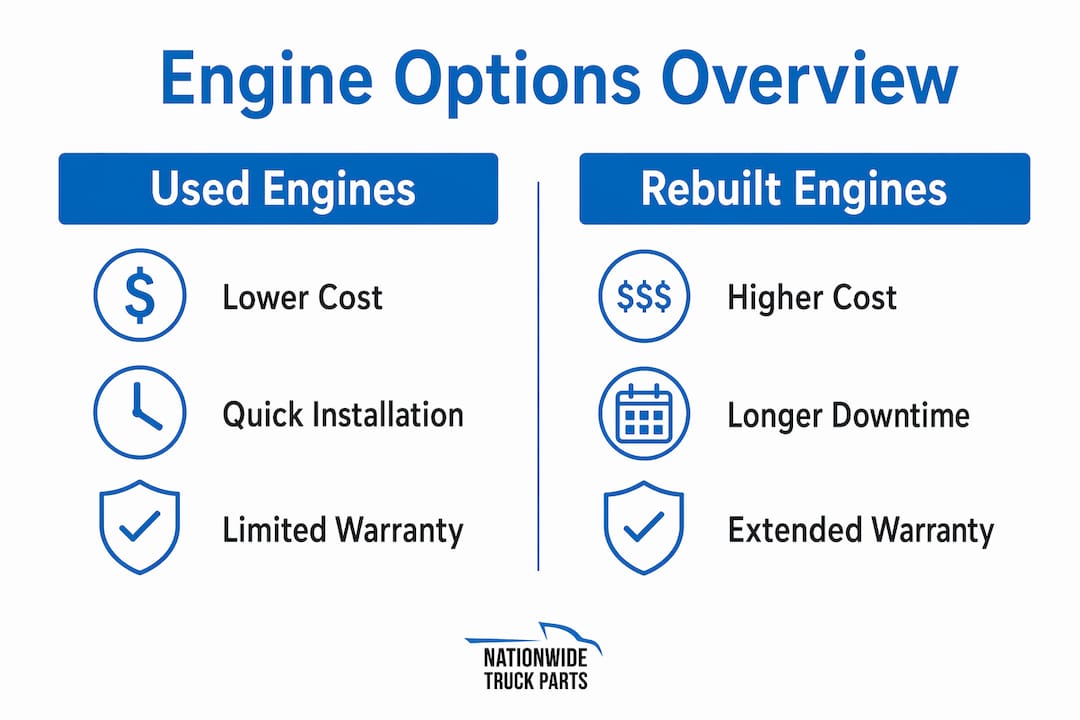
Replacing an engine with a used or remanufactured unit typically takes 3–7 days. A full rebuild stretches to 7–14 days. That gap of up to a week at $760 per hour adds up fast. For a fleet running tight delivery schedules, the faster turnaround from a used engine swap is often the deciding factor.
The cost comparison breaks down clearly across three scenarios:
- Used engine swap: $14,000–$27,000 total (parts plus labor), 3–7 days downtime
- In-frame rebuild: Lower parts cost, but 7–14 days downtime and unpredictable long-term maintenance
- New truck purchase: Highest capital outlay, longest lead time, and depreciation from day one
Lower upfront rebuild costs are frequently offset by unpredictable long-term maintenance and extended downtime. Remanufactured engines offer a steadier total cost of ownership because their factory-spec performance reduces the chance of repeat failures.
Fleet managers should also track the 15–18% threshold. When maintenance costs exceed 15–18% of a new vehicle's replacement cost, the truck signals it needs either a major overhaul or retirement. A used engine swap that resets the powertrain can pull a truck back below that threshold and extend its productive years.
Pro Tip: Pre-select your engine supplier before a failure happens. Pre-selecting suppliers and staging inventory of commonly replaced engines cuts emergency downtime and eliminates shipping delays when you can least afford them.
What maintenance practices maximize lifespan after installing a used engine?
Installing a used engine is only half the job. What happens in the first few thousand miles determines how long that engine lasts.
- Follow the break-in protocol. Run moderate loads and vary the RPM range during the first 500 miles. Avoid extended idling and heavy pulls until the engine seats properly. This step is skipped more often than any other, and it costs years of engine life.
- Change the oil early and often. Proper post-installation maintenance, including oil changes every 5,000 miles, can add up to 20% more engine life. The first oil change after a used engine install should happen at 500–1,000 miles to flush break-in debris.
- Reduce unnecessary idling. Extended idle burns fuel, deposits carbon, and wears rings without moving the truck. Idling reduction is one of the highest-return habits a driver can adopt.
- Inspect fluids and seals at every PM interval. A used engine may have gaskets or seals that are near the end of their service life. Catching a small coolant or oil leak early costs $200. Ignoring it costs an engine.
- Log every service event. Consistent records help you spot patterns, plan ahead, and prove maintenance history if you ever sell or trade the truck.
Scheduling engine replacements during off-peak seasons and coordinating logistics in advance also reduces disruption. Planned downtime is always cheaper than emergency downtime.
Do used engines support sustainability and corporate responsibility goals?
Remanufactured engines are one of the most effective tools a fleet has for reducing its environmental footprint without sacrificing uptime. The numbers are significant.
Modern remanufacturing salvages about 60% of an engine's weight and reduces CO2 emissions by about 56% compared to producing a new engine. That is not a marginal improvement. It represents a fundamental shift in how raw materials flow through the supply chain.
The environmental case for used and remanufactured engines rests on three pillars:
- Raw material conservation: Reusing engine blocks, crankshafts, and heads reduces mining and smelting demand for steel and aluminum.
- Energy reduction: Manufacturing a new engine from raw materials consumes far more energy than restoring an existing one.
- Waste diversion: Engines that would otherwise go to scrap are returned to productive service, extending the circular economy of heavy truck components.
"Sustainability goals increasingly push fleets toward remanufactured engines to reduce raw material use without sacrificing uptime. The remanufacturing process restores components to original specifications with full warranty coverage, making it both an environmental and operational win."
Fleet sustainability reporting now factors in scope 3 emissions, which include the manufacturing footprint of purchased goods. Choosing a remanufactured engine over a new one directly reduces that figure. For fleets with corporate sustainability commitments, this is a measurable, documentable improvement. You can read more about remanufactured engine examples in fleet applications to see how other operators have made this work.
What factors should drive the decision to use a used engine?
The decision to install a used engine instead of rebuilding or retiring a truck depends on three variables: chassis condition, cost metrics, and remaining asset life.
| Decision Factor | Use a Used Engine | Consider Retiring the Truck |
|---|---|---|
| Chassis condition | Frame and cab structurally sound | Severe corrosion or frame damage |
| Maintenance cost trend | Below 15–18% of replacement value | Exceeding 15–18% threshold consistently |
| Remaining revenue years | 3+ years of productive use projected | Near end of useful lifecycle |
| Engine block condition | Block not compromised by prior rebuilds | Block worn beyond further restoration |
Fleet strategies emphasizing asset lifecycle value recommend used engines when the chassis and cab remain structurally sound. Replacing the engine alone adds no value if the frame is severely corroded or the cab needs major structural work.
Key signals that a used engine swap makes financial sense:
- The truck has a strong chassis with low frame mileage relative to the engine
- Maintenance costs have spiked due to engine-specific failures, not systemic vehicle decline
- The truck's route and payload requirements match what a used engine can reliably handle
- Total Cost of Ownership calculations show the swap pays back within 18–24 months of continued operation
Asset lifecycle value should drive engine replacement decisions, with attention to chassis condition and the projected revenue years remaining. A truck with three good years left on the frame and a failed engine is a strong candidate for a used engine swap. A truck with a failing frame and a tired engine is a retirement candidate, not a repair candidate.
Key takeaways
Used engines extend fleet life most effectively when the chassis is sound, costs are tracked against replacement thresholds, and post-installation maintenance follows a disciplined schedule.
| Point | Details |
|---|---|
| Used engine cost range | Parts run $10,000–$20,000 plus $4,000–$7,000 labor with 3–7 days downtime. |
| Downtime cost matters | At $760 per hour, faster engine swaps often outweigh the lower cost of rebuilds. |
| Maintenance adds life | Oil changes every 5,000 miles and proper break-in can add up to 20% more engine life. |
| Sustainability benefit | Remanufacturing cuts CO2 emissions by about 56% compared to producing a new engine. |
| Retirement threshold | Maintenance costs above 15–18% of replacement value signal the need for major action. |
What I've learned from watching fleets get this wrong
The fleets that struggle with used engines almost always make the same mistake: they treat the engine swap as a one-time fix instead of the start of a new maintenance cycle. They install the engine, skip the early oil change, run the truck hard in the first week, and then wonder why the engine doesn't last. The break-in period is real. Ignoring it is expensive.
The other mistake I see constantly is buying on price alone. A used engine at $8,000 with no service history is not a deal. It is a gamble. The fleets that consistently get 300,000+ miles out of used engines are the ones that vet their suppliers, demand pull records, and treat the engine's history as part of the purchase decision.
Supplier relationships matter more than most fleet managers realize. When a truck goes down unexpectedly, you do not have time to research vendors. The fleets that recover fastest are the ones that already have a trusted source with inventory staged and ready to ship. That preparation is not luck. It is planning.
The sustainability angle is also underused. If your fleet has any kind of ESG reporting requirement, remanufactured engines are one of the easiest wins you can document. A 56% reduction in CO2 compared to a new engine is a number you can put in a report. Most fleets leave that on the table because they do not connect the procurement decision to the sustainability team.
— John
Reliable used engines for your fleet, ready to ship
Fleet managers who need a dependable engine source without the wait will find Nationwide Truck Parts carries a daily-changing inventory of tested, warrantied used diesel engines ready for same-day shipping.
Popular options include the 2015 Paccar MX13 Engine, the 2013 Mack MP8 445 Engine Assembly, and the 2012 Detroit DD15 Engine Assembly. Each unit goes through inspection before it ships, and standard warranty coverage comes with every purchase. Nationwide Truck Parts also carries transmissions and drivetrain components, so you can source multiple parts from one supplier and reduce coordination time. Browse the full selection of truck engines for sale and get your fleet back on the road faster.
FAQ
How long does a used engine last in a fleet truck?
A used engine typically delivers 200,000–400,000 miles of service life depending on its condition and maintenance history. Proper break-in and consistent oil changes every 5,000 miles extend that range significantly.
Is a used engine better than rebuilding the existing one?
A used engine swap takes 3–7 days versus 7–14 days for a rebuild, and at $760 per hour in downtime costs, the faster turnaround often makes the used engine the better financial choice. Rebuilds also carry more long-term uncertainty, especially after multiple prior in-frame repairs.
When should a fleet retire a truck instead of replacing the engine?
Retire the truck when maintenance costs consistently exceed 15–18% of the vehicle's replacement value or when the chassis shows severe structural damage. A used engine swap only adds value when the frame and cab remain sound.
What is the difference between a used engine and a remanufactured engine?
A used engine is a pull-out unit from another truck, sold as-is with limited warranty coverage. A remanufactured engine is restored to original factory specifications through an industrial process and carries a nationwide warranty, making it more predictable over time.
Do remanufactured engines help meet sustainability goals?
Remanufacturing salvages about 60% of an engine's weight and cuts CO2 emissions by about 56% compared to producing a new engine. Fleets with ESG or sustainability reporting requirements can document this reduction directly.