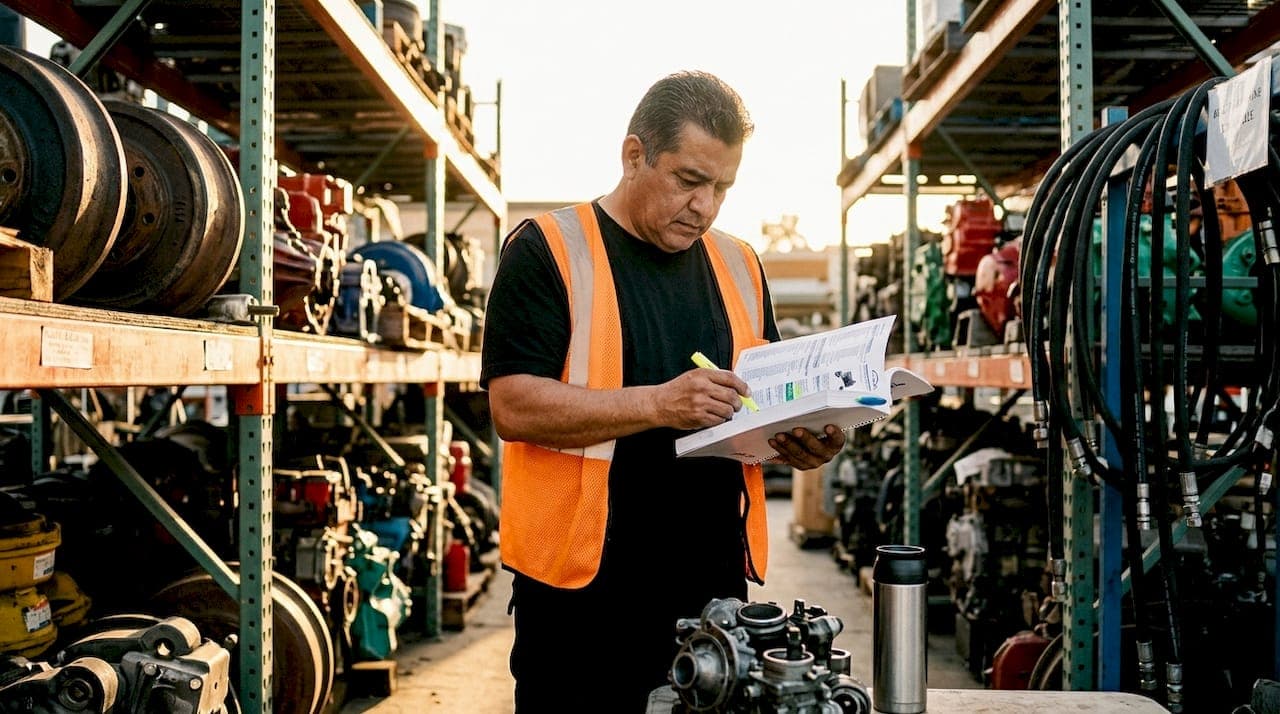
Standardized truck parts are defined as uniform components selected across a fleet to ensure consistent fitment, repair procedures, and inventory management. Fleet managers who adopt parts standardization, the recognized industry term for this practice, gain a direct advantage in controlling total cost of ownership and reducing unplanned downtime. Reducing equipment variability is the single most effective way to control those costs across a commercial fleet. Nationwide Truck Parts works with fleet managers daily who see this reality play out in their maintenance bays and on their balance sheets.
Why standardized truck parts matter for fleet efficiency
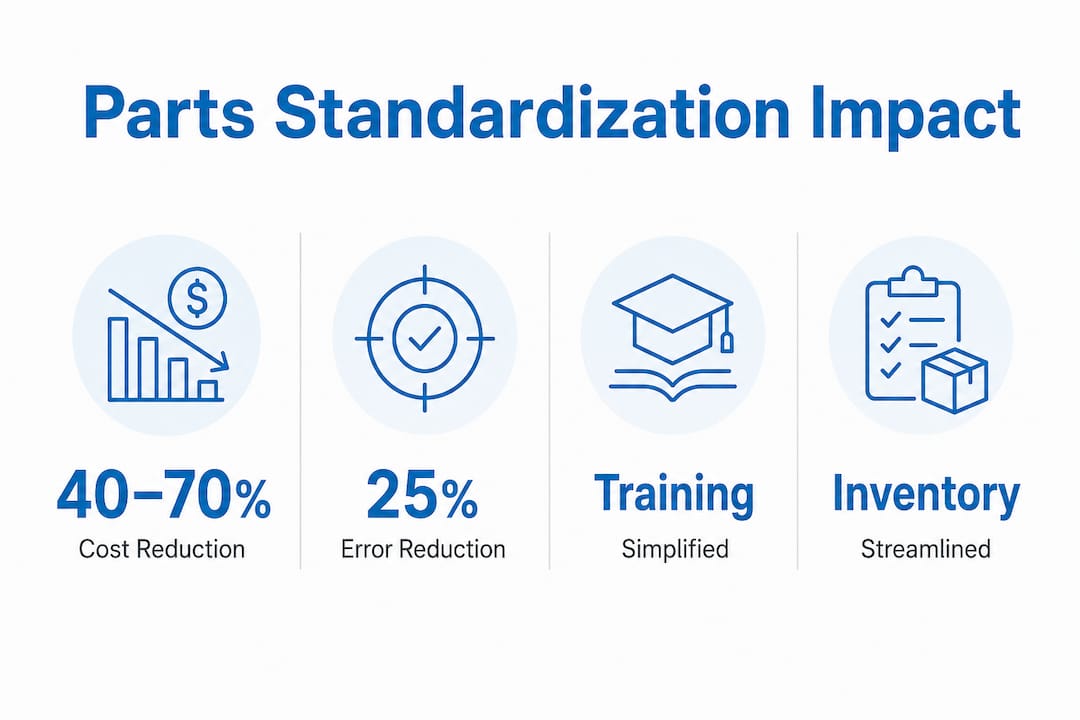
Parts standardization cuts repair expenses by a measurable margin. Standardizing equipment models and parts can reduce total repair expenses by 40–70%. That range reflects the combined effect of economies of scale in procurement, faster diagnostic workflows, and technicians who already know the part they are installing.
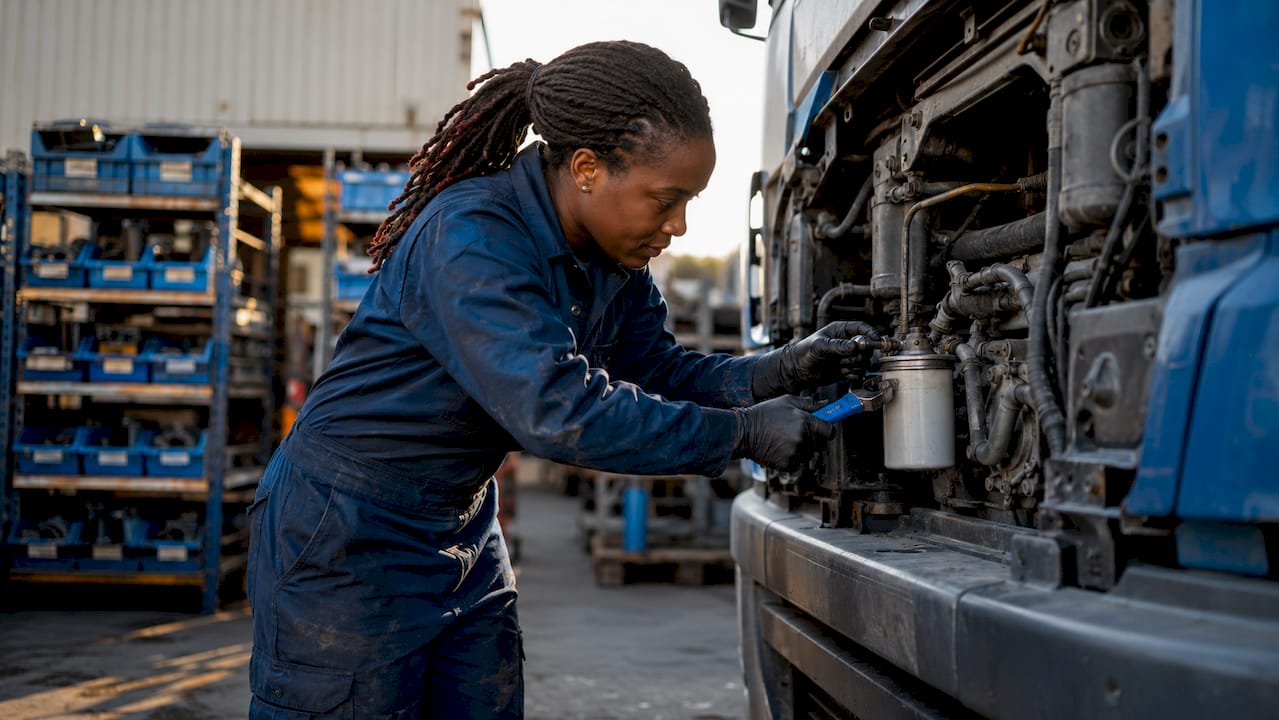
The operational logic is straightforward. When every truck in your fleet runs the same engine family, transmission model, and brake components, your technicians build deep familiarity with those systems. Repair time drops. Diagnostic errors drop. Parts sitting on the shelf fit the truck that just rolled in, not the truck you serviced three months ago.
Uniform components also simplify your parts catalog. A mixed-brand fleet might carry hundreds of SKUs for components that perform the same function across different makes. A standardized fleet collapses that list dramatically. Fewer SKUs mean lower carrying costs, less warehouse space, and fewer ordering mistakes.
How standardization reduces technician training time
Technician onboarding is a real cost that rarely shows up in a maintenance budget line. Standardization empowers technicians to work faster, reduces onboarding time for new hires, and makes vehicle reassignment during peak demand far easier. A new hire who learns one engine platform is productive faster than one who must master five.
The same logic applies to vehicle reassignment. When a driver moves from one truck to another, or a technician rotates between service locations, standardized components mean no relearning curve. That consistency compounds over time into measurable uptime gains.
Pro Tip: Build your standardization program around your highest-volume truck model first. Locking in parts consistency on your most common platform delivers the fastest return on the training and procurement investment.
Key benefits of standardization in maintenance operations:
- Fewer part numbers to stock and track
- Faster diagnostics because technicians recognize failure patterns
- Reduced risk of ordering the wrong part
- Lower per-unit parts cost through volume purchasing
- Simpler warranty tracking across the fleet
What are the biggest risks in mixed-brand fleet parts procurement?
Mixed-brand fleets carry a hidden tax on every repair. Nearly 25% of fleet maintenance delays result from incorrect parts orders and catalog mismatches, and that risk is significantly higher in mixed-brand fleets. One wrong part number can ground a truck for days while the correct component ships.
The problem runs deeper than simple catalog errors. Even with identical part numbers, compatibility issues arise due to hidden engineering changes and electronic protocols. Manufacturers issue running production changes, known as RPCs, that alter a component's specifications without changing its catalog number. A part that fit your 2021 truck may not fit your 2023 model of the same make.
Electronic components add another layer of risk. Non-OEM electronic components used during a manufacturer's warranty period may void or complicate warranty claims if linked to engine failures. Warranty risks are highest with sensors, emissions components, and any part that communicates with the vehicle's ECU.
The most dangerous scenario involves what engineers call tolerance stack-up. When multiple components with small dimensional variances are installed together, those variances accumulate. The result is accelerated wear or outright failure, often without a clear root cause in the maintenance record.
Common pitfalls in mixed-fleet parts procurement:
- Ordering by part number alone without verifying the production date range
- Installing aftermarket electronic parts that require ECU pairing via OEM diagnostic software
- Relying on cross-reference databases that lag behind OEM production changes by months or years
- Skipping VIN-based lookup tools that catch fitment exceptions catalogs miss
- Assuming identical function means identical fitment across model years
Pro Tip: Always verify parts using a VIN-specific lookup, not just a year, make, and model search. VIN decoding captures production date and build configuration details that generic catalog searches miss entirely.
How should fleets implement a standardized parts inventory program?
The best approach to parts inventory standardization is what the industry calls flexible standardization. Flexible standardization allows core consistency while adapting to supply chain challenges, preventing operational disruptions. You set firm specifications for your most critical components, then build in approved alternatives for situations where your primary source is unavailable.
Supplier selection drives the success of any standardization program. Fleet managers increasingly focus on establishing partnerships with fewer, highly accurate parts suppliers for operational control and uptime. A supplier with deep catalog accuracy and a clear understanding of your fleet's OEM mix is worth more than a supplier with a broader catalog and inconsistent fitment data.
When evaluating suppliers, prioritize these criteria:
- Catalog accuracy: Does the supplier use VIN-based lookup and maintain current OEM production data?
- Business alignment: Does the supplier specialize in your truck makes and engine families?
- Inventory depth: Can the supplier fulfill repeat orders on your core components without substitutions?
- Warranty support: Does the supplier back parts with a clear warranty that protects your fleet?
- Shipping speed: Can the supplier deliver same-day or next-day to minimize downtime?
Inventory management under a standardized program also becomes more predictable. When you know exactly which parts your fleet consumes, you can forecast demand by mileage intervals rather than reacting to failures. That shift from reactive to scheduled procurement lowers carrying costs and eliminates emergency freight charges.
For guidance on building the right inventory structure, the article on managing heavy truck parts inventory covers catalog accuracy and supplier reliability in practical detail.
What operational benefits does parts standardization deliver beyond cost?
Cost reduction gets the most attention in standardization discussions, but the operational benefits extend well beyond the parts budget. Uniform components create consistency in how trucks perform, which matters to drivers, dispatchers, and safety officers alike.
Standardization multiplies technician productivity and simplifies vehicle reassignment during demand peaks. When a fleet runs consistent components, a technician trained at one location can walk into any other shop in the network and work at full speed immediately. That portability is a workforce asset that no amount of cross-training on mixed platforms can replicate.
Safety is a direct beneficiary of standardization. When technicians work with familiar components, they are less likely to make installation errors. OSHA guidance on maintenance safety consistently points to procedural familiarity as a key factor in reducing workplace incidents. Standardized parts reinforce that familiarity at every service interval.
Scalability is the long-term payoff. A fleet that adds ten trucks of the same spec as its existing units absorbs those vehicles into an existing parts program, training structure, and maintenance schedule. A fleet that adds ten trucks of a different make starts building a parallel system from scratch. That parallel system costs money every month it exists.
Predictable maintenance also supports better budgeting. When you know the service life of your standard components, you can build accurate annual maintenance budgets. Surprises become less frequent. Capital planning becomes more reliable. Understanding engine compatibility for heavy trucks is one practical step toward that predictability.
Additional operational benefits of uniform components include:
- Faster driver onboarding when trucks share controls and configurations
- Consistent fuel economy data across the fleet for accurate reporting
- Simplified compliance documentation for DOT inspections
- Reduced risk of service errors during high-volume maintenance periods
Key Takeaways
Standardized truck parts reduce total fleet costs, simplify maintenance operations, and support scalable growth by eliminating the complexity that mixed-brand and mixed-spec fleets create.
| Point | Details |
|---|---|
| Cost reduction is measurable | Standardization can cut total repair expenses by 40–70% through volume purchasing and faster diagnostics. |
| Mixed fleets carry hidden risks | Nearly 25% of maintenance delays come from incorrect parts orders, a risk that rises sharply in mixed-brand fleets. |
| Flexible standardization is the goal | Set firm specs for critical components, then build in approved alternatives for supply chain disruptions. |
| Supplier accuracy matters most | Fewer suppliers with deep catalog accuracy and VIN-based lookup tools outperform broad but inconsistent sources. |
| Benefits extend beyond cost | Standardization improves technician productivity, safety, scalability, and budget predictability across the fleet. |
The case for standardization I keep making to every fleet manager I meet
Fleet managers often tell me they cannot standardize because their fleet is already mixed. That reasoning gets the logic backward. A mixed fleet is the reason to start standardizing now, not a reason to wait.
Every month a mixed fleet operates without a standardization plan, it accumulates complexity. More part numbers, more supplier relationships, more technician training gaps, and more exposure to the catalog mismatch problem that causes roughly one in four maintenance delays. The cost of that complexity is real, even when it does not show up as a single line item.
The fleets I have seen execute this well do not try to replace every truck overnight. They pick one platform, lock in their parts program for that platform, and let attrition do the rest. As older mixed-spec trucks cycle out, replacement units match the standard. Within a few years, the fleet looks very different without a single disruptive overhaul.
The other mistake I see regularly is treating standardization as a procurement decision rather than an operational one. Parts standardization touches training, scheduling, supplier relationships, and capital planning. Fleet managers who involve their shop supervisors and logistics leads from the start build programs that actually hold. Those who hand it to purchasing alone end up with a parts list that nobody in the shop follows.
The future of fleet maintenance points toward tighter hardware and software integration in trucks. That trend makes standardization more critical, not less. A fleet running consistent electronic architectures will adapt to new diagnostic tools and telematics platforms far more easily than one running five different ECU families.
— John
Nationwide Truck Parts supports your fleet's standardization goals
Fleet managers who are ready to build a more consistent parts program need a supplier who understands their fleet's specific make and model requirements.
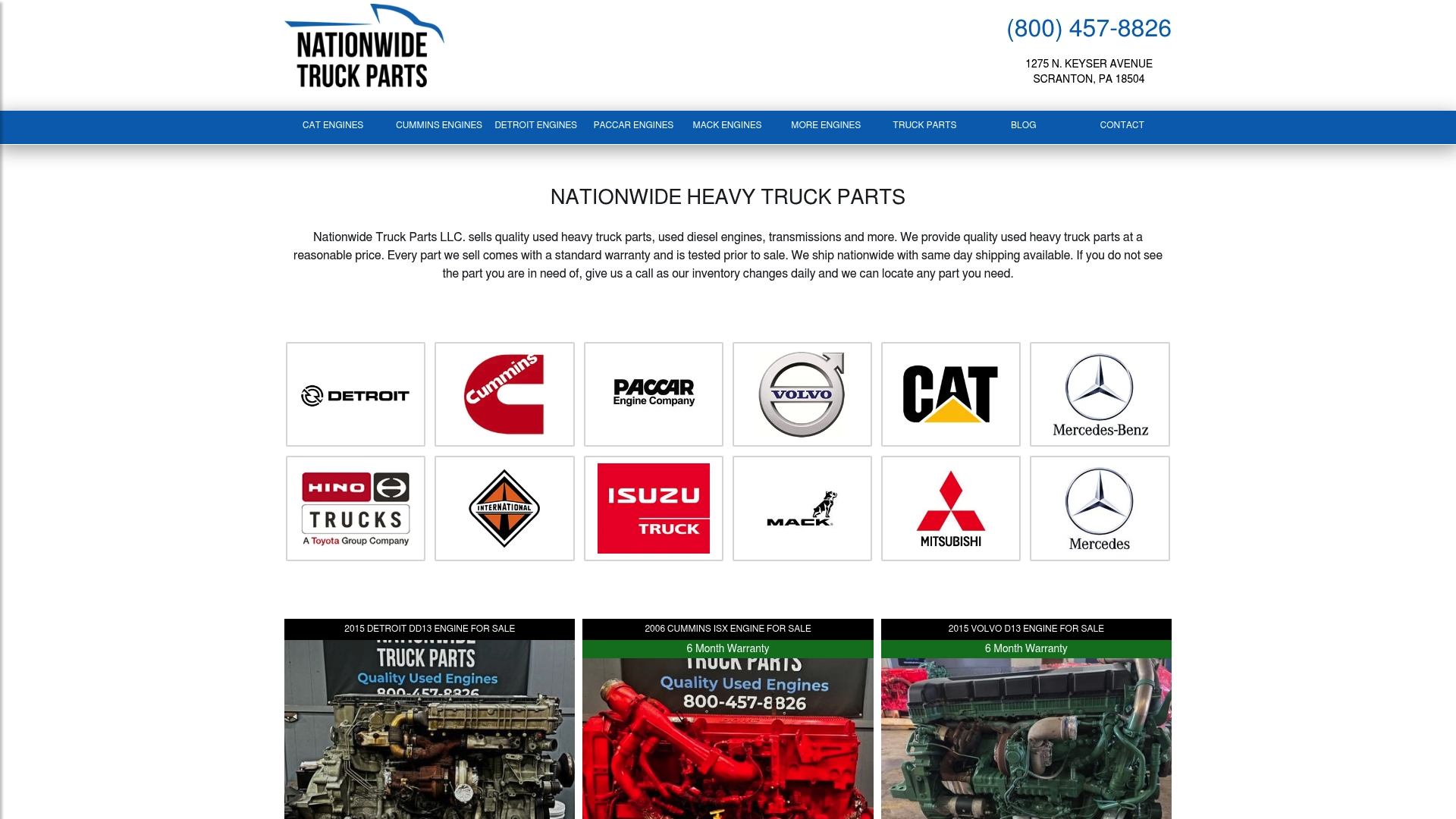
Nationwide Truck Parts carries a daily-changing inventory of tested and inspected heavy truck parts, including diesel engines and transmissions, all backed by a standard warranty. Every part goes through thorough inspection before it ships, so you are not guessing about fitment or condition. Same-day shipping means a grounded truck gets back on the road without a multi-day wait. Whether you are sourcing parts for a single platform or building out a standardized inventory across a larger fleet, Nationwide Truck Parts has the catalog depth and the parts expertise to support that work.
FAQ
What is parts standardization in fleet management?
Parts standardization is the practice of selecting uniform components across a fleet to simplify maintenance, reduce inventory complexity, and lower repair costs. It applies to engines, transmissions, brakes, and any component that appears across multiple vehicles.
How much can standardization reduce fleet repair costs?
Standardizing equipment models and parts can reduce total repair expenses by 40–70%, driven by economies of scale in procurement and faster diagnostic workflows.
Why do mixed-brand fleets have higher parts ordering errors?
Nearly 25% of fleet maintenance delays result from incorrect parts orders and catalog mismatches, and that risk increases in mixed-brand fleets where part number genealogy and running production changes create hidden compatibility gaps.
Can non-OEM parts void a truck's warranty?
Non-OEM electronic components installed during a manufacturer's warranty period may void or complicate warranty claims if those parts are linked to engine or emissions failures. Warranty risk is highest with sensors, ECU-connected components, and emissions-related parts.
What is flexible standardization?
Flexible standardization means setting firm specifications for critical components while maintaining approved alternative parts for supply chain disruptions. It keeps fleets operational during shortages without abandoning the core consistency that standardization delivers.