
Coordinating engine replacements across a fleet is one of the most operationally complex tasks a fleet manager faces. Done right, it keeps trucks moving, controls costs, and prevents the kind of cascading downtime that wipes out a quarter's margin. Done reactively, it turns into a scramble of overtime labor, parts delays, and trucks sitting idle waiting for engines that should have been ordered weeks earlier.
The core discipline here is fleet lifecycle management: combining maintenance history, telematics data, and cost thresholds to schedule swaps before failure forces your hand. The major engine families in play across most US heavy truck fleets are Cummins, CAT, Detroit Diesel, Paccar, and Navistar. Each has its own rebuild standards, warranty terms, and parts lead times, all of which affect how you sequence replacements across multiple units.
Key elements of effective multi-truck engine replacement coordination:
- Scheduling: Batch similar engine types together and align swaps with low-demand periods
- Parts sourcing: Pre-order remanufactured engines weeks ahead to avoid parts-driven delays
- Core returns: Pre-approve core return logistics with your supplier before any swap begins
- Data integration: Use telematics and maintenance records to trigger replacements before failure
- Communication: Keep shop supervisors, drivers, and parts suppliers on the same timeline
Pro Tip: Build a 12-month replacement calendar at the start of each fiscal year. Plotting all anticipated swaps against your operational calendar surfaces conflicts before they become crises and helps you balance workshop capacity across the year.
How do you schedule multi-truck engine replacements without killing uptime?
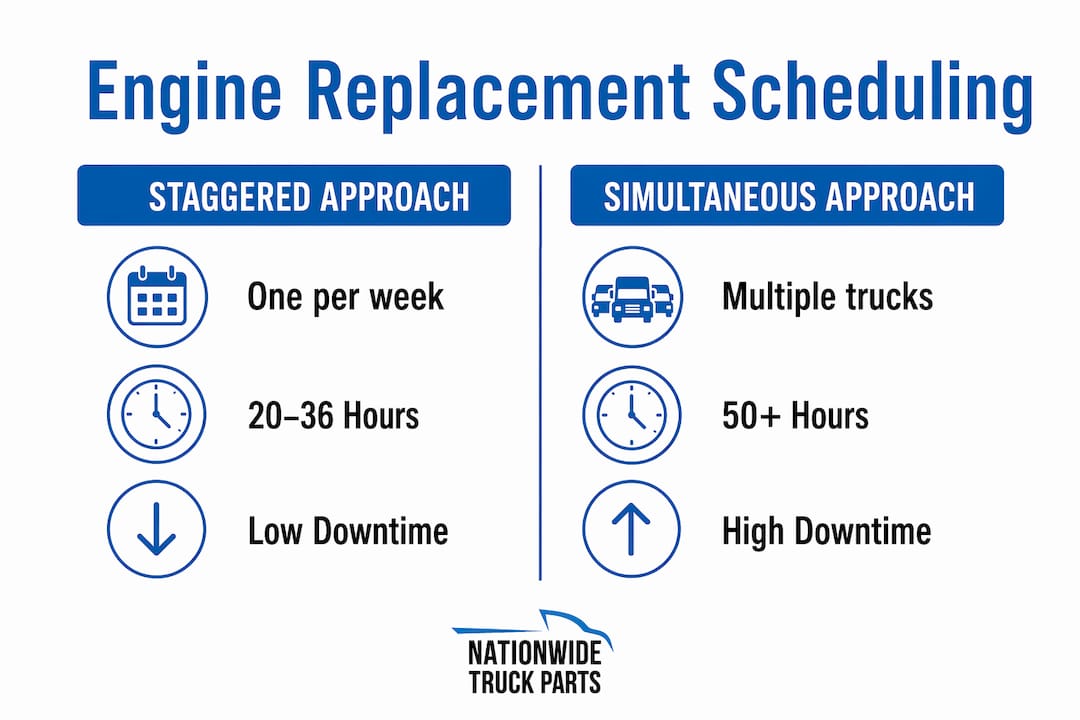
The single biggest scheduling mistake fleets make is allowing multiple trucks of the same class to go down simultaneously. One engine swap is manageable. Three at once strains your shop, your parts supply, and your delivery commitments at the same time.
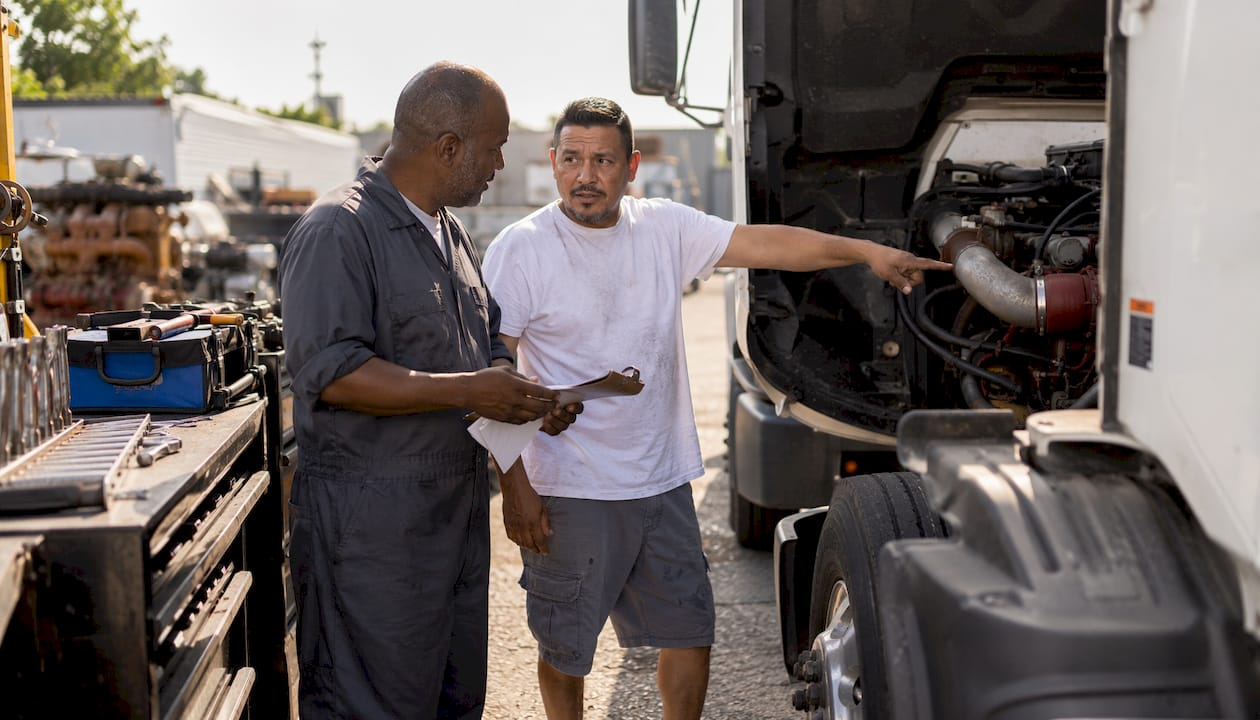
Staggering replacements by vehicle class and engine type is the baseline. Never schedule more than one swap per vehicle class in the same week. Beyond that, align each replacement with an existing major service window. An engine swap timed alongside a scheduled overhaul cuts the total number of separate shop visits per vehicle across the year.
Grouping trucks with the same engine platform lets your technicians build a rhythm. A mechanic who pulls and installs a Cummins X15 twice in a week works faster on the second job than the first. That efficiency compounds across a multi-unit batch and reduces per-unit labor costs without cutting corners.
| Scheduling method | Typical labor hours | Downtime impact |
|---|---|---|
| Staggered by class (one per week) | 20–36 hours per unit | Minimal fleet-wide disruption |
| Batched by engine type | 16–28 hours per unit (efficiency gain) | Concentrated but shorter per unit |
| Aligned with major service window | 20–36 hours (shared teardown time) | Lowest total downtime per year |
| Reactive/unplanned | 36–60+ hours per unit | Highest: overtime, parts delays |
Digital tools change what's possible here. Telematics platforms aggregate OBD sensor data, fuel efficiency trends, and maintenance logs in real time, flagging engines approaching wear thresholds before they fail. AI-enabled predictive maintenance systems go further, analyzing historical repair patterns to recommend replacement windows weeks in advance. A parts compatibility checker integrated into your workflow prevents the costly mistake of ordering an engine that doesn't fit the chassis configuration.
Communication protocols matter as much as the tools. Before any swap begins, your shop supervisor, fleet coordinator, and parts supplier need to be working from the same timeline. Consolidating core shipments across multiple vehicles in the same replacement cycle reduces freight costs and simplifies accounting. Poor core return logistics add days of unnecessary downtime and billing complications, so standardize that process with your supplier before the first wrench turns.
What are your options: repair, rebuild, overhaul, or swap?
Not every engine problem calls for a full replacement. Understanding where each option fits prevents overspending on trucks that needed a targeted repair and underspending on trucks that needed a fresh engine.
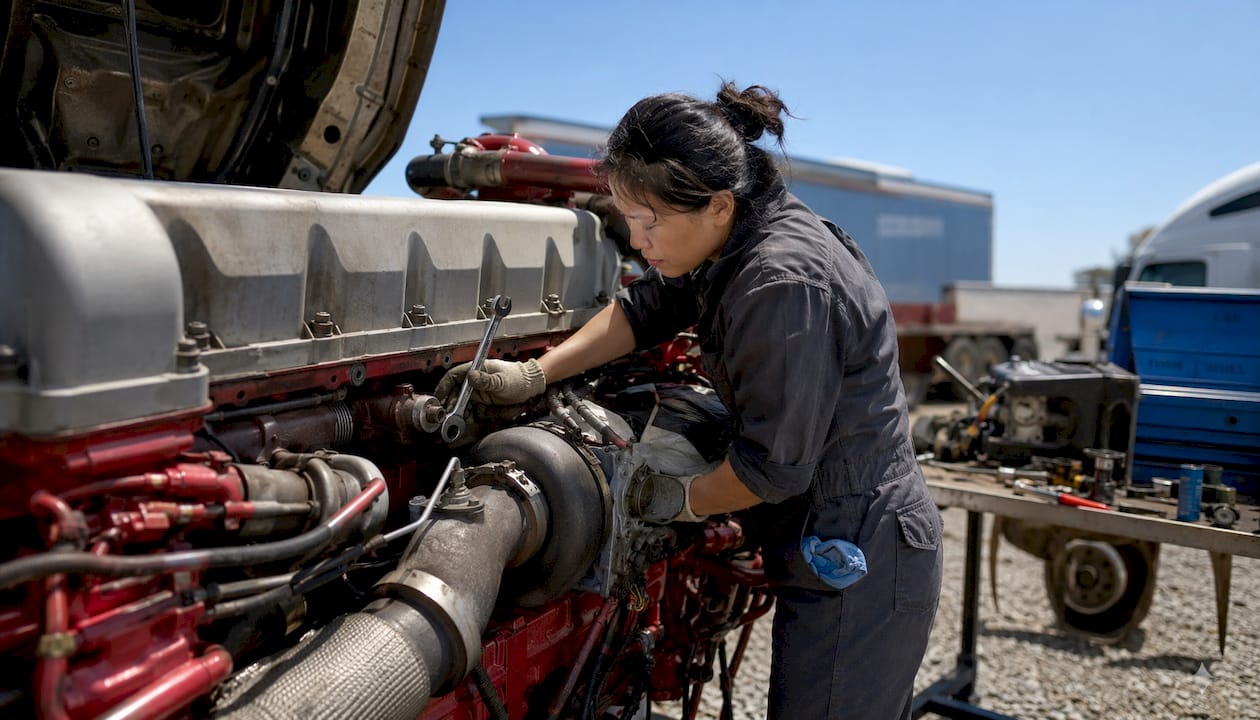
Repair addresses isolated component failures: injectors, turbochargers, cooling system components. It makes sense when the engine block is sound and the failure is contained. In-frame rebuild keeps the engine in the truck, replacing rings, pistons, bearings, and seals without a full teardown. Out-of-frame overhaul pulls the engine completely, allowing crankshaft inspection, block machining, and a full reseal. Out-of-frame work typically runs $25,000–$40,000, covering a full kit, reman turbo, reman injectors, crankshaft machining, and labor between $12,000 and $20,000. Engine swap replaces the unit entirely with a new, remanufactured, or quality used engine.
Manufacturer warranty standards vary by path. Cummins, CAT, Detroit Diesel, Paccar, and Navistar all offer factory remanufactured programs with warranty coverage comparable to new units. Independent aftermarket remanufactured engines cost less but require careful vetting of the supplier's testing and inspection protocols.
One risk fleet managers often underestimate: installing a fresh engine in an older chassis with failing electronics or emissions systems raises total cost of ownership and breakdown risk. Before committing to a new or reman engine, assess the full vehicle condition. If the transmission also needs major work or the frame has structural issues, the math often points toward replacement of the truck rather than the engine alone.
| Option | Typical cost range | Best fit |
|---|---|---|
| Targeted repair | $3,000–$12,000 | Isolated component failure, low mileage engine |
| In-frame rebuild | $12,000–$20,000 | Sound block, worn rings/bearings |
| Out-of-frame overhaul | $25,000–$40,000 | Major wear, salvageable block and crank |
| Reman engine swap | $18,000–$35,000 | Severe damage, faster return to service |
| New engine swap | $35,000–$45,000 | High-utilization unit, full warranty needed |
Pro Tip: When batching repairs across multiple trucks, group units needing the same service level together. A shop running multiple out-of-frame overhauls in sequence can negotiate better labor rates and machine shop scheduling than separate jobs spread across the quarter.
For fleets sourcing diesel engines for multiple trucks simultaneously, pre-ordering and consolidating shipments reduces lead time risk and freight overhead.
How does data-driven decision making improve replacement timing?
Condition-based maintenance replaces the old fixed-interval model with one that responds to what the engine is actually doing. Shifting from reactive to condition-based planning reduces failure rates and emergency downtime across fleets. The inputs that matter most are oil consumption trends, fuel efficiency trajectory, coolant loss frequency, and unscheduled repair history.
Two cost thresholds act as reliable replacement triggers. Replace when repair costs exceed 50% of post-repair value or when maintenance costs per mile climb above $0.18. Beyond those points, the truck consumes more in repairs than it generates in productive output. Tracking total cost of ownership through cumulative cost-per-mile data is what makes those thresholds actionable rather than theoretical.
AI tools sharpen the timing further. AI analysis of OBD data improves engine failure prediction accuracy by a significant margin, avoiding costly breakdowns and generating notable savings annually per vehicle. Teck Resources applied this approach to their Cummins QSK60 fleet and reduced annual engine replacements from 32 to 26 across their Komatsu 930E haul trucks, delivering over $3.5 million in value.
Best practices for data management in multi-truck replacement programs:
- Centralize maintenance records in a single fleet management platform, not across spreadsheets and separate shop systems
- Set automated alerts when any unit crosses the $0.18/mile maintenance threshold
- Log fuel efficiency readings monthly per unit to catch internal wear trends early
- Record post-replacement performance metrics (fuel economy, oil consumption, unscheduled repairs) to validate whether rebuild or swap was the right call
- Review the full fleet's replacement queue quarterly against your 12-month calendar
Pro Tip: Track post-replacement performance for at least 90 days after each swap. That data tells you whether your rebuild-versus-replace decision was correct and refines the thresholds you use for the next round of scheduling.
Key Takeaways
Coordinating multi-truck engine replacements requires batching by engine type, applying cost thresholds as triggers, and integrating telematics data to schedule swaps before failure drives the decision.
| Point | Details |
|---|---|
| Batch and stagger replacements | Group same-engine-type swaps and limit one per vehicle class per week to protect fleet uptime. |
| Use cost thresholds as triggers | Replace when repair costs exceed 50% of post-repair value or maintenance costs exceed $0.18 per mile. |
| Match the service level to engine condition | Choose repair, rebuild, or swap based on block condition and total cost of ownership, not just the repair quote. |
| Apply AI and telematics data | AI analysis of OBD data improves failure prediction accuracy by 18–25%, saving $1,200–$3,400 per vehicle annually. |
| Pre-approve core return logistics | Coordinate core returns with your supplier before the swap begins to avoid billing delays and added downtime. |
FAQ
Is it cheaper to fix an engine or replace it?
Repair is cheaper upfront, but replacement often delivers better value when repair costs exceed 50% of the vehicle's post-repair value or maintenance costs surpass $0.18 per mile. At those thresholds, continued repairs cost more than a fresh engine over the following months.
How many labor hours does an engine swap take?
Removing a failed engine typically requires 16 labor hours depending on vehicle configuration, and installation adds another 12–20 hours. Total labor for a complete swap generally runs 20–36 hours under planned conditions.
How much does a heavy truck engine replacement usually cost?
New factory engines typically run $35,000–$45,000, and remanufactured units—including both factory and aftermarket sources—range from $18,000 to $35,000. Installation costs vary depending on ancillary work required.
What is the best truck engine for fleet reliability right now?
Cummins, Detroit Diesel, Paccar, CAT, and Navistar all have strong track records in specific duty cycles. The best fit depends on your application, existing technician expertise, and parts availability in your region rather than a single universal ranking.
Nationwide Truck Parts maintains a daily-changing inventory of tested and inspected used diesel engines, including Detroit Diesel MCM units and assemblies like the 2013 Mack MP8 445, each backed by a standard warranty and available with same-day shipping. When you're coordinating replacements across multiple trucks and need parts fast, that combination of verified quality and quick fulfillment keeps your schedule on track.
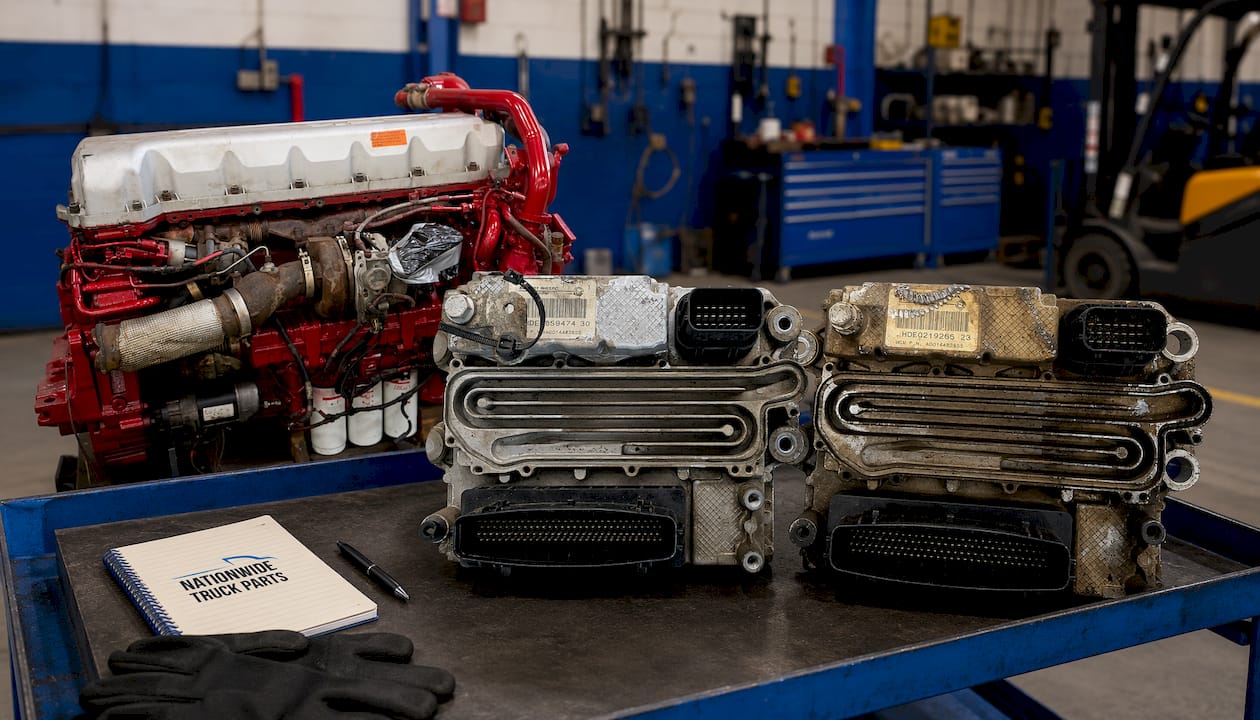
Browse the full inventory at Nationwide Truck Parts or contact the team directly to confirm availability and compatibility before your next scheduled swap.