
Emergency diesel engine sourcing logistics is the process of rapidly acquiring and delivering diesel engines and critical components to restore fleet operations during urgent breakdowns. Fleet operators face a compounding problem in 2026: critical engine components cost 20%–30% more than pre-tariff levels, and supply chain constraints make fast procurement harder than ever. Every hour a truck sits idle translates directly into lost revenue and missed delivery commitments. The teams that recover fastest are the ones who treat diesel engine procurement logistics as a core operational discipline, not a reactive scramble.
What does effective emergency diesel engine sourcing require?
Effective emergency diesel engine sourcing logistics starts before a breakdown happens. Fleet operators who succeed under pressure have three things in place: supplier relationships, component pricing awareness, and logistics tools ready to deploy.
Critical components and current pricing
Critical diesel engine components are 20%–30% more expensive than pre-tariff levels, driven largely by supply chain anxiety rather than actual scarcity alone. That pricing pressure forces fleet operators to make faster decisions with less margin for error. Knowing your baseline costs before an emergency means you can approve a purchase order in minutes instead of hours.
Multi-sourcing and supplier dependency
Single-source dependency causes supply paralysis when your primary supplier is out of stock or delayed. Multi-sourcing with at least two to three vetted secondary suppliers is the single most effective structural defense against logistics bottlenecks. Maintaining those relationships actively, not just as a backup list, determines how fast you can pivot.
Documentation and logistics tools you need ready
- Engine serial number, model year, and OEM specifications for the failed unit
- Supplier qualification records and current pricing agreements
- Freight account numbers for air, ground, and expedited courier services
- Customs broker contact and import certification files for international sourcing
- A freight tracking system capable of real-time shipment visibility
| Logistics tool | Primary function |
|---|---|
| Freight tracking platform | Real-time shipment visibility across carriers |
| Customs broker on retainer | Prevents documentation delays at the border |
| Secondary supplier list | Activates immediately when primary source fails |
| Engine spec database | Confirms compatibility before purchase |
Pro Tip: Build a one-page emergency sourcing card for each truck class in your fleet. Include the engine model, known compatible replacements, and your top two supplier contacts. When a breakdown hits at 2:00 AM, that card eliminates 30 minutes of searching.
How do you execute the step-by-step sourcing and logistics process?
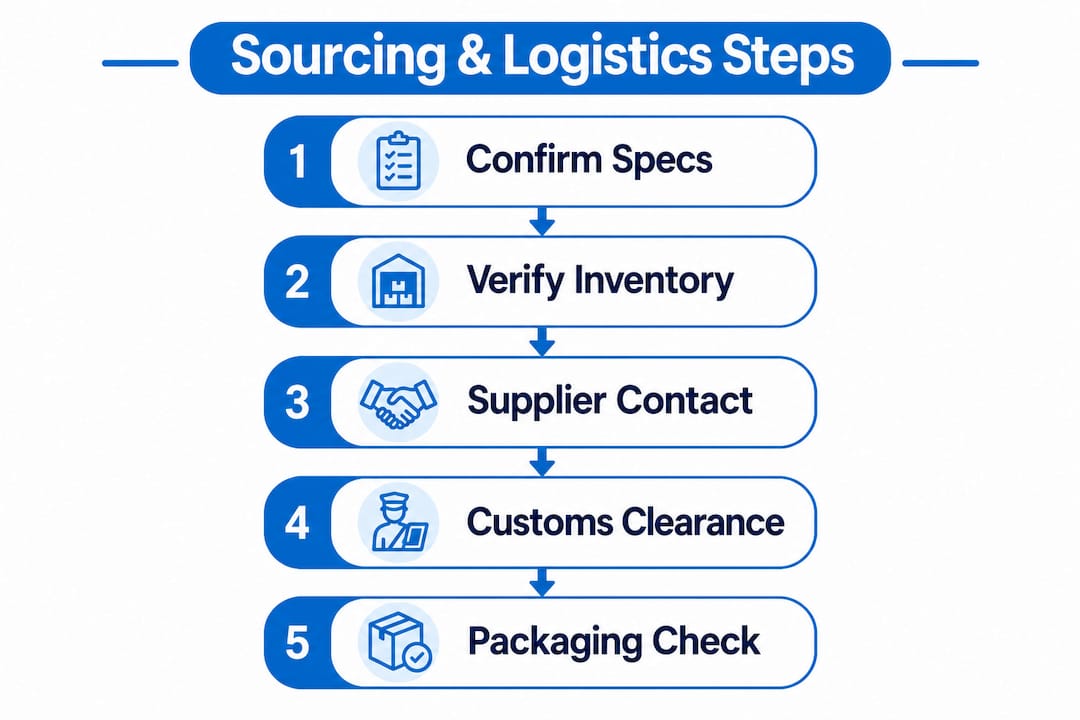
The step-by-step process for sourcing diesel engines fast under pressure follows a clear sequence. Skipping steps to save time almost always costs more time later.
Step 1: Confirm specifications before contacting any supplier
Specification errors are the most expensive mistake in emergency procurement. Incorrect specs can cause secondary failures that delay uptime by an additional 30 days after the replacement is already installed. Pull the VIN, engine serial number, and emissions certification tier before you make a single call.
Step 2: Verify supplier inventory and lead times
Contact your primary supplier first, then your secondary list simultaneously. Ask for confirmed stock on hand, not estimated availability. Standard engine replacements take 5–10 business days of labor once the unit arrives, so your shipping window directly affects total downtime.
Step 3: Choose the right shipping method
- Air freight: Fastest option for high-value, time-critical engines. Cost is significantly higher but justified when a truck generates $1,500+ per day in revenue.
- Expedited ground: Best for domestic sourcing within 500 miles. Reliable 24–48-hour delivery windows with lower cost than air.
- Standard LTL freight: Appropriate when downtime is tolerable and cost control is the priority.
- Sea freight: Only viable for international sourcing with a lead time of three weeks or more.
Step 4: Handle customs clearance proactively
Incomplete certification documentation causes customs delays of three months or more in international sourcing. Demand complete, original certification documents before the container is sealed. Your customs broker should receive the full documentation package the same day the order is placed.
Step 5: Confirm packaging requirements
Diesel engines require crating with vibration dampening, moisture barriers, and clearly labeled lifting points. Damage during transit from improper packaging adds days to the repair timeline and creates a warranty dispute that slows reimbursement.
Pro Tip: When placing an emergency order, ask the supplier to send a photo of the engine crate before it ships. This takes 60 seconds and confirms the unit is properly packaged before it leaves the dock.
What are the common challenges in emergency diesel engine sourcing logistics?
The most frequent obstacles in emergency engine supply chain management are predictable. Knowing them in advance means you can counter them before they escalate.
Tariff-driven cost increases and fleet behavior changes
21% of fleets have shifted to non-genuine aftermarket parts to offset tariff cost increases, and 68% of dealers pass full tariffs directly to customers. That shift creates a compatibility risk that shows up weeks after installation. Aftermarket parts can work well, but only when sourced from suppliers who provide full spec documentation and testing records.
Long lead times for high-risk components
- ECMs (Engine Control Modules) and DPF (Diesel Particulate Filter) units carry lead times of 8–20 weeks. That range makes last-minute sourcing nearly impossible without pre-positioned stock.
- Turbochargers and fuel injection components from OEM suppliers face similar constraints.
- Used and remanufactured units from verified suppliers often have shorter lead times than new OEM parts.
Workforce shortages in distribution centers
Distribution center staffing shortages slow order processing and picking times at major parts warehouses. Building relationships with suppliers who have dedicated account managers gives your orders priority handling over anonymous web orders.
"The best logistics strategy is to eliminate emergency demand through rigorous preventive maintenance programs and strategic stock holding. Fleets that treat sourcing as a reactive function will always pay more and wait longer than those who treat it as a proactive discipline."
Pro Tip: When a critical part has an 8–20 week lead time, order a spare the moment you install the first one. The cost of carrying one extra unit is always lower than the cost of a truck sitting idle for four months.
What best practices build long-term resilience in diesel engine sourcing?
The best diesel engine sourcing strategy is one that reduces how often you need emergency procurement in the first place. Preventive maintenance programs directly reduce emergency sourcing demand, and fleets that invest in them spend less on expedited freight and premium pricing.
Core resilience practices for fleet operators
- Preventive maintenance schedules: Rigorous PM programs catch failing components before they cause full engine failures. A $300 sensor replacement today prevents a $15,000 emergency engine swap next month.
- Strategic safety stock: Maintain on-hand inventory of high-failure, long-lead-time components including ECMs, DPF units, and fuel injectors. The carrying cost is predictable. Emergency downtime is not.
- Vendor dependency audits: Conduct a formal review of your supplier list every six months. Identify any single-source dependencies and add a secondary supplier before a crisis forces you to.
- Supplier collaboration: Digital procurement and close supplier collaboration are now the standard approach for handling modern parts bottlenecks. Suppliers who know your fleet profile can alert you to incoming shortages before they hit.
- Fleet association intelligence: Organizations like the American Trucking Associations publish supply chain alerts and parts availability forecasts. That intelligence is free and often arrives weeks before a shortage becomes critical.
Pro Tip: Treat your parts inventory the same way you treat cash flow. Know your burn rate on high-risk components, set reorder points, and never let critical stock hit zero. A stockout on an ECM is as damaging as a cash shortfall.
For teams managing multiple trucks across a fleet, consolidating sourcing through a single primary supplier with a documented secondary backup reduces administrative overhead and improves priority status with both vendors.
Key Takeaways
Effective emergency diesel engine sourcing logistics requires pre-positioned supplier relationships, accurate specifications, proactive documentation, and a preventive maintenance program that reduces emergency demand before it starts.
| Point | Details |
|---|---|
| Multi-source your suppliers | Maintain at least two to three vetted suppliers to prevent single-source supply paralysis. |
| Confirm specs before ordering | Incorrect specifications cause secondary failures that add 30 days to total downtime. |
| Prepare documentation in advance | Missing certifications cause customs delays of three months or more in international sourcing. |
| Stock high-lead-time components | ECMs and DPF units carry 8–20 week lead times, making last-minute sourcing nearly impossible. |
| Prevention beats emergency response | Rigorous preventive maintenance reduces emergency sourcing demand and total procurement cost. |
What I've learned after years of watching fleets get this wrong
Fleet operators consistently underestimate how much of their emergency sourcing problem is self-created. I've watched teams spend $8,000 on air freight for an engine that could have been sourced domestically in 48 hours if someone had made one supplier call the week before. The urgency was real, but the crisis was manufactured by a lack of preparation.
The counterintuitive truth about logistics for emergency engines is that the best practitioners rarely face true emergencies. They run PM programs that catch failures early. They carry strategic stock on the components that take the longest to source. They know their suppliers by name, not just by website. When a breakdown does happen, their response looks calm because the groundwork was already done.
The other lesson I keep coming back to is specification discipline. Rushing an order to beat downtime and getting the wrong engine is worse than waiting an extra day to confirm the right one. A compatible used diesel engine sourced correctly on day two beats an incompatible unit installed on day one every time. The 30-day secondary failure delay is a real cost that rarely shows up in the initial purchase decision.
Embed sourcing logistics as a core fleet competency, not a task you delegate to whoever answers the phone during a breakdown. The fleets that do this well treat their parts supply chain with the same rigor they apply to driver scheduling and fuel management. That discipline is what separates a two-day recovery from a two-week one.
— John
Nationwide Truck Parts has the engines you need, fast
When a truck goes down and every hour counts, you need a supplier with verified inventory and same-day shipping, not a three-week wait.
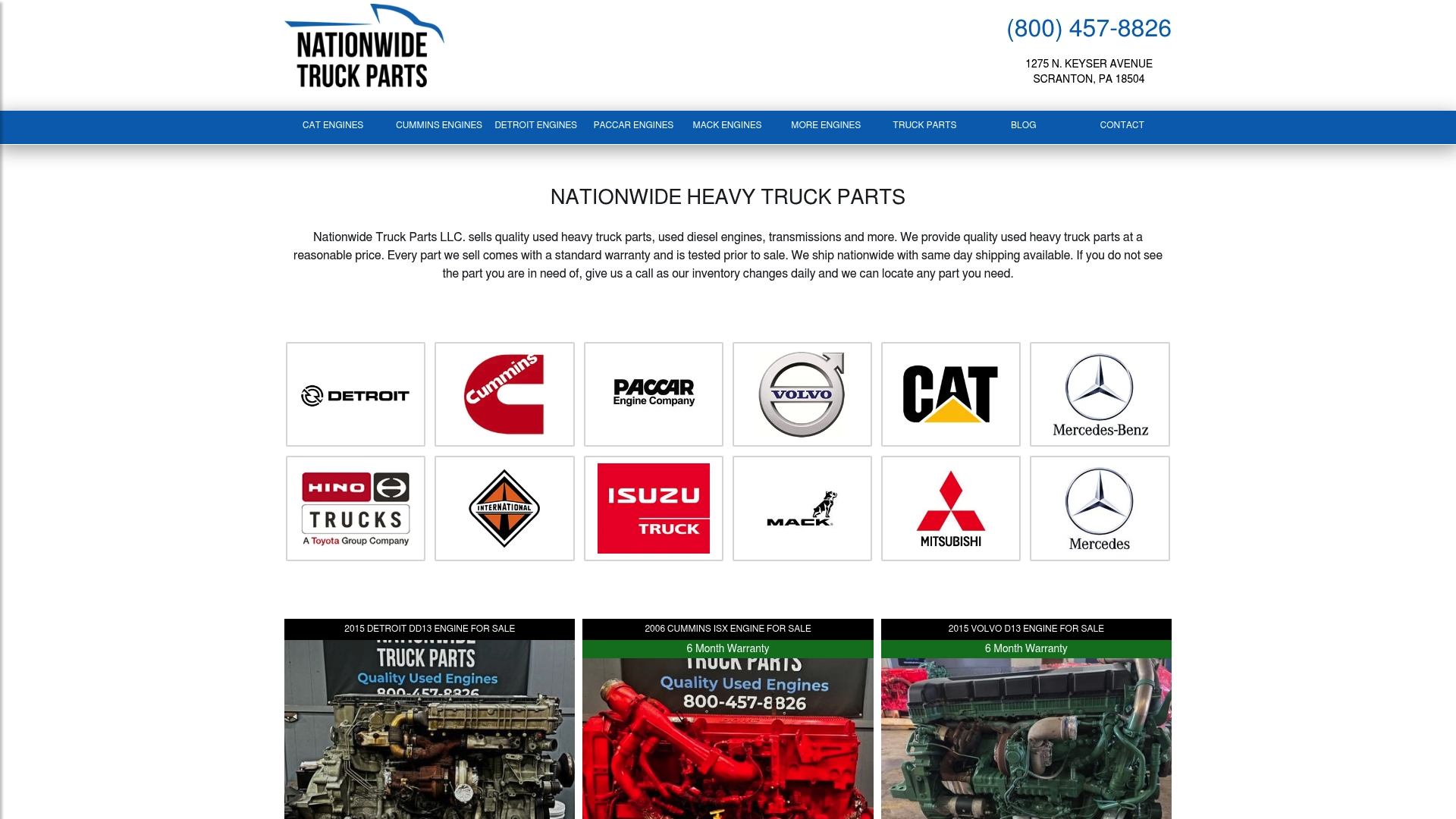
Nationwide Truck Parts carries a broad inventory of tested and inspected commercial truck engines, including Detroit Diesel engines and CAT diesel engines across multiple models. Every unit ships with a standard warranty, and inventory updates daily so you get accurate availability when you call. For fleet operators who need to source a replacement engine without the guesswork of unverified listings, Nationwide Truck Parts delivers the speed and reliability your operation depends on.
FAQ
What is emergency diesel engine sourcing logistics?
Emergency diesel engine sourcing logistics is the process of rapidly locating, purchasing, and delivering a diesel engine or critical components to restore a fleet vehicle to service after an unplanned breakdown.
How long does an emergency engine replacement take?
Standard engine replacements require 5–10 business days of labor once the unit arrives on site. Total downtime depends on how quickly the replacement engine is sourced and shipped.
Why do specification errors matter so much in emergency sourcing?
An engine sourced with incorrect specifications can cause secondary failures that delay uptime by an additional 30 days after installation, making spec confirmation the most critical step before placing any order.
What causes the longest delays in international diesel engine sourcing?
Incomplete or missing certification documentation causes customs delays of three months or more. Demanding full original documents before the container is sealed is the most effective way to prevent this.
How can fleet operators reduce the need for emergency engine sourcing?
Rigorous preventive maintenance programs and strategic safety stock of high-lead-time components like ECMs and DPF units directly reduce emergency sourcing demand and total procurement cost.