
The fastest way to find a reputable used truck parts supplier is to combine three sources: verified local salvage yards, specialty online platforms with VIN-based compatibility tools, and tested parts dealers who back their inventory with warranties. Price alone should never drive the decision. The suppliers worth trusting are the ones who document part history, stand behind returns, and answer questions before you pay.
Before you call anyone or click "add to cart," run through these first steps:
- Confirm the part number and your truck's full VIN (all 17 characters)
- Identify whether you need a used, remanufactured, or OEM-certified component
- Check seller ratings, return windows, and warranty terms before comparing prices
- Ask for photos, mileage data, and any available maintenance or inspection records
- Verify payment security and buyer protection policies on any online platform
Table of Contents
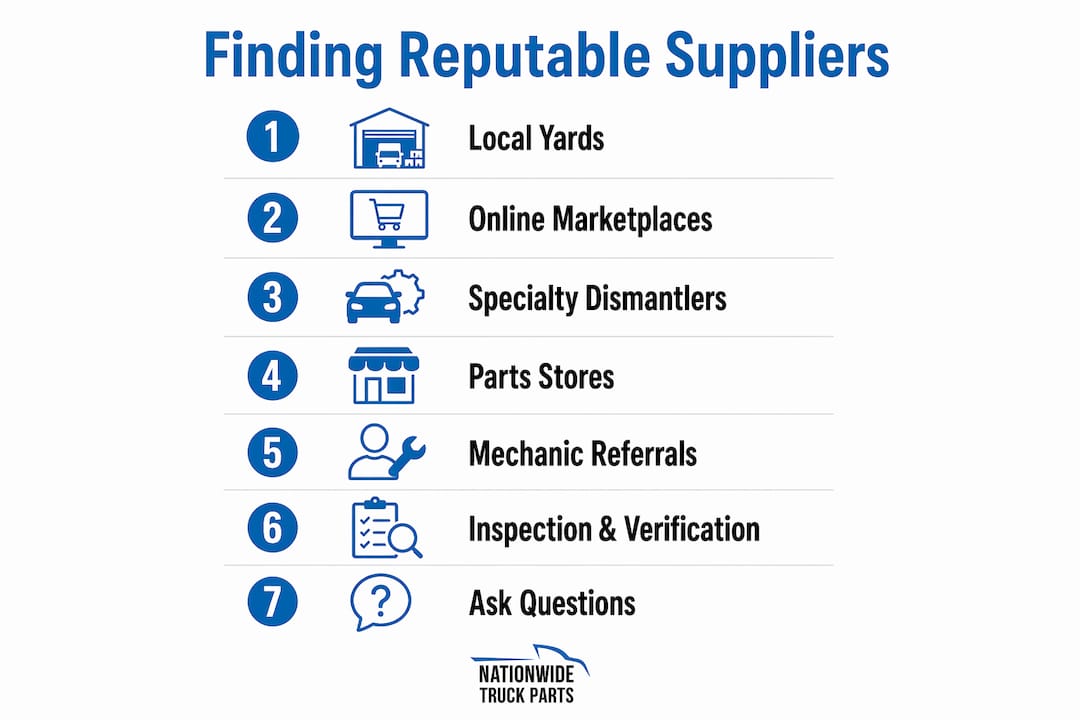
- 1. How local salvage yards help you find used truck parts
- 2. Using online marketplaces wisely to buy used truck parts
- 3. What specialty truck dismantlers offer that generic sellers don't
- 4. Why brick and mortar parts stores and dealer networks still matter
- 5. How mechanic shops and trucking fleets can point you to trusted suppliers
- 6. How to inspect and verify used truck parts before you pay
- 7. Questions to ask any supplier before you commit
- 8. Building a long-term sourcing strategy for affordable truck parts
- 9. Why Nationwide Truck Parts stands out for tested, warranted used parts
- 10. How to use reviews and ratings platforms to assess supplier reputation
- Nationwide Truck Parts: tested parts, same-day shipping, no guesswork
- Key Takeaways
- FAQ
1. How local salvage yards help you find used truck parts
Local salvage yards remain one of the most reliable sources for OEM truck components, particularly for engines, axle assemblies, and transmission units. These yards dismantle trucks systematically, inspect parts, and categorize them by make, model, and year. That process gives you a known history on the component before you ever touch it.
The real advantage of going local is physical access. You can look at the part yourself, check mounting points, and ask the yard staff direct questions about where it came from. That kind of transparency is harder to get from a photo listing.
What to look for when visiting a salvage yard:
- Ask about their inspection and categorization process
- Request mileage and vehicle history for any drivetrain component
- Examine structural parts for rust penetration, weld repairs, and mounting point distortion
- Confirm return policies before paying, even for cash transactions
- Ask whether the yard offers any short-term warranty on tested parts
Pro Tip: Build a relationship with two or three local yards. Yards that know you as a repeat buyer will call you first when a specific truck comes in, which matters enormously when you need a hard-to-find component fast.
2. Using online marketplaces wisely to buy used truck parts
Online platforms give you access to inventory that no single local yard can match. The key is knowing how to filter out the noise. Platforms with VIN-based search tools match parts to your truck's exact make, model year, engine type, and production sequence, cutting the risk of ordering something that only looks right. A 17-character VIN is your single most useful asset when buying truck parts online.

Seller reputation matters as much as the part itself. Read reviews carefully, not just the star rating. Look for patterns: do buyers mention accurate descriptions, fast shipping, and responsive communication? A seller with a 4.8 rating and 200 reviews is a different proposition than one with a 4.8 rating and 4 reviews.
Red flags to watch for on any online listing:
- Vague descriptions with no part numbers or compatibility details
- Single blurry photo or stock images instead of actual product shots
- No stated return policy or warranty terms
- Seller who does not respond to pre-purchase questions
- Prices that sit well below every comparable listing
Pro Tip: Before paying, send the seller a specific question about the part's condition or history. How fast they respond and how clearly they answer tells you more about their reliability than any rating system.
3. What specialty truck dismantlers offer that generic sellers don't
Specialty truck dismantlers focus exclusively on heavy trucks, which means their staff understands the difference between a Detroit Diesel MCM and a generic engine module. These suppliers often refurbish and test components before listing them, and they typically provide condition reports and limited warranties, especially for hard-to-find parts. That level of quality control is rare among general salvage operations.
If you need something like a Good Used Detroit Diesel MCM A0014462835 or a specific transmission unit. A specialty dismantler is far more likely to have it tested, documented, and ready to ship than a general junkyard.
When evaluating a specialty dismantler:
- Confirm they specialize in your truck brand or component category
- Ask for the inspection and testing process used on the specific part
- Request a written condition report and any warranty documentation
- Verify they can provide OEM part numbers and compatibility data
- Check whether they offer technical support after the sale
4. Why brick and mortar parts stores and dealer networks still matter
Physical stores and dealer networks offer something online platforms cannot: immediate availability and in-person inspection before you commit. For fleet managers running tight maintenance schedules, same-day counter service can be worth a price premium. Dealer networks also carry OEM-certified components and remanufactured parts rebuilt to factory specifications, which is a different category from standard used parts.
Understanding the distinction between used and remanufactured matters here. Remanufactured parts are rebuilt to OEM tolerances and tested before sale, while used parts may have had only minimal repairs. For safety-critical systems like ABS modules or fuel injectors, that difference affects reliability and longevity.
How to assess a brick and mortar supplier's reputation:
- Check Google reviews and industry forum mentions before visiting
- Ask about their return policy and whether they offer any warranty on used components
- Confirm staff can verify part compatibility using your VIN, not just a visual match
- Look for dealers who carry documented certifications for remanufactured parts
- Note whether they stock parts from recognized brands like Bendix, Haldex, or Donaldson
5. How mechanic shops and trucking fleets can point you to trusted suppliers
Experienced mechanics and fleet managers have already done the vetting you're trying to do now. They know which local yards are honest, which online sellers ship what they photograph, and which suppliers disappear after payment clears. A single conversation with a shop that services heavy trucks regularly can save you hours of research.
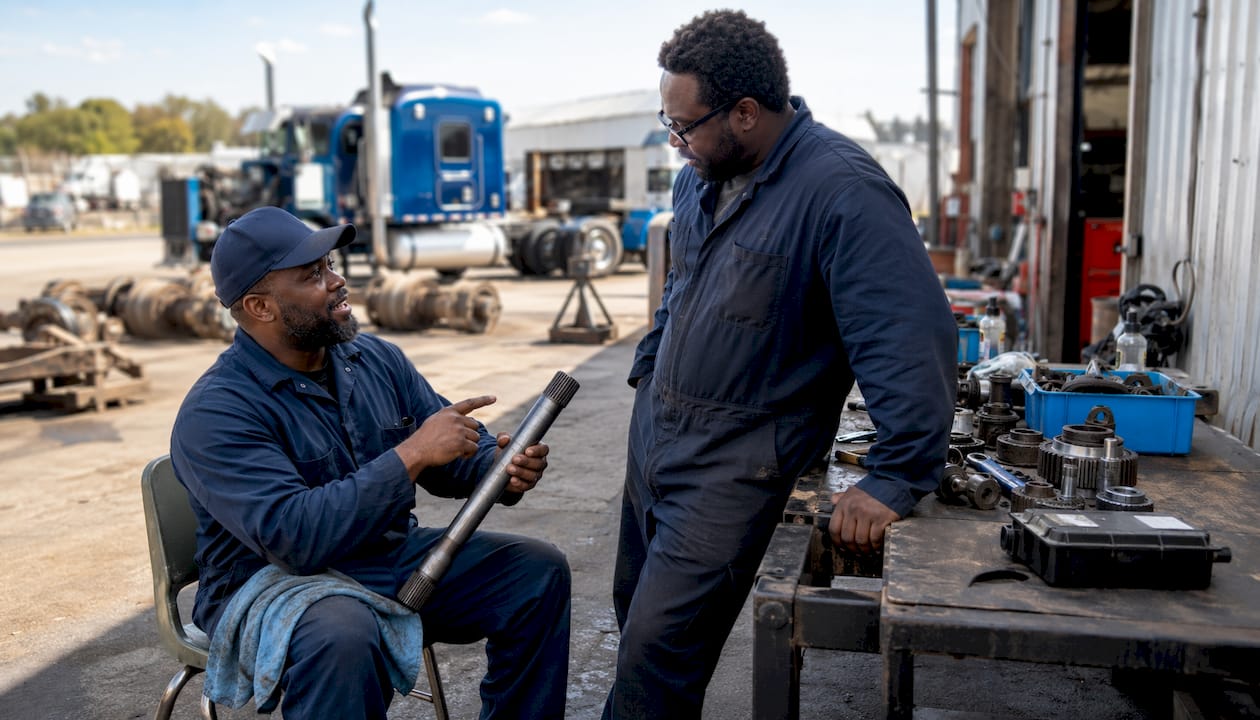
Fleet contacts are also a direct source for surplus parts. When a fleet retires a truck or upgrades a component, the pulled parts often go to trusted contacts before hitting any public market. Those parts typically come with known history and a relationship-based accountability that no online listing can replicate.
Ways to tap into mechanic and fleet networks:
- Ask your regular shop which suppliers they use and trust for used drivetrain parts
- Join regional trucking associations or online forums where fleet managers share sourcing tips
- Offer to pay a mechanic's hourly rate for a pre-purchase inspection on a high-value part
- Ask fleet managers whether they sell or know of surplus parts from retired units
- Use industry events and trade shows to build supplier relationships directly
6. How to inspect and verify used truck parts before you pay
Inspection is where most buyers cut corners and most problems start. For structural components, focus on weld patterns and mounting points rather than surface rust. Discoloration or cracks at stress interfaces indicate overloading or poor repair, and those issues do not show up in a casual glance at a photo.
Part history is equally critical. Reputable sellers disclose mileage, usage context, and maintenance records and often back that disclosure with a limited warranty. A seller who cannot or will not provide this information is telling you something about their confidence in the part.
Verification checklist before any purchase:
- Confirm the part number matches your truck's VIN and configuration exactly
- Request clear, detailed photos of all mounting points, connectors, and wear surfaces
- Ask for mileage and the vehicle the part was pulled from
- Get warranty terms and return policy in writing before paying
- For high-value parts, hire a third-party mechanic to inspect before shipment
- Use a secure payment method with buyer protection; avoid wire transfers to unknown sellers
- Check that the seller's contact information, business name, and bank details are consistent
Reputable suppliers provide warranties even on used components, covering replacement and sometimes shipping costs. A seller who offers a limited warranty period on a used part is demonstrating real confidence in what they're selling.
Pro Tip: For a diesel engine buying checklist that covers inspection photos, batch codes, and condition reports, the used diesel engine guide at Nationwide Truck Parts walks through every step in detail.
7. Questions to ask any supplier before you commit
Asking the right questions before payment is the single most effective fraud prevention tool available. A trustworthy supplier answers clearly and quickly. One who deflects, delays, or gives vague answers is showing you exactly how they will handle a problem after the sale.
Core questions for any used truck parts seller:
- What vehicle was this part pulled from, and what is the mileage?
- Has the part been tested, and do you have documentation of that test?
- What warranty do you offer, and what does it cover specifically?
- What is your return process if the part arrives damaged or incompatible?
- Can you provide additional photos of the mounting points and connectors?
- How do you handle a defect claim after installation?
Suppliers who encourage communication and readily provide inspection reports, batch codes, and additional photos are consistently more trustworthy than those who treat pre-sale questions as an inconvenience.
8. Building a long-term sourcing strategy for affordable truck parts
A one-time purchase from a random seller is a gamble. A vetted supplier list built over time is an asset. Fleet managers who evaluate suppliers on total operational value, including quality consistency, delivery reliability, and post-sale support, consistently outperform those who chase the lowest unit price.
Diversify your sources. Relying on a single supplier for all components creates risk. A local yard for structural parts, a specialty dismantler for drivetrain components, and a tested online source for electronic modules gives you coverage across categories without depending on any one relationship.
Practical steps for a sustainable sourcing strategy:
- Maintain a running list of vetted suppliers with notes on part categories, pricing, and reliability
- Track warranty claims and return experiences to grade each supplier over time
- Use VIN-based lookup tools consistently to eliminate compatibility errors before ordering
- Review your supplier list quarterly and replace underperformers
- Time larger purchases around known inventory cycles at salvage yards, particularly after fleet auctions
- Keep records of part numbers, sources, and installation dates for every major component
For fleets sourcing multiple engines or transmissions, the diesel engine sourcing guide at Nationwide Truck Parts covers scale purchasing strategies worth reviewing.
9. Why Nationwide Truck Parts stands out for tested, warranted used parts
Nationwide Truck Parts operates with a daily-updated inventory of used heavy truck parts, each inspected and tested before it ships. That process covers engines, transmissions, and electronic modules, with a standard warranty included on every part. For truck owners and fleet managers who cannot afford downtime from a failed component, that warranty is not a marketing line. It is a concrete commitment.
The inventory includes specific, hard-to-source components like the Freightliner CPC4 Module RA0034461002 and the Eaton Fuller FRO16210C 10-speed transmission, both available with OEM warranty documentation. Finding those parts tested and warranted in a single place is genuinely uncommon.
What Nationwide Truck Parts delivers:
- Thorough inspection and testing on every part before listing
- Standard warranty coverage across the inventory
- Same-day shipping on available parts, reducing truck downtime
- Daily inventory updates so the catalog reflects actual stock
- VIN-compatible part matching to reduce ordering errors
- Direct customer support to confirm compatibility before purchase
For fleet managers building a compatibility-verified parts list, Nationwide Truck Parts' inventory depth and testing standards make it a practical first call, not a last resort.
10. How to use reviews and ratings platforms to assess supplier reputation
Online reviews are most useful when you read them critically rather than just tallying stars. Look for reviews that mention specific parts, describe the condition on arrival, and comment on how the seller handled problems. A supplier with 50 reviews mentioning accurate descriptions and fast resolution of issues tells you far more than one with 500 generic five-star ratings.
Google Business profiles, industry forums like Reddit's trucking communities, and platform-specific feedback systems all serve different purposes. Google reviews tend to reflect the full customer experience. Forum discussions surface the kind of candid, experience-based opinions that sellers cannot easily manipulate. Platform ratings on specialty truck parts marketplaces reflect transaction-specific performance.
Practical ways to use ratings and reviews:
- Search the supplier's business name plus "reviews" and "complaints" separately
- Check the Better Business Bureau for formal complaint history on established businesses
- Read one-star and two-star reviews first; they reveal how the seller handles problems
- Look for verified purchase labels on platform reviews where available
- Ask in trucking forums whether other owners have used the supplier for your specific part category
A supplier with a pattern of unresolved complaints, even if the overall rating looks acceptable, is a risk worth avoiding when the part in question keeps your truck on the road.
Nationwide Truck Parts: tested parts, same-day shipping, no guesswork
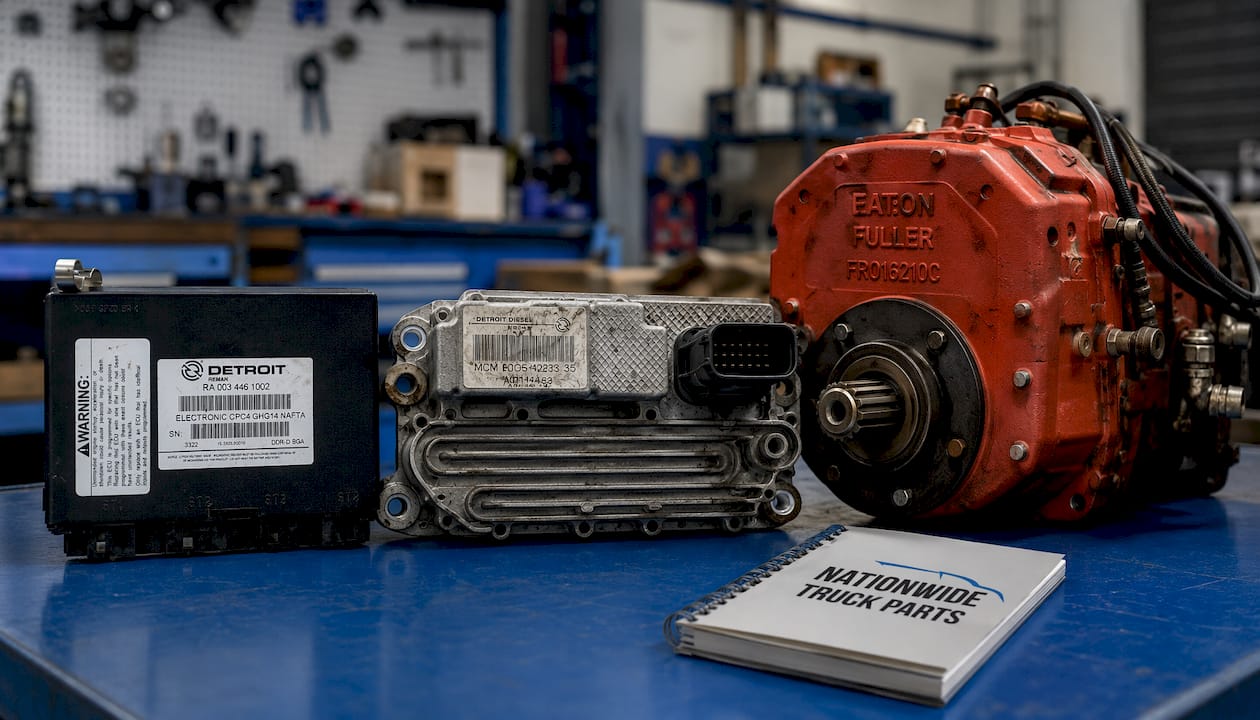
Buying used truck parts from an unverified seller is a coin flip. Nationwide Truck Parts removes that uncertainty by inspecting and testing every component before it ships, then backing each part with a standard warranty. The inventory covers diesel engines, transmissions, and electronic modules, updated daily so you see actual available stock rather than placeholder listings.
For truck owners who need a specific part fast, same-day shipping on in-stock components means less time waiting and more time running. Fleet managers sourcing at scale get the same tested inventory, the same warranty coverage, and direct support to confirm compatibility before the order goes through.
If you need a tested, warranted heavy truck part today, browse the current inventory at Nationwide Truck Parts and confirm availability with the team before you order.
Key Takeaways
Reputable used truck parts suppliers combine documented part history, warranty coverage, and transparent communication, and the best sourcing strategy uses multiple vetted channels rather than a single source.
| Point | Details |
|---|---|
| VIN-based matching prevents errors | Always use your 17-character VIN to confirm compatibility before ordering any used part. |
| Warranty signals seller confidence | Reputable suppliers offer warranties on used parts, covering replacement and sometimes shipping. |
| Inspection focus for structural parts | Check weld patterns and mounting points first; surface rust matters less than stress-point cracks. |
| Diversify your supplier sources | Combine local salvage yards, specialty dismantlers, and tested online dealers to reduce sourcing risk. |
| Nationwide Truck Parts | Offers inspected, warranted used heavy truck parts with same-day shipping and daily inventory updates. |
FAQ
How do I find reliable used semi truck parts?
Start with your truck's VIN and search specialty platforms that offer compatibility filters and verified seller ratings. Combine online sources with local salvage yards and specialty dismantlers who provide condition reports and warranties.
Who sells heavy-duty truck parts with warranty coverage?
Specialty dismantlers and tested parts dealers like Nationwide Truck Parts include standard warranties on used components. Look for sellers who document the part's history and cover replacement costs in writing before you pay.
What truck parts wear out the fastest?
Brake components, clutches, and belts typically require the most frequent replacement on heavy trucks. Drivetrain parts like transmissions and engine modules last longer but carry higher replacement costs, making sourcing quality used units especially worthwhile.
What is the best source for hard-to-find used truck parts?
Specialty truck dismantlers and tested online dealers with daily-updated inventories are the most reliable sources for rare components. Nationwide Truck Parts carries specific hard-to-find parts like the Freightliner CPC4 Module and Eaton Fuller FRO16210C transmission, both inspected and warranted.