
Shipping a heavy truck diesel engine is not like sending a pallet of parts. These units weigh hundreds of pounds, contain residual hazardous fluids, and require specific freight classifications before any carrier will touch them. Get the classification wrong, skip the fluid draining, or hand the driver a sloppy Bill of Lading, and you are looking at a rejected load, reclassification fees, or a damaged engine sitting in a terminal.
Here is what freight shipping mechanics look like for heavy truck diesel engines in practice:
- Freight class: Crated engines typically fall under NMFC Class 70; palletized engines land at Class 85, which carries higher rates
- Shipping method: LTL (less-than-truckload) for single engines; FTL (full truckload) for multiple units or urgent, high-value shipments
- Regulatory prep: US regulations require all diesel engines to be fully drained of oil, coolant, and fuel before any carrier will accept them
- Documentation: A completed Bill of Lading listing correct weight, dimensions, and NMFC class is mandatory
- Packaging: Crating or palletizing with heavy-duty strapping, foam cushioning, and sealed fluid ports
Table of Contents
- How freight classification and pricing actually work for heavy truck engines
- LTL vs. FTL: which shipping method fits your engine shipment?
- Regulatory requirements and preparation steps before the engine ships
- Logistics best practices for loading, transit, and delivery
- Why Nationwide Truck Parts is built for fleet managers sourcing used diesel engines
- Interstate permits and customs considerations for engine shipments
- Key Takeaways
- FAQ
How freight classification and pricing actually work for heavy truck engines
The National Motor Freight Classification (NMFC) system is what determines your shipping rate, and for diesel engines, the class you land in depends almost entirely on how you package the unit.
A crated engine earns Class 70; a palletized engine is Class 85. That gap matters because LTL rates are priced per hundredweight, and a higher class means a higher multiplier applied to every hundred pounds of freight. An engine on a pallet costs noticeably more to ship than the same engine in a crate, even though the weight is identical.
What drives classification beyond packaging:
- Density: Heavier, more compact loads classify more favorably
- Stowability: An awkward footprint or top-heavy load raises the class
- Handling risk: Residual fluid or irregular shape signals higher handling cost to the carrier
- Packaging integrity: A solid crate signals a lower-risk, easier-to-handle unit
The practical takeaway: spending money on a proper crate often pays for itself in reduced freight charges, especially on long hauls.
LTL vs. FTL: which shipping method fits your engine shipment?
Most single diesel engine shipments move via LTL freight. You share trailer space with other shippers, pay only for the space your engine occupies, and the carrier handles the routing. For fleet managers sourcing one replacement engine, LTL is the standard approach and usually the most cost-effective.
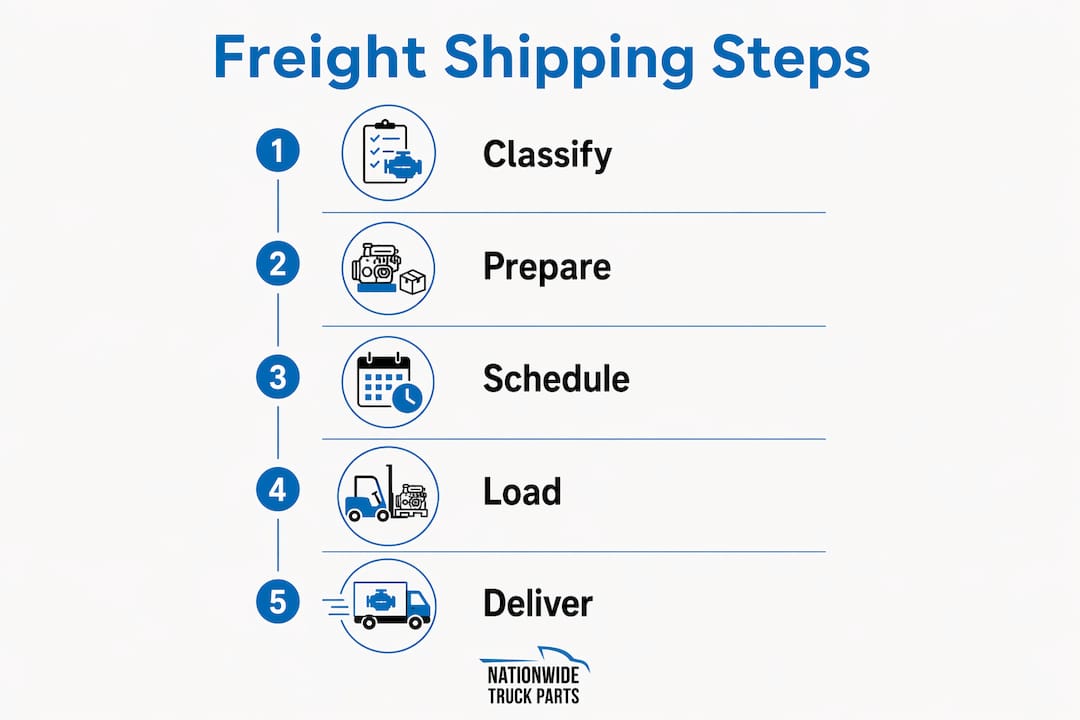
FTL makes sense when the calculus shifts. Shipping multiple engines at once, moving a high-value rebuilt unit where extra handling is a real risk, or facing a hard deadline all push toward a dedicated truck. With FTL, the engine never transfers between terminals, which cuts both transit time and the number of times someone touches the load.
Key differences to weigh:
- LTL: Lower cost per shipment, shared handling, longer transit windows, higher chance of terminal transfers
- FTL: Faster, direct routing, dedicated truck, fewer handoffs, higher base cost
- Handling risk: Every terminal transfer in LTL is a moment where a heavy crate can be dropped or shifted
- Transit time: LTL shipments for cross-country engines typically take several business days; FTL can cut that significantly
- Urgency: A truck sitting in your yard costs money every day. When downtime is expensive, FTL's speed often justifies the premium
For a deeper look at sourcing and shipping decisions, the fleet manager's diesel engine guide covers LTL and FTL tradeoffs in detail.
Regulatory requirements and preparation steps before the engine ships
This is where most shipments go wrong. Carriers treat diesel engines as hazardous freight because residual oil, fuel, and coolant are flammable and can leak onto other cargo. A wet engine will be rejected at pickup, and some carriers charge a dry-run fee even if they never load it.
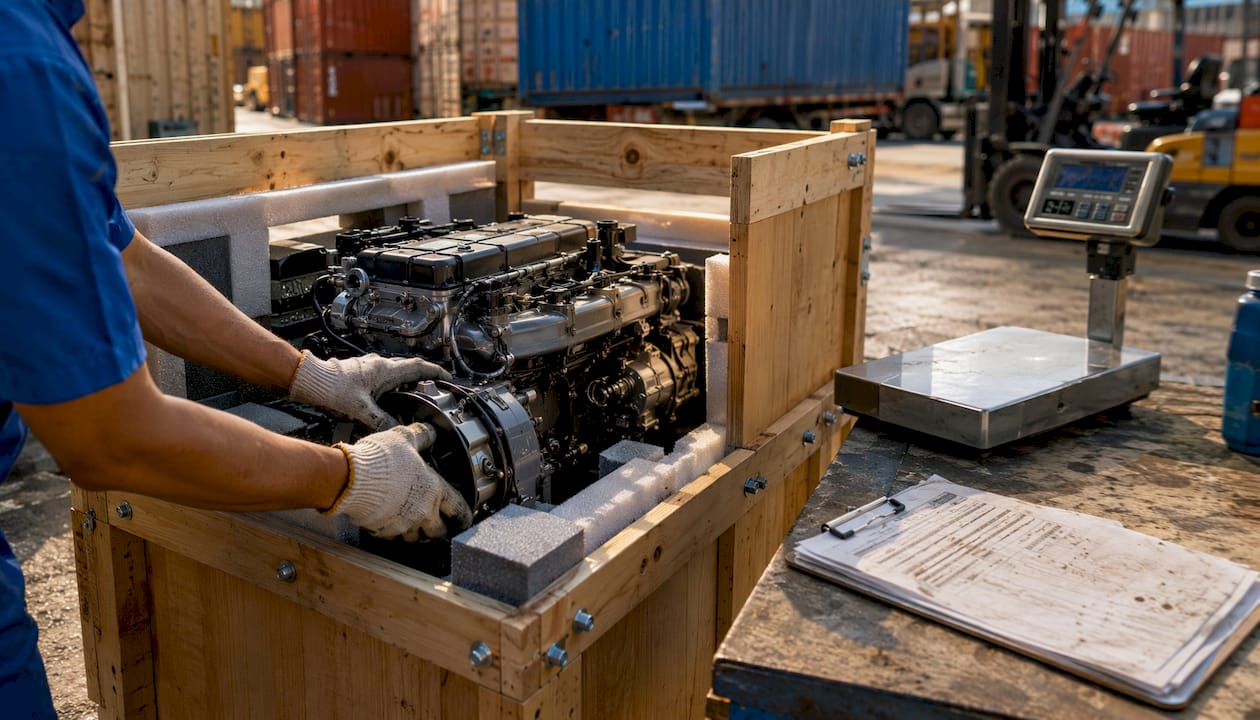
US regulations mandate complete fluid removal before shipment. That means oil, coolant, and fuel, not just a quick drain.
Required preparation steps:
- Drain all fluids completely, then let the engine sit for several hours so residual fluid settles and drains fully
- Clean the exterior to remove oil and grease buildup before packaging
- Cap all fluid ports with oil-resistant plugs or heavy-duty tape, not loose rags or plastic wrap
- Plug intake and exhaust openings to keep moisture and debris out during transit
- Spray exposed machined surfaces with a light preservative oil to prevent surface rust on multi-day shipments
- Photograph the engine before crating to document pre-shipment condition
Pro Tip: Let a freshly-run engine cool completely and sit overnight before final sealing. Fluids that appear drained often leave residual pooling in low points of the block. Sealing too early is the most common cause of in-transit leaks and carrier rejection.
Packaging must meet carrier standards. A crate assembled with nuts and bolts, engineered foam enclosures, and a solid base for forklift access is the preferred method. Palletizing is acceptable with most carriers, but confirm acceptance before scheduling pickup. Some carriers refuse uncrated engines outright, and finding that out after the driver arrives costs you a dry-run fee and a rescheduled pickup.
Logistics best practices for loading, transit, and delivery
Getting the engine out the door without incident requires coordination on both ends of the shipment, not just good packaging.
- Confirm equipment at origin and destination: Forklifts, loading docks, or liftgate service must be confirmed before the carrier arrives. A heavy crate arriving at a shop with no forklift is a serious problem.
- Bill of Lading accuracy: The BOL must list correct crated weight, dimensions, NMFC class, and any special handling instructions. Errors trigger reclassification or delays at the terminal.
- Photograph the crated engine: Document the completed crate and pallet, note the crated weight, and keep those photos. They are your evidence if a damage claim becomes necessary.
- Declare accurate value: Standard freight insurance often does not cover the full replacement value of a diesel engine. Declared value coverage or a separate cargo policy fills that gap.
- Choose carriers with automotive freight experience: A carrier whose network is built around light palletized consumer goods handles a 600-pound engine block differently than one experienced with industrial and automotive freight.
- Inspect on delivery: The recipient should check for crate damage and note any issues on the delivery receipt before signing. That notation is what a damage claim rests on.
Pro Tip: Call the carrier the day before pickup to confirm the window, verify equipment needs, and flag any access issues at the pickup location. Early communication prevents dry-run fees and same-day scrambles.
For guidance on engine compatibility verification before you even book freight, that step belongs before the shipping process starts.
Why Nationwide Truck Parts is built for fleet managers sourcing used diesel engines
When a truck is down, the engine sourcing and shipping processes need to move fast. Nationwide Truck Parts specializes in used heavy truck diesel engines and drivetrain components, with an inventory that updates daily to reflect what is actually available.
Every engine goes through thorough testing and inspection before it ships, and each unit carries a standard warranty. That matters when you are making a freight decision on a high-value component: you want to know the engine was verified before it was packaged, not after it arrives.
What sets Nationwide Truck Parts apart for fleet operations:
- Same-day shipping on in-stock engines, which cuts the window between order and freight pickup
- Daily-changing inventory covering a wide range of makes and configurations, including Detroit Diesel engines and other major platforms
- Tested and inspected units with documented condition, reducing the risk of a costly return freight situation
- Standard warranty coverage on used engines, giving fleet managers a baseline of protection
Browse the current inventory of used truck engines for sale at Nationwide Truck Parts, or visit nationwideheavytruckparts.com to check availability and get same-day shipping on the engine your fleet needs.
Interstate permits and customs considerations for engine shipments
Most domestic engine shipments within the contiguous US move without special permits, provided the load stays within legal size and weight limits for the trailer type. Where permits come into play is when the crated engine and trailer combination exceeds state weight thresholds or dimensional limits, which is more common with large industrial engines than with standard truck diesel units.
For interstate shipments, each state sets its own oversize and overweight thresholds. A load legal in one state may require a permit in the next. Carriers experienced with heavy freight handle permit coordination as part of the move, but confirm this upfront rather than assuming it is included.
For cross-border or international engine shipments, the documentation requirements expand significantly. Customs clearance requires a commercial invoice, certificate of origin, and in some cases an import permit specific to the destination country. Engines are frequently subject to customs inspection, and incomplete paperwork delays clearance. If you are shipping internationally, working with a freight forwarder who handles engine and machinery customs is the practical path.
Key Takeaways
Freight shipping for heavy truck diesel engines follows a defined process: correct classification, proper preparation, and accurate documentation determine whether the shipment moves cleanly or gets rejected at the terminal.
| Point | Details |
|---|---|
| Freight class drives cost | Crated engines classify as NMFC Class 70; palletized engines land at Class 85 with higher rates. |
| LTL vs. FTL depends on urgency | LTL fits single-engine shipments; FTL is faster and reduces handling for multiple or high-value units. |
| Fluid draining is mandatory | US regulations require complete removal of oil, coolant, and fuel before any carrier will accept the load. |
| BOL accuracy prevents disputes | The Bill of Lading must list correct weight, dimensions, and NMFC class to avoid reclassification fees. |
| Insurance gaps are real | Standard freight coverage rarely covers full engine value; declared value or additional cargo insurance is recommended. |
FAQ
What freight class applies to a heavy truck diesel engine?
A crated heavy truck diesel engine typically ships as NMFC Class 70; a palletized engine is Class 85. The difference in class directly affects your LTL rate.
Do engines need to be drained before freight shipping?
Yes. US regulations require all diesel engines to be completely drained of oil, coolant, and fuel before shipment. Carriers will reject a wet engine at pickup, and dry-run fees may apply.
What documents are required to ship a diesel engine by freight?
At minimum, you need a completed Bill of Lading with accurate weight, dimensions, and NMFC classification. Engines classified as hazardous goods also require a dangerous goods declaration and appropriate handling labels.
When does FTL make more sense than LTL for engine shipments?
FTL is the better choice when shipping multiple engines at once, when the unit is high-value and extra handling is a risk, or when a hard delivery deadline makes LTL's transit variability unacceptable.
Does shipping a diesel engine across state lines require a permit?
Most standard diesel engine shipments move without permits if the load stays within legal size and weight limits. Oversized or overweight loads require state-specific permits, which experienced heavy freight carriers coordinate as part of the move.