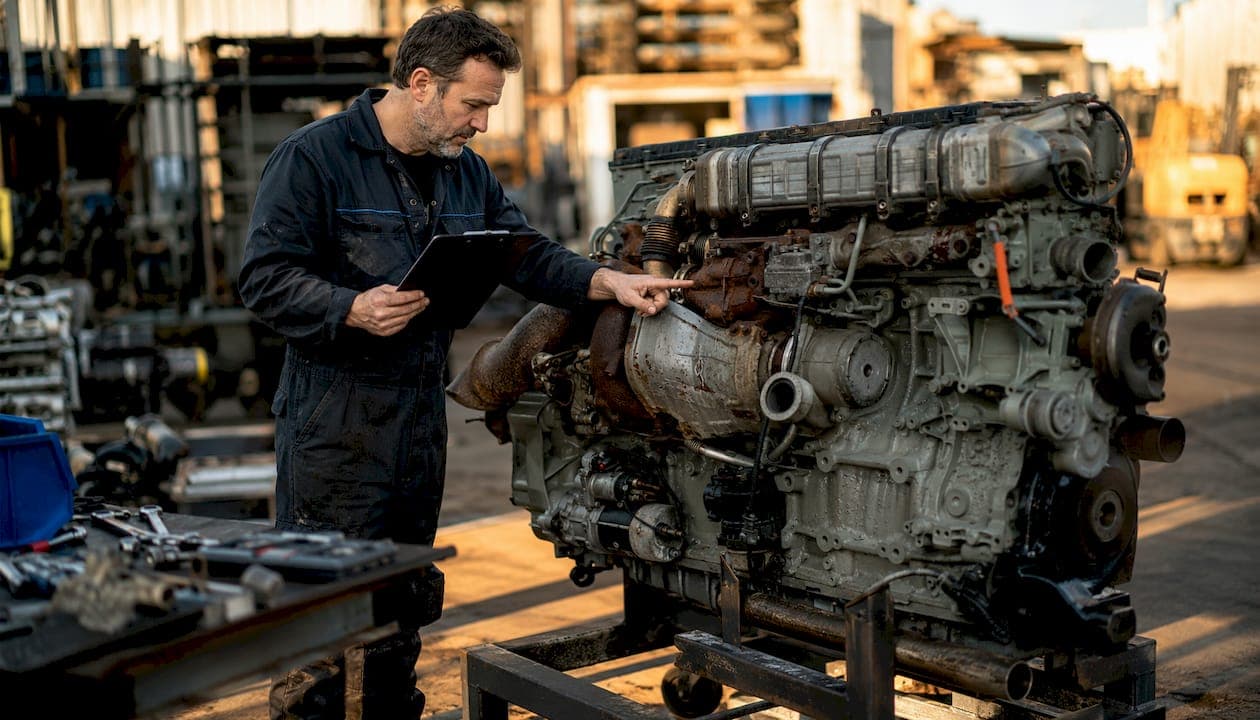
Yes, you can order a used truck engine same day and get it dispatched today — but "same day" almost always means the engine leaves the warehouse today, not that it arrives at your shop today. Here is what to do right now:
- Call the seller and confirm the engine is physically in stock (not "available to source")
- Ask for a run-time video with the serial number visible before you commit
- Request compression test results and an oil analysis report
- Confirm the dispatch cutoff time — most warehouses stop same-day processing by 2:00 PM local time
- Lock the engine with a deposit the moment you verify the documents
Pro Tip: "Same-day dispatch" and "same-day arrival" are two different promises. Dispatch means the engine ships today. Arrival within 24 hours requires a dedicated hot-shot carrier and is only realistic within roughly 300–500 miles of the warehouse. If your shop is farther out, plan for next-day or two-day delivery and arrange your install crew accordingly.
Table of Contents
- How do you qualify a used truck engine fast before ordering?
- What does "same-day shipping" actually mean for a truck engine?
- What inspection documents actually prove an engine's condition?
- What drives the price, and what warranty should you expect?
- How to place a same-day order with Nationwide Truck Parts
- How long does a truck engine swap actually take?
- Key Takeaways
- The part most buyers get backwards
- Nationwide Truck Parts gets inspected engines out the door fast
- Useful sources
- FAQ
How do you qualify a used truck engine fast before ordering?
Speed matters, but a bad engine costs you more time than a one-hour verification call. Run through this before you hand over a deposit.
Three-minute phone script:
- "Is this engine physically on your floor right now, or does it need to be pulled?"
- "What was the donor vehicle's mileage, and why was it scrapped — collision or mechanical?"
- "Was the engine running when the donor arrived at your facility?"
- "What is your same-day dispatch cutoff, and can you confirm shipping today?"
- "Do you have a run-time video with the serial number on screen?"
Documents to request immediately:
- Compression test results (relative cylinder-to-cylinder balance is important)
- Oil analysis report — labs charge a fee per sample and the results reveal wear metals and contamination that no visual inspection catches
- Run-time video with serial/ID number clearly visible on screen
- Donor vehicle VIN and odometer reading
- Photos from at least four angles, including mounting points, turbo, and wiring harness condition
- Core tag and any existing inspection checklist the seller completed
Red flags that should stop a same-day purchase:
- Seller cannot produce a run-time video or claims "it ran fine" with no documentation
- No compression test results and no willingness to provide them
- Donor history is vague ("came from a fleet" with no VIN or mileage)
- Missing serial numbers or a core tag that does not match the listing
- Seller pushes you to wire funds before documents are sent
A reputable salvage source will tell you upfront why the truck was scrapped — collision versus mechanical failure is one of the most important distinctions you can make before buying. Also check our used diesel engine buying checklist for a more detailed pre-purchase walkthrough.
What does "same-day shipping" actually mean for a truck engine?
The phrase gets used loosely. Here is what it means in practice, and what it costs.
Dispatch vs. arrival: Dispatch same day means the engine is picked up or handed to a carrier today. Arrival same day is a separate, harder promise. Due to FMCSA Hours of Service limits, a practical same-day delivery radius is roughly 300–500 miles from the shipping point. Beyond that, you are looking at next-day or two-day arrival regardless of how fast the seller moves.
Carrier types and when to use each:
- Hot-shot / dedicated run: Fastest option. The engine travels as the only load, which also reduces handling damage risk. Expect multiple times the standard hauling rates because you are paying for truck exclusivity and the driver's full day.
- LTL freight: Standard for most engine moves. Engines typically exceed parcel carrier limits, so LTL is the default. Fluids must be drained, the engine must be properly palletized or crated, and weight/dimensions must be accurate — carriers will reclass and surcharge if they are not. Typical transit: usually a day or more depending on distance.
- Expedited air freight: Services like AirFreight.com handle time-critical freight up to 12,500 lbs with same-day air options when ground distance makes road transport impractical. Cost is highest, but expedited air freight is a viable option for cross-country emergencies.
| Carrier Type | Typical Transit | Relative Cost | Best For |
|---|---|---|---|
| Standard LTL | A few days | Baseline cost | Non-emergency, planned replacement |
| Expedited LTL | Faster transit | Higher cost | Regional urgency for moderate distance |
| Hot-shot / dedicated run | Same day for relatively short distances | Multiple times standard cost | True same-day arrival for local hauls |
| Expedited air freight | Very fast transit nationwide | Highest cost | Cross-country emergency |
Booking time changes everything. Call before 10:00 AM if you want same-day dispatch confirmed. A deposit placed by noon locks the engine and the driver. Afternoon calls often push dispatch to the next morning, which means arrival shifts a full day. For sourcing engines fast, morning action is the single biggest variable you control.
What inspection documents actually prove an engine's condition?
Documents are not paperwork formalities. They are the only way to verify condition without physically touching the engine.
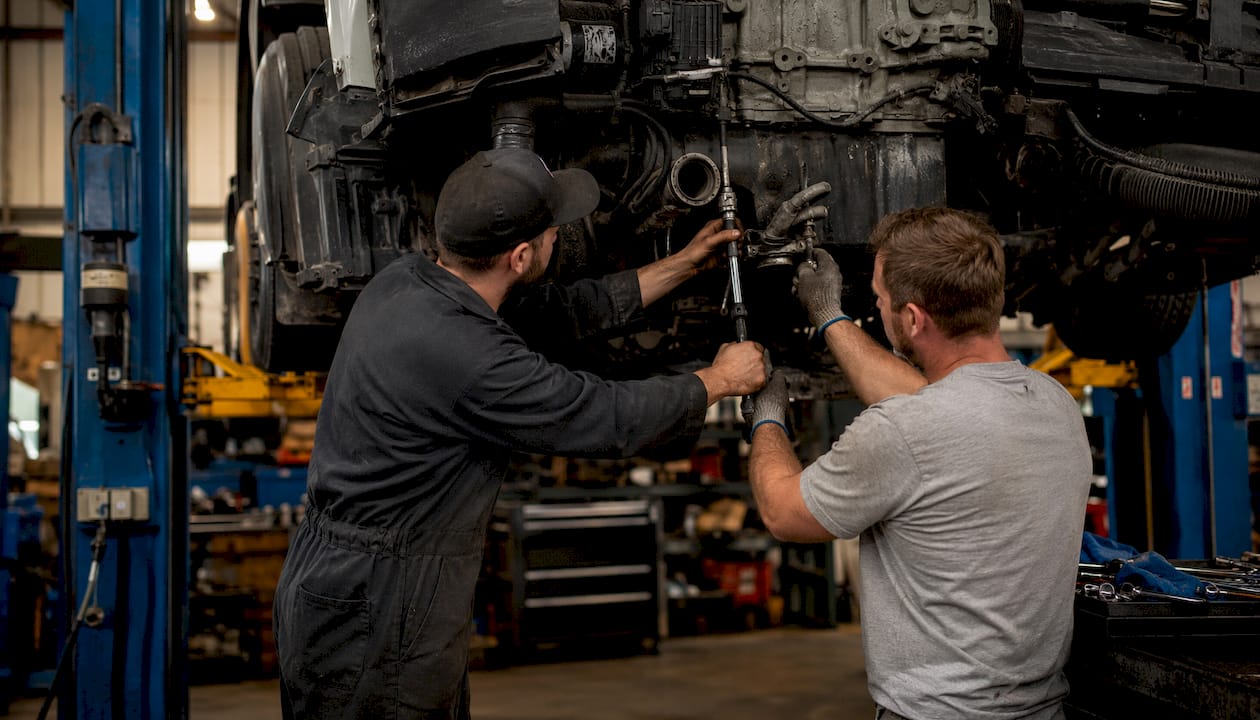
Inspection checklist — request all of these:
- Compression test results: Cylinder-to-cylinder variation tells you more than a single absolute number. A healthy engine shows balanced readings across all cylinders. Any cylinder reading significantly lower than the others signals a problem.
- Oil analysis report: An oil sample takes minutes to collect and costs around $30 at most labs. The results flag wear metals (iron, copper, aluminum) and contamination (coolant, fuel dilution) that indicate internal damage long before it shows up visually.
- Run-time video: Must show the engine idling under its own power with the serial number or ID tag visible on screen. Timestamps matter — a video from six months ago is not the same as one from this week.
- Donor vehicle photos: Multiple angles including mounting points, turbo condition, exhaust manifold, and wiring harness. Photographing from multiple angles before crating also protects against freight damage disputes after delivery.
- Donor history: VIN, odometer, and reason for scrapping. Collision donors may have hidden stress damage; mechanical failures are more predictable.
- Core tag and serial numbers: Must match the listing exactly.
Reading an oil analysis takes about two minutes once you have the report. Watch for elevated iron (cylinder wear), copper (bearing wear), coolant contamination (head gasket), and fuel dilution (injector or ring issues). Any of those in significant concentrations is a reason to pause the order.
A professional pre-purchase inspection including compression, oil analysis, and a road test costs hundreds of dollars when time allows. For a same-day order, you will not have time for a full PPI — which is exactly why the seller's own documentation has to be thorough and verifiable.
Pro Tip: Ask the seller to record a short timestamped video showing the serial number plate, then pan to the engine running. A seller who hesitates on this request is telling you something important.
What drives the price, and what warranty should you expect?
A used truck engine is the middle path between a full rebuild and a full truck replacement. The cost band for a used engine runs roughly $10,000–$20,000 for the unit itself, with labor adding another $4,000–$7,000 on top. Several factors push that number up or down.
Price drivers:
- Donor mileage (lower miles = higher price, all else equal)
- Tested and run-time documented vs. untested ("as-is")
- Included accessories: turbo, wiring harness, EGR components, and aftertreatment hardware add value but also add cost
- Reason for scrapping (collision donor engines often sell cheaper but carry more risk)
- Packaging quality for freight (a properly crated engine costs more to ship but arrives intact)
Warranty terms to expect:
- Most resellers offer a limited warranty period covering internal mechanical failure under normal operating conditions
- Warranties typically exclude external damage, overheating caused by the buyer's cooling system, and installation errors
- Some sellers offer extended terms for an additional fee — worth asking about for high-mileage units
Core charge and return policy:
- Core charges vary widely depending on the engine family
- The returned core must be complete, unmodified, and drained — a disassembled or damaged core usually forfeits the charge
- Confirm the return window in writing before you order; most sellers allow 30–60 days
On payment for same-day orders: A deposit is standard practice to hold an engine and lock a carrier. Acceptable methods typically include credit card, ACH transfer, or wire. Get a written receipt and a copy of the warranty terms before the engine leaves the dock. Never pay in full via wire to a seller who has not provided verified inspection documents — the deposit structure exists to protect both parties, and a legitimate seller will not object to it.
For fleet context on why used engines make financial sense, the cost math holds up clearly against both rebuilds and new replacements.
How to place a same-day order with Nationwide Truck Parts
Here is the exact workflow for an urgent order through Nationwide Truck Parts.
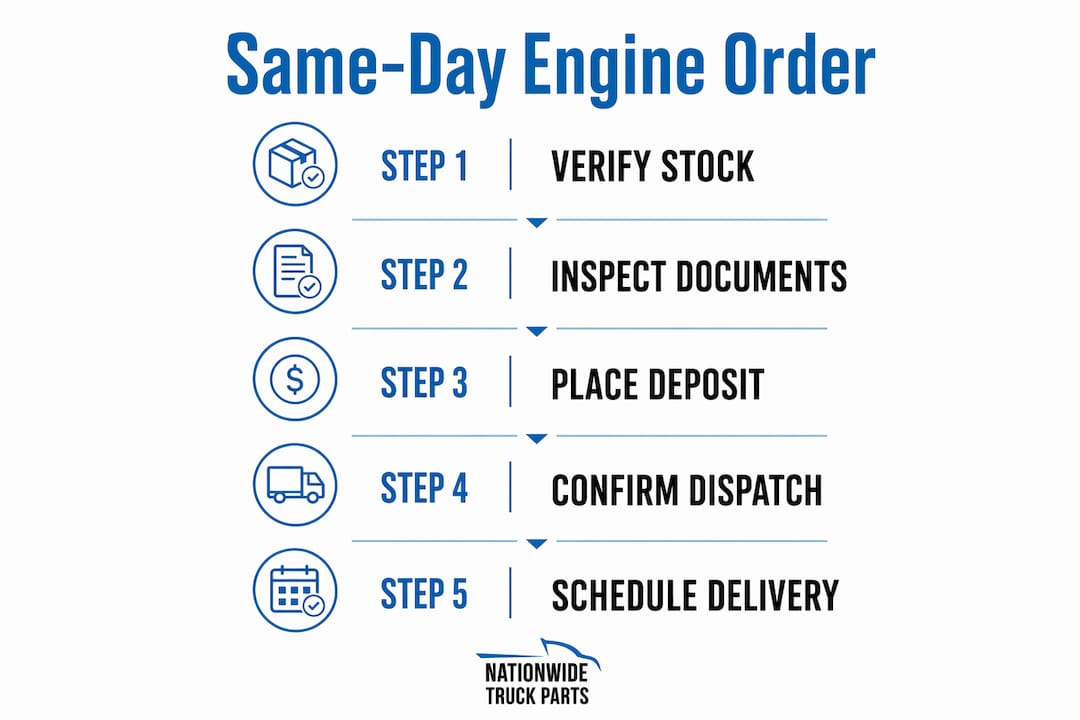
- Confirm inventory: Call or contact Nationwide Truck Parts and verify the specific engine is on the floor today. Inventory changes daily, so a listing from yesterday may already be sold. For a current in-stock example, the 2012 Detroit DD15 Engine Assembly 472903S is a documented good-running unit with inspection records available.
- Request the documentation package: Ask for the compression test results, oil analysis, run-time video, and donor VIN. Nationwide Truck Parts documents inspection results for engines they list, which cuts verification time significantly for urgent orders.
- Place your deposit: Authorize payment to hold the engine. This locks both the unit and the carrier slot. Have your credit card or ACH details ready.
- Confirm your receiving setup: Tell the team whether your shop has a forklift or needs a liftgate truck. Engines shipped via LTL require accurate weight and dimensions — Nationwide Truck Parts handles the crating and declaration, but your receiving dock needs to be ready.
- Schedule the carrier: For same-day dispatch, confirm the cutoff time and whether you need a hot-shot run or LTL. Nationwide Truck Parts can coordinate expedited carrier options for urgent moves. A freight management resource can also help you compare carrier options independently.
- Get delivery confirmation: Once the engine ships, confirm tracking details and the estimated arrival window. Have your install crew scheduled before the engine lands.
What to have ready on your end:
- Engine model, serial number, and application (year/make/model of the receiving truck)
- Receiving address with dock or liftgate specification
- Contact name and phone number for the delivery driver
- Forklift capacity or liftgate confirmation
- Install shop availability confirmed before you book the carrier
Additional Detroit DD15 assembly options are also available if the primary listing is sold by the time you call.
How long does a truck engine swap actually take?
Knowing the install timeline before the engine arrives prevents the most common delay: the engine shows up and the shop is not ready.
- Estimate your swap window: Heavy-duty truck engine swaps typically run 6–20 hours depending on model complexity, harness differences, and shop familiarity with the platform. A straightforward same-platform swap on a common engine family (like a DD15 in a Freightliner Cascadia) sits toward the lower end. An unfamiliar model with aftertreatment and APU connections pushes toward 20 hours or more.
- Pre-match the hardware: Confirm mount compatibility, turbo fitment, and exhaust manifold alignment before the engine arrives. A mismatch discovered after delivery adds hours.
- Drain and prep the bay: Have the old engine drained and the bay cleared before the replacement lands. Every hour of prep done in advance is an hour off the total downtime.
- Stage your parts: Gaskets, coolant, oil, filters, and any harness adapters should be on the bench before the swap starts. Running out for a $12 gasket set mid-job kills momentum.
- Confirm specialty tools: Some platforms require specific torque sequences or proprietary tools for the flywheel, injector cups, or EGR connections. Know this before day one.
- Schedule your crew: A two-technician team on a straightforward swap can realistically finish within one long shift. A solo tech on a complex job almost always spills into day two.
Pro Tip: Call your install shop the moment you confirm the engine order — not after it arrives. Give them the engine specs, the estimated delivery window, and the swap complexity so they can stage tools and clear the bay. The shops that finish in one day are the ones that started preparing 24 hours before the engine showed up.
For a full breakdown of swap cost factors by platform and complexity, that resource covers labor variables in detail.
Key Takeaways
Same-day ordering is realistic when the engine is physically in stock, documents are verified before the deposit, and the carrier type matches your distance and urgency.
| Point | Details |
|---|---|
| Dispatch vs. arrival | "Same-day dispatch" means it ships today; same-day arrival requires a hot-shot carrier within 300–500 miles. |
| Verify before you pay | Demand compression test results, oil analysis, and a timestamped run-time video before authorizing any deposit. |
| Carrier cost multipliers | Hot-shot runs cost 2x–3x standard LTL rates; expedited air is higher still but viable for cross-country emergencies. |
| Engine price range | Used truck engines typically run $10,000–$20,000 for the unit; budget $4,000–$7,000 more for labor. |
| Nationwide Truck Parts | Offers daily-updated inventory, documented inspection results, and same-day dispatch for urgent orders nationwide. |
The part most buyers get backwards
The instinct in an emergency is to move fast on price and slow down on verification. That is exactly the wrong order. A seller who cannot produce a run-time video and compression results within an hour of your call is not a seller who inspected the engine carefully. The documents are not a formality — they are the only proof you have that the engine will start when it comes off the truck.
Where I think buyers can reasonably compromise: accept dispatch-same-day without arrival-same-day if the distance makes same-day arrival impossible. That is a logistics constraint, not a quality signal. What you should never compromise on is the inspection documentation. A 30-day warranty is cold comfort if the engine arrives and will not turn over.
When to insist on arrival same day: if the truck is blocking a loading dock, a production line, or a contracted delivery route, the cost of a hot-shot carrier is almost always less than the cost of the delay. Run the math on your downtime rate before you balk at the freight premium.
Nationwide Truck Parts gets inspected engines out the door fast
When a truck is down and every hour costs you money, you need a supplier who has already done the verification work before you call. Nationwide Truck Parts maintains a daily-updated inventory of tested heavy truck engines, with documented compression results, oil analysis, and run-time video available for urgent orders. The 2012 Detroit DD15 Engine Assembly 472903S is one example of an in-stock, inspected unit ready for same-day dispatch.
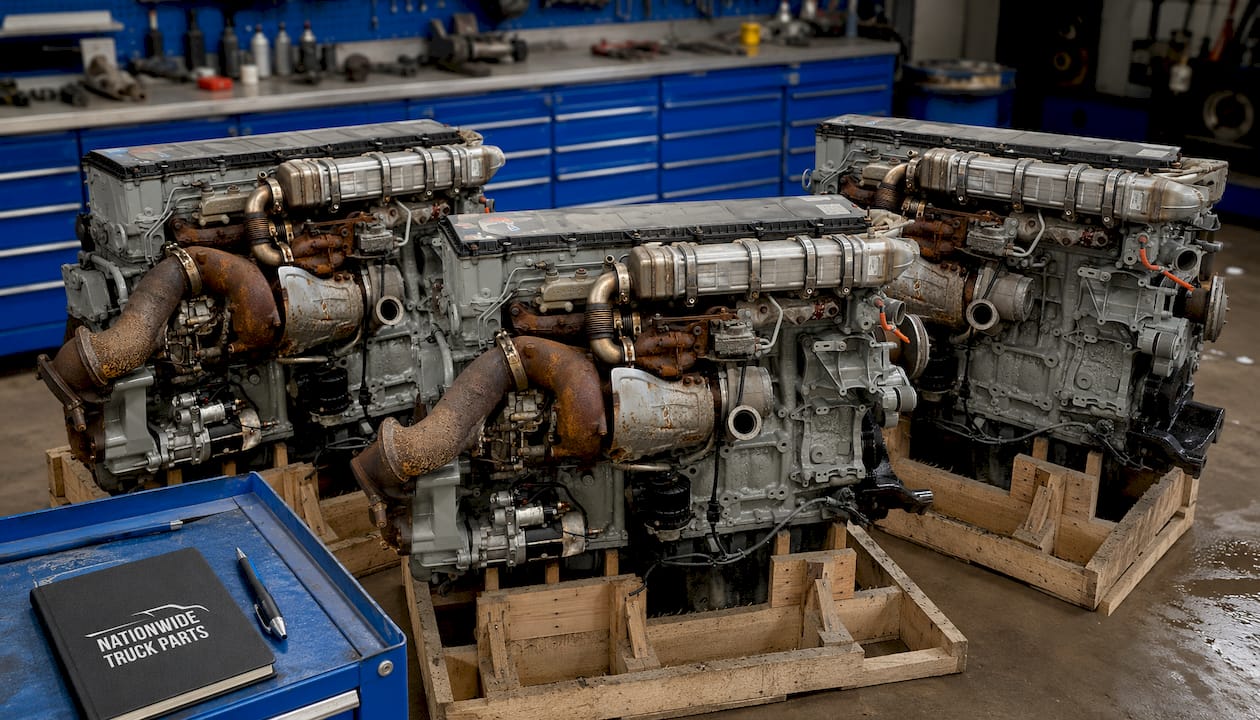
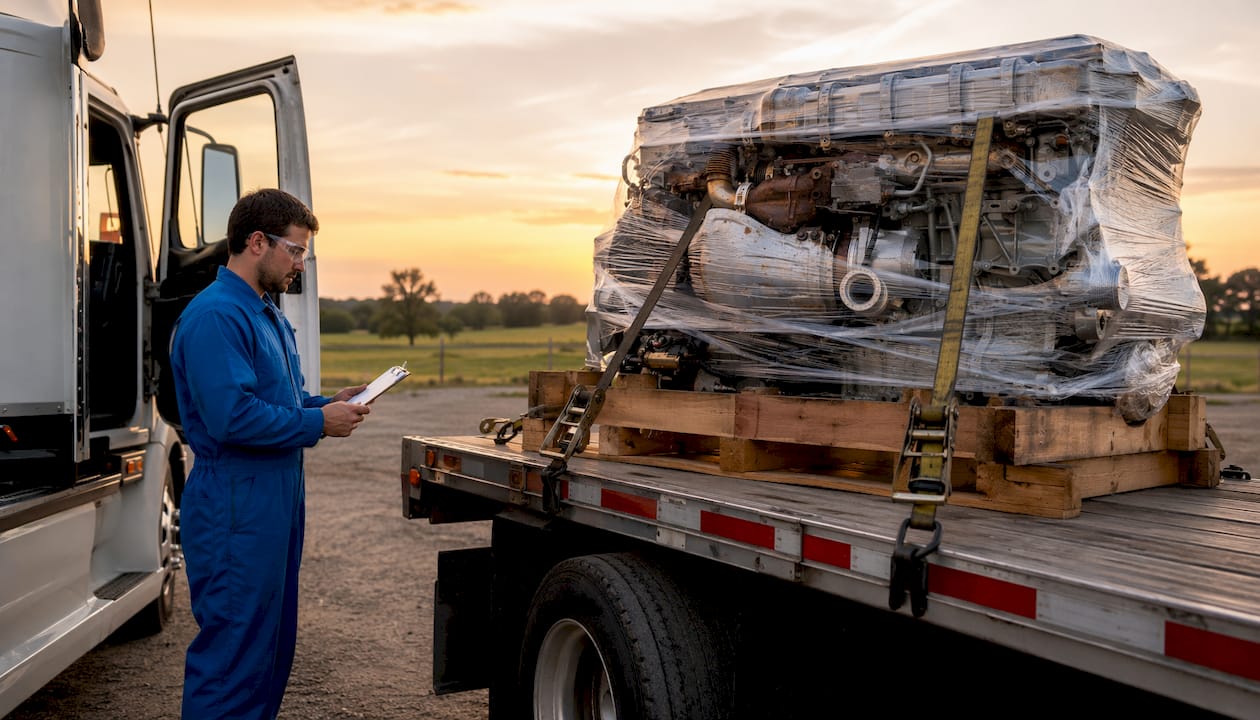
Every engine ships with a standard warranty and a documented inspection package. For same-day dispatch, have your engine model, receiving address, and dock or liftgate details ready when you call. Contact Nationwide Truck Parts now to confirm availability, lock your unit with a deposit, and get a carrier scheduled before your cutoff window closes.
Useful sources
These are the primary references behind the claims in this guide.
| Source | What it covers | Relevant section |
|---|---|---|
| Bear Down Logistics | Same-day heavy equipment shipping costs and distance limits | Shipping timelines, carrier cost table |
| PB Hauling | Hot-shot vs. LTL cost multipliers and dispatch vs. arrival distinction | Carrier types, BLUF pro tip |
| ParcelPath | LTL engine shipping requirements, crating, and photo documentation | Shipping prep, inspection docs |
| In-Flight Pilot Training | Oil analysis cost and wear-metal detection value | Qualification checklist, inspection section |
| Interstate Auto & Truck Salvage | Donor history questions and used engine qualification | Qualification checklist |
| FleetRabbit | Used engine cost band ($10,000–$20,000) and warranty norms | Pricing and warranty section |
| CarParts.com | Engine swap time estimates (6–20 hours) | Installation timeline section |
| USA Trucker Choice | PPI cost and inspection scope | Inspection documents section |
Where to act on these resources:
- Order an oil analysis kit from a lab like Blackstone Laboratories or Oil Analyzers Inc. before your engine arrives so you can test the first oil change
- Get expedited freight quotes directly from AirFreight.com or through a freight broker if your distance exceeds the hot-shot radius
- Use the BBB (bbb.org) to verify a seller's complaint history before wiring any deposit
FAQ
Can you replace an engine in one day?
A straightforward same-platform swap on a common heavy-duty engine takes 6–20 hours, so a one-day finish is possible with a two-tech crew, a prepped bay, and all parts staged in advance. Complex models with aftertreatment or harness differences typically run into a second day.
How long does it take for an engine to get delivered?
Delivery time depends on carrier type and distance. A hot-shot dedicated run can deliver within the same day inside 300–500 miles; standard LTL freight typically takes 1–3 days. Expedited air freight is available for cross-country emergencies when ground transit is too slow.
How long does it take to swap an engine in a truck?
Most heavy-duty truck engine swaps take 6–20 hours depending on model complexity, shop familiarity, and how much pre-work was done before the engine arrived. Nationwide Truck Parts recommends confirming your install crew and prepping the bay before the engine ships, not after it arrives.
How much is a used engine from a salvage yard?
Used heavy truck engines typically run $10,000–$20,000 for the unit, with labor adding another $4,000–$7,000. Price varies based on donor mileage, tested status, included accessories, and whether the engine comes with documented inspection results and a warranty.