Truck engine swap cost factors break down into five core buckets: parts, labor, machining, ancillary system upgrades, and downtime. A Class 8 diesel rebuild can cost tens of thousands of dollars, while a new or remanufactured replacement engine generally costs significantly more. Neither figure tells the full story until you add what the truck isn't earning while it sits in the shop.
Here is what drives the total cost:
- Parts: Major components (cylinder heads, pistons, rods, bearings, injectors, turbochargers) plus core deposits and consumables
- Labor: 60–120+ hours for a full rebuild; 16–20 hours for a straight engine swap
- Machining: Block resurfacing, crankshaft grinding, and cylinder boring on rebuilds
- Ancillary upgrades: Cooling system, exhaust fabrication, custom mounts, ECU calibration
- Downtime: Rebuilds average 7–14 days; replacements run 3–7 days, with $760 per hour in lost productivity at stake
- Secondary charges: Towing, diagnostic fees, disposal, and core return deposits that can add 15–25% on top of the base estimate
- Warranty: Rebuilds typically carry 90 days to 6 months of coverage; new or remanufactured engines offer 2–5 years
What are the main cost components in a truck engine swap?
Parts are where the money starts piling up fast. Cylinder head assemblies run $1,500–$4,000 depending on the engine model. Complete piston and ring kits cost $800–$2,500, crankshaft and bearing sets run $1,200–$3,500, and turbocharger assemblies land at $1,000–$3,000 for quality units. Fuel injection components are the most expensive line item per piece: complete injection pump replacements cost $2,000–$5,000, and individual injectors run $200–$600 each.
Labor is the second major variable. Skilled diesel technicians charge $85–$150 per hour, and a full rebuild demands 60–120+ hours depending on whether it is an in-frame or out-of-frame overhaul. A straight engine swap (remove and replace) takes 16–20 hours. Total installation labor for a replacement typically lands at $3,000–$5,000, though complex jobs involving cab removal or chassis modifications push well past that.
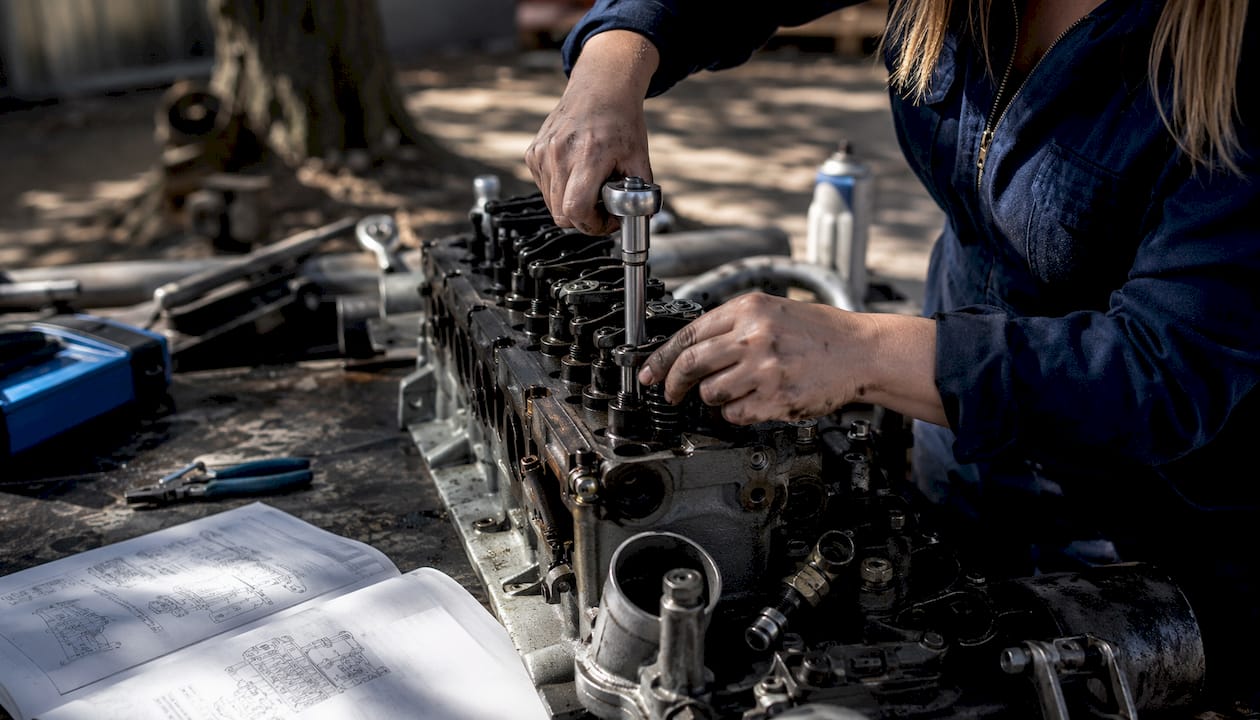
Machining adds cost that many owners do not anticipate. An out-of-frame overhaul requires block resurfacing, cylinder boring, and crankshaft grinding, all of which take time and specialized equipment. Shops that do not have in-house machining capability send cores out, which adds days to the timeline and a markup on top.
Secondary charges accumulate quietly. Core deposits alone range from $500–$2,000 per component, refunded only when acceptable cores are returned on time. Diagnostic fees, towing, and disposal of the old engine add more. Budget these as a separate line item, not an afterthought.
Geographic location shapes labor rates more than most owners expect. Urban shops in high-cost states charge at the top of the $85–$150 range; rural independents often come in lower. That gap can mean a $3,000–$5,000 swing on a full rebuild job.
Key cost components at a glance:
- Cylinder head assemblies vary in price depending on engine model and supplier.
- Piston and ring kits cost varies based on engine type and quality.
- Crankshaft and bearing sets prices depend on engine specifications and supplier.
- Turbocharger assemblies vary in cost depending on make and quality.
- Injection pump replacements generally cost several thousand dollars depending on engine type.
- Individual injector prices typically range in the low to mid hundreds of dollars each.
- Labor (rebuild): 60–120+ hours at $85–$150/hr
- Labor (swap/replacement): 16–20 hours
- Core deposits: $500–$2,000 per component
- Secondary charges (towing, diagnostics, disposal): 15–25% of base estimate
How do rebuild and replacement costs actually compare?
The sticker price gap is real, but downtime closes it faster than most fleet managers expect.
| Cost Element | Rebuild (In-Frame) | Rebuild (Out-of-Frame) | Replacement (Reman) | Replacement (New OEM) |
|---|---|---|---|---|
| Engine/Parts | $8,000–$15,000 | $10,000–$18,000 | $25,000–$35,000 | $35,000–$45,000 |
| Labor | $3,000–$5,000 | $5,000 | $3,000–$5,000 | $3,000–$5,000 |
| Ancillaries | $1,000–$3,000 | $2,000–$5,000 | $2,000–$5,000 | $2,000–$5,000 |
| Total (parts + labor) | $20,000–$40,000 | $25,000–$40,000 | $40,000–$55,000 | $40,000–$55,000 |
| Downtime | 7–14 days | 10–14 days | 3–7 days | 3–7 days |
| Warranty | 90 days–6 months | 90 days–6 months | 2–5 years | 2–3 years |
A rebuild looks like the obvious winner on paper. The problem is downtime. At $760 per hour in lost productivity, a rebuild taking 14 days versus a replacement taking 7 days generates roughly $85,000 in additional lost revenue, not $11,000 as the simplified math suggests. For a high-utilization truck running 150,000+ miles per year, the faster turnaround of a replacement can make it cheaper overall once you run the real numbers.
Used engine swaps provide an alternative at generally lower engine cost plus labor, with downtime similar to reman swaps, though risk and warranty coverage vary. The tradeoff is risk: warranties on used engines typically run only 90 days to 6 months, and unknown service history raises the odds of a follow-on failure. For trucks with one or two years of service life remaining, a used diesel engine can be a sensible bridge. For a truck with three or more years of revenue ahead, it is a gamble.
Factors that favor a rebuild:
- Engine block is structurally sound and salvageable
- Truck chassis is solid with no major corrosion or frame issues
- Budget ceiling is firm at under $35,000
- Truck mileage is below 600,000 miles
Factors that favor replacement:
- Engine block has major damage (cracked, spun bearing, rod failure)
- Truck has three or more years of revenue-generating life ahead
- Maximum warranty coverage is a priority for fleet risk management
- Downtime cost per day is high enough to justify the price premium
What factors push the final swap price up or down?
Engine type is the single biggest variable in swap pricing. A modern emissions-compliant diesel with a DEF system, EGR cooler, and DPF filter involves far more integration work than a pre-emissions mechanical engine. Installing a different-generation engine into an older chassis can require custom mounts, exhaust fabrication, cooling system upgrades, and ECU programming that collectively exceed the base engine price. That is not an edge case; it is the norm on cross-generation swaps.

Shop selection shapes both price and outcome. Dealers charge 20–40% more than independent shops but bring factory-trained technicians, OEM parts, and standardized warranties. An experienced independent that knows your engine platform can save $5,000–$10,000 and deliver comparable quality. The risk with independents is variability: a shop without ECM and emissions system expertise can create recurring diagnostic failures that cost more to fix than the original savings.
Warranty terms directly affect the risk-adjusted cost of any swap. Rebuilds typically guarantee 90 days to 6 months with limited mileage caps. New and remanufactured engines carry 2–5 years of coverage, which functions as insurance against cascade failures on high-mileage trucks. For a fleet running mission-critical routes, that coverage gap between a rebuild and a reman is worth pricing into the decision.
Electronic integration is where budgets quietly blow up. Modern heavy-duty trucks require precise ECM calibration, and improper handling of emissions controls can cause recurring failures that negate any upfront savings. Shops that lack ECM expertise are the cheapest option on the quote sheet and the most expensive option over the following 12 months.
Additional cost drivers to account for:
- Custom engine mounts and adapter plates for cross-platform swaps
- Exhaust system modifications when headers or downpipes do not align
- Cooling system capacity upgrades for higher-output engines
- Transmission compatibility (a high-torque diesel can destroy a light-duty gearbox)
- Fuel system modifications, including lift pumps and fuel lines
- Emissions compliance inspections in states with strict standards
Pro Tip: Before committing to any shop, ask specifically whether they have performed ECM calibration and DEF/DPF integration on your engine platform. A shop that hesitates or deflects on that question is telling you something important about their capabilities.
What do lifecycle and electronic complexity mean for your total cost?
Engine failure on a high-mileage truck is rarely an isolated event. Trucks over 800,000 miles often carry aging wiring harnesses, brittle sensors, and chassis wear that a fresh engine cannot fix. Spending $30,000 on a rebuild inside a truck with corroding electronics and a frame approaching its service limit is a poor allocation of capital. The engine repair may outlast the harness by six months.
Electronic integration complexity has grown substantially with each emissions tier. A 2026 truck with SCR, EGR, and DPF systems requires a shop that understands how those systems communicate with the ECM. Shops without that expertise risk performance issues, fault codes, and failed emissions inspections that send the truck back to the bay. The hidden integration costs on a modern engine swap, including wiring harness modifications, sensor recalibration, and ECU programming, can delay a project by weeks and push the final bill well past the initial estimate.
Factory-backed warranties from dealer shops justify their premium for fleets where downtime is expensive. A post-repair breakdown covered under a 3-year factory warranty costs nothing beyond the tow. The same failure on a 90-day rebuild warranty is a full out-of-pocket repair, plus another round of downtime at $760 per hour.
Key lifecycle and integration factors to evaluate before committing:
- Total truck mileage and remaining chassis service life
- Condition of wiring harnesses, sensors, and ECM on the existing truck
- Whether the replacement engine matches the truck's emissions generation
- Shop's documented experience with your specific engine platform and ECM
- Post-repair support availability, including warranty claim handling and parts access
- Whether the engine replacement cost is justified against the truck's residual value
For fleet managers running high-utilization routes, the cost-benefit calculation on a rebuild versus replacement shifts decisively once downtime revenue loss is included. A two-week rebuild that costs $25,000 in parts and labor can easily reach $40,000 or more in total economic impact when lost loads, contract penalties, and driver wages during idle time are factored in. That math makes a faster reman swap look considerably more attractive, even at a higher sticker price.
Nationwide Truck Parts has the engines you need in stock
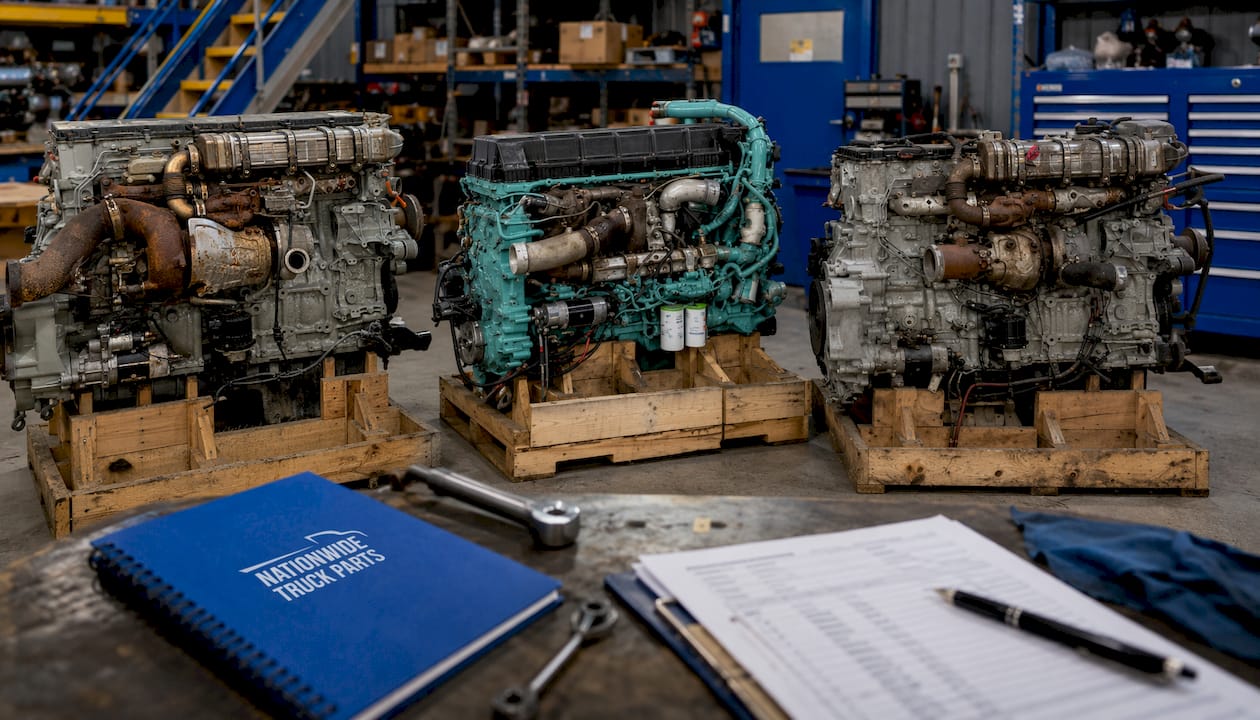
When the decision is made and you need a tested, ready-to-ship diesel engine, Nationwide Truck Parts carries inspected, warranted units available for same-day shipping. Every engine in the inventory goes through thorough testing before it ships, so you are not guessing about condition.
Current inventory includes the 2012 Detroit DD15 engine assembly, the 2015 Volvo D13 J engine, and the 2015 Detroit DD15 engine, all available now. Visit Nationwide Truck Parts to check current inventory and get your truck back on the road without unnecessary delays.
Key Takeaways
A truck engine swap's true cost extends well beyond parts and labor once downtime, warranty gaps, and electronic integration work are included in the calculation.
| Point | Details |
|---|---|
| Total rebuild cost | A Class 8 diesel rebuild runs $20,000–$40,000 all in, including parts, labor, and machining. |
| Replacement cost range | New or remanufactured engine replacements cost $40,000–$55,000, but carry 2–5 years of warranty coverage. |
| Downtime impact | At $760 per hour in lost productivity, a 7-day downtime gap between rebuild and replacement can significantly close the price difference. |
| Secondary charges | Towing, diagnostics, core deposits, and disposal typically add 15–25% on top of the base parts and labor estimate. |
| ECM expertise matters | Shops without ECM and emissions system experience risk recurring failures that erase any upfront savings on a cheaper rebuild. |
FAQ
How much does a truck engine swap typically cost?
A Class 8 diesel rebuild runs $20,000–$40,000 all in, while a new or remanufactured replacement costs $40,000–$55,000 including parts, labor, and ancillary work. Used engine swaps offer a lower entry point at $10,000–$20,000 for the engine plus $3,000–$5,000 in labor, but carry higher risk and limited warranty coverage.
Is it cheaper to rebuild a truck engine or replace it?
Rebuilding costs less upfront, but replacement is often cheaper in total economic terms once downtime is included. Lost productivity during prolonged downtime from rebuilds versus replacements significantly impacts total cost, potentially offsetting upfront savings from lower rebuild prices.
How many labor hours does a truck engine swap take?
A complete engine swap (remove and replace) takes 16–20 hours for a straightforward installation. A full out-of-frame rebuild requires 60–120+ hours depending on the engine condition and scope of machining work required.
Does an engine swap affect truck insurance?
An engine swap can affect commercial truck insurance, particularly if the replacement engine differs from the original in displacement, emissions certification, or power output. Notify your insurer before the swap and confirm the replacement engine is documented in your policy to avoid coverage gaps.
What hidden costs should I budget for in a truck engine swap?
Core deposits ($500–$2,000 per component), ECU calibration, custom mounts, exhaust modifications, cooling system upgrades, and diagnostic fees collectively add 15–25% beyond the base parts and labor estimate. Cross-generation swaps involving modern emissions systems carry the highest risk of budget overruns due to electronic integration complexity.