
Nationwide parts networks are defined as coordinated systems of distribution centers, parts stores, and certified service locations that keep commercial truck fleets moving. The role of nationwide parts networks in logistics goes far beyond simple parts delivery. These networks form the operational backbone of the trucking supply chain, directly controlling how fast a broken truck returns to service. Fleets using dedicated parts systems see 47% fewer stockouts and 31% lower carrying costs, with daily downtime costs ranging from $448 to $760 per vehicle. For fleet managers and logistics professionals, understanding how these networks function is the difference between a proactive operation and a reactive one.
What is the role of nationwide parts networks in logistics?
Parts availability is the single biggest driver of fleet uptime. When a truck sits waiting for a part, the cost clock starts immediately. At $448 to $760 per day in downtime costs, a two-day delay on a single vehicle can cost a fleet more than a month of preventive maintenance. Nationwide parts networks cut that exposure by placing inventory closer to where trucks operate.
The scale of these networks is what makes them effective. Heavy-duty vehicle programs connect 140 or more distribution centers, 2,300 parts stores, and 4,000 certified service centers across North America. That density means a fleet manager in rural Texas or northern Minnesota can access the same parts availability as one operating near a major metro hub.
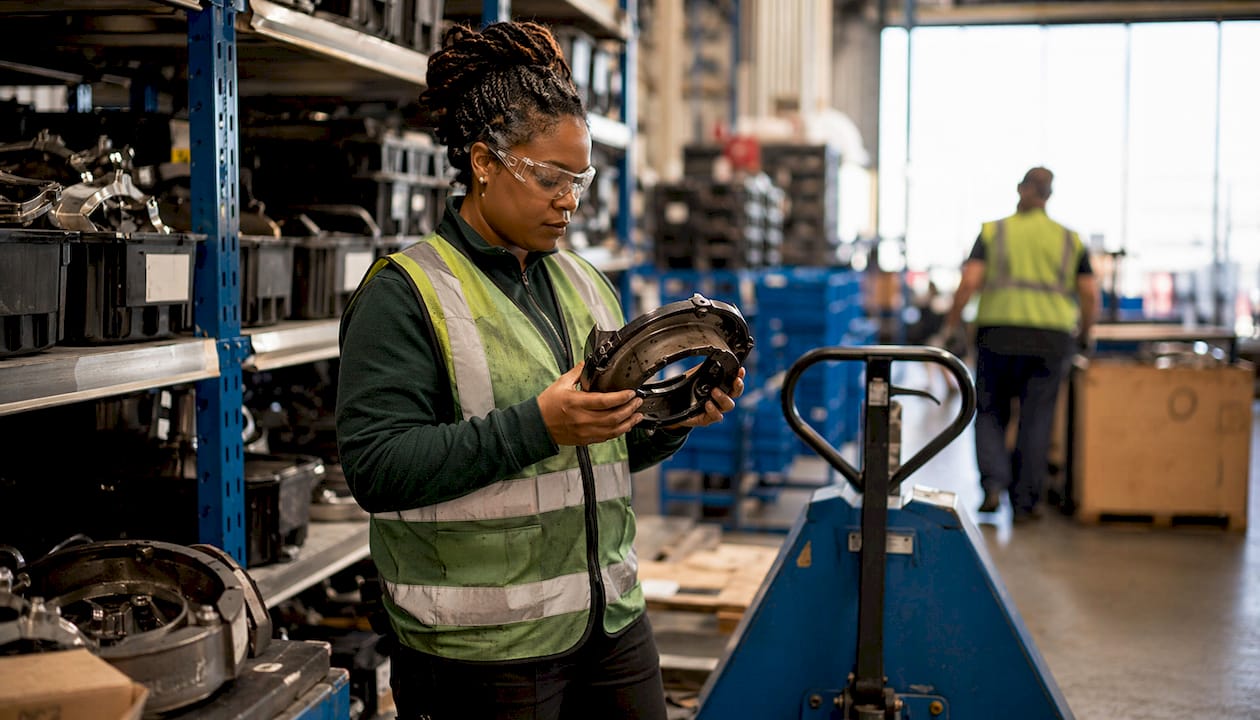
The logistics supply chain depends on this geographic spread. A single distribution center cannot serve a national fleet. But a network of coordinated hubs, each carrying regionally relevant inventory, creates a system where parts reach repair locations in hours rather than days. That speed directly translates to fewer missed deliveries and lower operational disruption across the entire supply chain.
How do parts networks reduce truck downtime and improve uptime?
Vehicle downtime is mostly caused by waiting on parts, not the repair itself. A small cluster of high-failure parts causes the majority of repair delays. Identifying those parts and stocking them strategically is the core logic behind critical-spares modeling.
Critical-spares modeling works by analyzing historical repair data to predict which components fail most often across a specific fleet. Fleet managers then pre-position those parts at locations tied to their routes. The result is a repair that starts within hours of a breakdown rather than waiting for a next-day shipment.
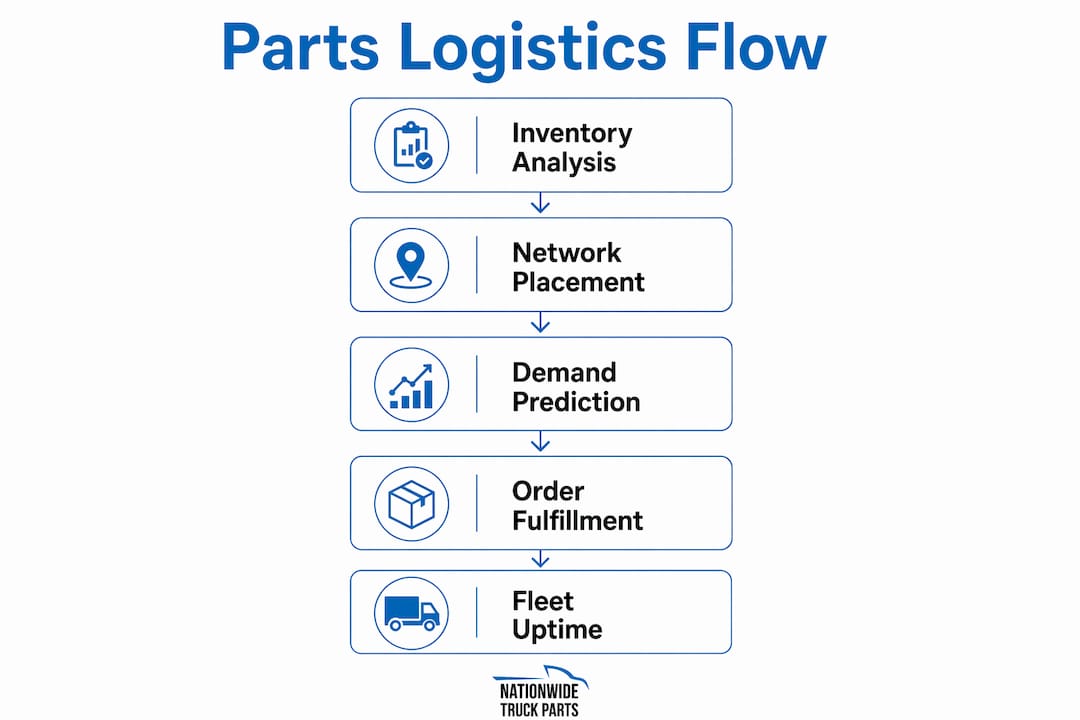
Multi-location inventory visibility takes this further. When a fleet manager can see stock levels across every distribution point in a network, they stop ordering parts that are already available nearby. Linking parts directly to VINs and work orders enables precise tracking, prevents duplicate purchases, and ties every part to a specific maintenance event. This approach treats inventory as a strategic asset rather than a cost center.
The practical benefits break down into four areas:
- Faster repair start times because parts arrive before the technician finishes diagnosis
- Lower carrying costs because network visibility eliminates redundant stock across locations
- Predictable maintenance windows because parts are tied to scheduled service intervals
- Reduced emergency freight costs because critical spares are already in position
Pro Tip: Map your fleet's top 20 highest-failure components by vehicle model and pre-position those parts at your three most-used service locations. This single step removes the most common source of repair delays without increasing total inventory spend.
Why does fragmented repair infrastructure create logistics risk?
The truck repair sector is highly fragmented. Roughly 150,000 independent service shops operate across the country, with no central coordination, no shared inventory visibility, and no standardized service commitments. For a fleet manager trying to get a truck repaired 400 miles from home base, that fragmentation creates real operational risk.
The financial exposure is immediate. Towing costs alone exceed $1,000 per incident. Add a day or two of downtime at $448 to $760, and a single breakdown in an unfamiliar region can cost a fleet $2,500 or more before the repair even begins.
Nationwide parts networks address this risk in three specific ways:
- Repair location mapping. Networks with thousands of certified service centers give fleet managers a pre-vetted list of shops that carry compatible parts and meet service standards. You are not calling random shops from a highway exit sign.
- Parts pre-positioning. When a truck breaks down, a network can confirm parts availability at the nearest certified location before the tow truck is dispatched. That confirmation eliminates the scenario where a truck gets towed to a shop that cannot complete the repair.
- Mobile repair integration. Mobile diesel mechanics bring repair services directly to the breakdown location, bypassing towing costs entirely. Nationwide parts networks support mobile mechanics by ensuring parts can be delivered to a roadside location quickly.
Pro Tip: Build a contingency repair plan for every major route corridor your fleet uses. Include the nearest certified service center, the closest parts distribution point, and at least one mobile mechanic contact. Update this list quarterly as network coverage changes.
How do distribution density and dealer networks function as logistics assets?
Dealer networks have shifted from being sales channels to functioning as distributed operating infrastructure. Dealer networks now serve as inventory buffers, service hubs, and market-sensing mechanisms that are vital for operational continuity. That shift changes how fleet managers should think about their dealer relationships.
A dealer with strong local inventory does more than sell parts. It absorbs demand spikes that would otherwise create delays across the broader network. When a regional weather event or seasonal surge drives up demand for specific components, a well-stocked local dealer prevents that surge from cascading into a nationwide shortage.
The table below shows how the function of a dealer network has changed in the context of parts distribution strategy:
| Function | Traditional commercial channel | Distributed logistics network |
|---|---|---|
| Primary role | Parts sales and order fulfillment | Inventory buffer and local service hub |
| Inventory logic | Stock what sells most | Stock what the local fleet base needs most |
| Demand response | Reactive to orders | Proactive based on fleet maintenance data |
| Service capability | Parts counter only | Certified repair and mobile support |
| Network value | Individual transaction | System-wide uptime contribution |
This shift matters because efficient parts delivery now depends on how well local dealers integrate with the broader national logistics network. A dealer that shares real-time inventory data with a central system gives fleet managers visibility they cannot get from a standalone shop. That visibility is what separates a parts distribution strategy built for scale from one that works only when conditions are ideal.
What benefits do national account programs offer fleet managers?
National account programs give fleets a direct mechanism for controlling costs and standardizing service quality across regions. National accounts help fleets standardize vendor performance, gain purchasing visibility, and control costs in ways that individual purchase orders cannot replicate.
The core advantages for medium and large fleets include:
- Price consistency across regions. A fleet operating in six states pays the same price for the same part regardless of where the repair happens. That consistency removes the budget unpredictability that comes from regional price variation.
- Priority service at network locations. National account programs provide nationwide credibility that ensures priority treatment at every location in the network. A fleet with a national account does not wait in line behind walk-in customers.
- Centralized data on parts demand. When purchasing flows through a single account structure, fleet managers gain visibility into which parts they buy most, which vendors perform best, and where delays occur most often. That data feeds directly into better maintenance planning.
- Local relationship preservation. National accounts do not eliminate local dealer relationships. They formalize them. A fleet can maintain its preferred local vendors while extending the same terms to new locations as the fleet grows.
Top-performing fleets treat parts availability as a proactive planning function rather than a reactive response to breakdowns. National account programs are the structural tool that makes proactive planning possible at scale. They connect purchasing data, service history, and vendor performance into a single view that supports better decisions across the entire logistics supply chain.
Key Takeaways
Nationwide parts networks reduce fleet downtime by placing the right inventory at the right locations, supported by dealer networks, national accounts, and real-time visibility across the logistics supply chain.
| Point | Details |
|---|---|
| Downtime costs are measurable | Vehicle downtime costs $448–$760 per day, making fast parts access a direct financial priority. |
| Critical-spares modeling works | Pre-positioning high-failure parts by route and vehicle model cuts repair wait times significantly. |
| Fragmentation creates risk | With 150,000 independent shops and towing costs above $1,000, network-backed repair planning is not optional. |
| Dealer networks are infrastructure | Modern dealer networks function as inventory buffers and service hubs, not just sales points. |
| National accounts control costs | Standardized pricing and priority service across regions remove budget unpredictability for growing fleets. |
What I have learned from watching fleets get this wrong
Fleet managers who treat parts procurement as a purchasing function rather than a logistics function consistently pay more and wait longer. I have watched operations with strong maintenance programs lose days of uptime because nobody mapped their parts availability to their actual routes. The truck breaks down in a corridor where the nearest certified shop is 80 miles away, and the parts that shop needs are sitting in a warehouse 200 miles in the wrong direction.
The fleets that perform best do one thing differently. They treat their parts network the same way they treat their route network. They know where the inventory is, they know which locations are certified, and they have a contingency plan before the breakdown happens. That is not a technology problem. It is a planning discipline problem.
Dealer networks becoming operational infrastructure is the most underappreciated shift in trucking logistics right now. A dealer that shares inventory data with a central system and offers mobile repair support is worth more to a fleet than a dealer with a bigger showroom. Fleet managers who recognize that shift and build their parts inventory management strategy around it will have a structural advantage over those still treating parts as a transactional afterthought.
National account programs are also underused by mid-size fleets. The assumption is that national accounts are for large carriers only. The reality is that a fleet running 20 trucks across three states gets the same priority service and price consistency benefits as a carrier running 500. The credibility that comes with a national account changes how vendors treat you, and that treatment shows up in repair turnaround times.
— John
Nationwide Truck Parts: parts availability built for fleet uptime
Fleet managers who need reliable access to heavy truck engines and transmissions without the delays of back-ordered new parts have a direct solution in Nationwide Truck Parts. Every part in the inventory is tested and inspected before it ships, backed by a standard warranty that removes the guesswork from used parts purchasing.
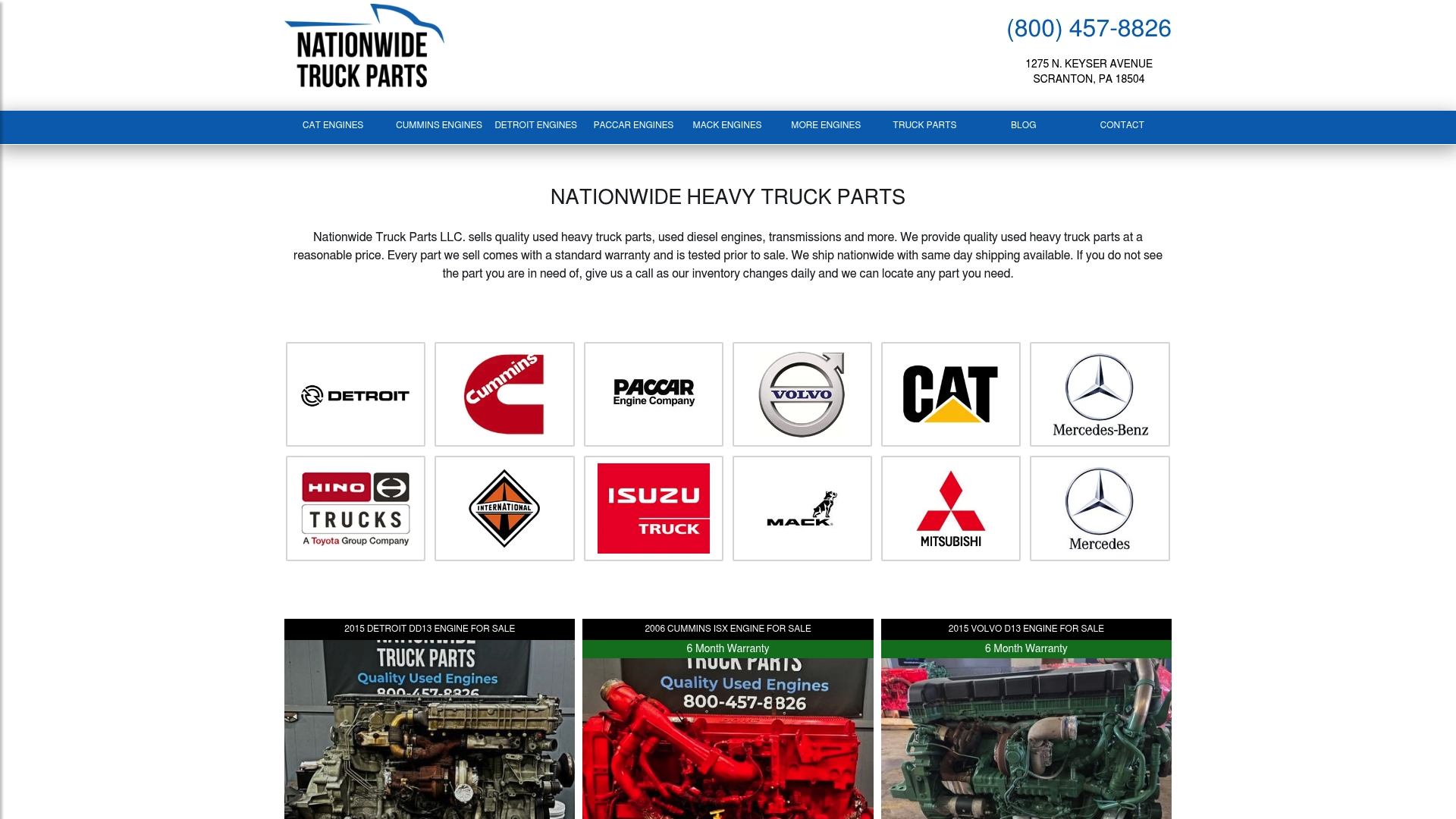
Nationwide Truck Parts carries a daily-changing inventory of diesel engines for sale and commercial transmissions with same-day shipping on available stock. For fleet managers who need to get a truck back on the road fast, that combination of tested inventory and fast fulfillment directly supports the uptime goals that nationwide parts network strategies are built around.
FAQ
What is a nationwide parts network in trucking logistics?
A nationwide parts network is a coordinated system of distribution centers, parts stores, and certified service locations that provides fleet managers with fast, geographically distributed access to truck components. These networks reduce vehicle downtime by placing inventory close to where fleets operate.
How much does truck downtime cost per day?
Truck downtime costs between $448 and $760 per day depending on the vehicle and operation type. That figure makes fast parts access one of the highest-return investments a fleet manager can make.
What is critical-spares modeling?
Critical-spares modeling is the practice of identifying the small group of high-failure parts that cause most repair delays and pre-positioning those parts at locations tied to a fleet's routes. It reduces repair wait times without increasing total inventory spend.
How do national account programs benefit fleet managers?
National account programs standardize pricing across regions, provide priority service at network locations, and give fleet managers centralized data on purchasing and vendor performance. Mid-size and large fleets both benefit from the cost consistency and service reliability these programs deliver.
Why is the truck repair sector considered fragmented?
The truck repair sector includes roughly 150,000 independent service shops with no shared inventory visibility or standardized service commitments. That fragmentation creates repair delays and towing costs that exceed $1,000 per incident when a breakdown occurs outside a fleet's home region.