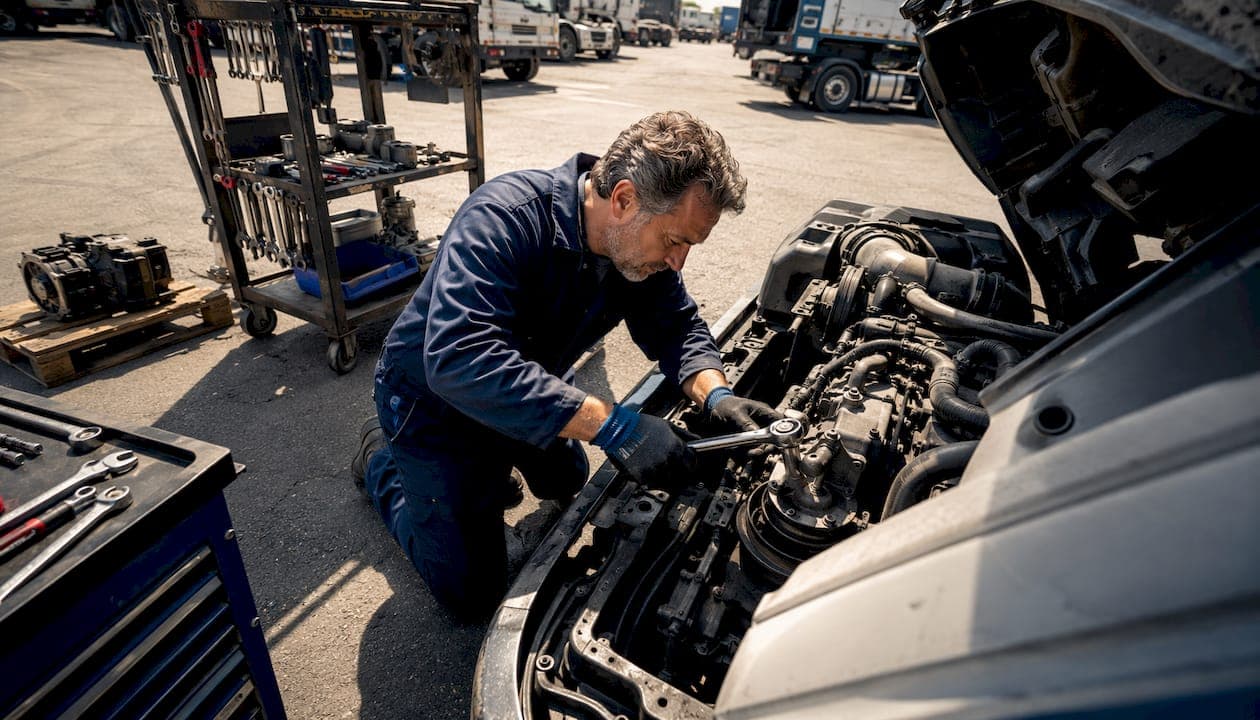
The water pump is defined as the primary circulation device in a truck engine's cooling system, responsible for moving coolant continuously through the engine block, cylinder heads, oil cooler, and radiator to prevent overheating. Understanding what a water pump does in truck engines is not optional knowledge for truck owners, mechanics, or fleet managers. It is the difference between catching a $150 seal replacement early and facing a $9,000 engine rebuild. The pump works alongside the thermostat, radiator, and serpentine belt to keep engine temperature within the safe operating range at all times.
How does the water pump work in a truck engine cooling system?
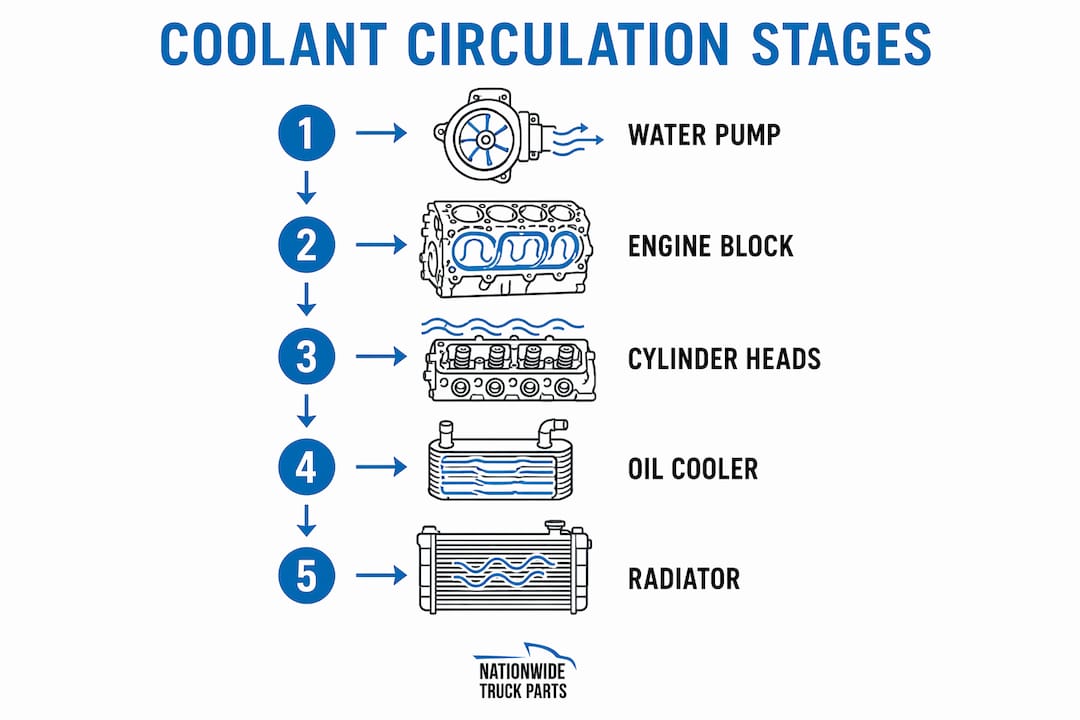
The water pump circulates coolant through the engine block, cylinder heads, oil cooler, and radiator to absorb heat and release it before the coolant loops back. Without continuous circulation, heat builds faster than the radiator can shed it, and the engine reaches destructive temperatures within minutes. The pump is the mechanical force that keeps that loop moving.
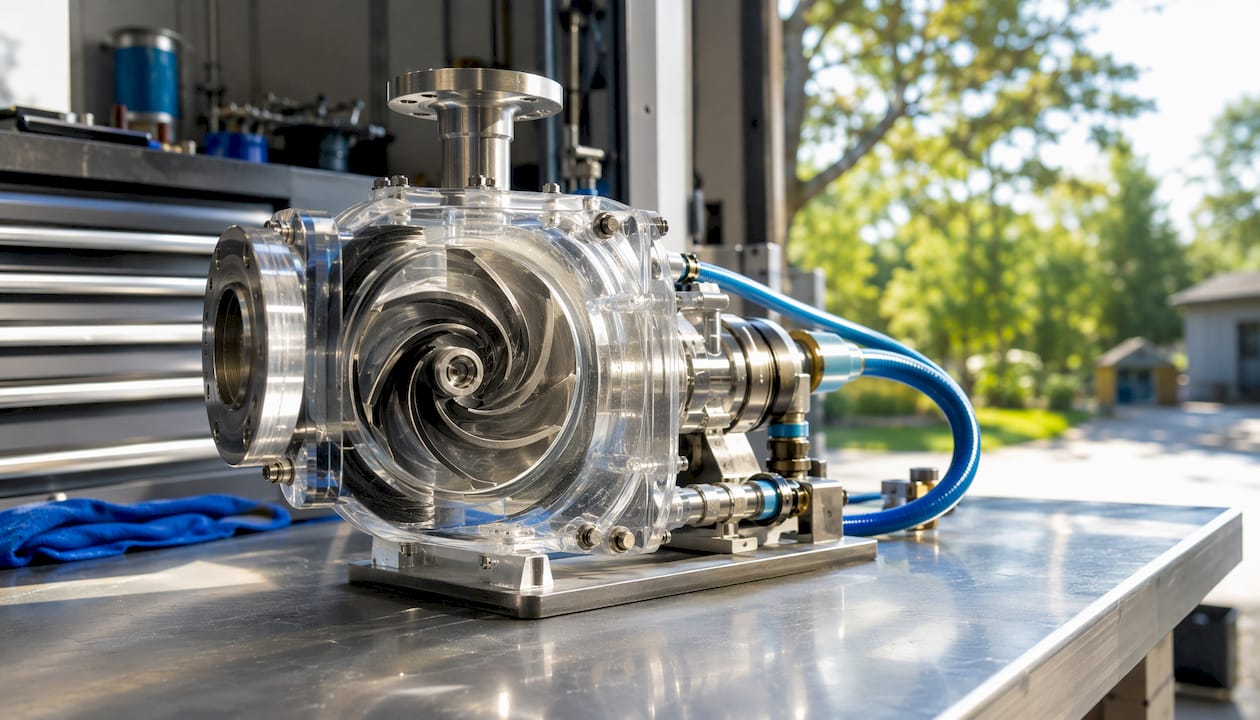
Most heavy truck water pumps use centrifugal pump action. A spinning impeller draws coolant in at the center and throws it outward by centrifugal force into the cooling passages. The impeller connects to a shaft driven by the serpentine belt, so pump speed scales directly with engine RPM. On many common platforms, including Cummins 6.7L engines, the pump sits at the front passenger side of the engine for easier access during service.
The thermostat and water pump have distinct roles that work together. The water pump provides mechanical circulation. The thermostat regulates temperature by opening and closing a valve to control how much coolant reaches the radiator. One moves the fluid; the other decides when to cool it. Confusing the two leads to misdiagnosis, which is one of the most common and costly mistakes in truck cooling system repair.
Electric water pumps are increasingly used in modern trucks for efficiency and independent operation from engine speed. Unlike belt-driven pumps, electric units can run at idle or even after engine shutdown to cool turbochargers and prevent heat soak. This technology is becoming standard on newer Class 8 platforms.
Coolant circuit at a glance
| Stage | Component | Function |
|---|---|---|
| 1 | Water pump | Pressurizes and circulates coolant |
| 2 | Engine block | Coolant absorbs combustion heat |
| 3 | Cylinder heads | Coolant absorbs additional valve and combustion heat |
| 4 | Oil cooler | Coolant removes heat from engine oil |
| 5 | Radiator | Coolant releases heat to outside air |
| 6 | Thermostat | Controls flow back to pump based on temperature |
Pro Tip: Run your hand along the lower radiator hose while the engine is at operating temperature. A firm, pressurized hose confirms the pump is generating flow. A soft or collapsed hose at operating temp often signals a pump or belt issue worth investigating immediately.
What are the signs of water pump failure in trucks?
The five most common signs of a failing water pump are coolant leaks from the weep hole, grinding or whining noises, engine overheating, steam at the radiator, and visible corrosion on the pump housing. Each symptom points to a specific failure mode, and recognizing which one you are dealing with speeds up diagnosis significantly.
- Coolant leak at the weep hole. The weep hole is a small opening in the pump housing designed to drain coolant when the internal seal fails. A steady drip or dried coolant residue below the pump is a clear early warning. Do not ignore it because the seal will not self-repair.
- Grinding or whining noise. Bearing wear produces a grinding or rumbling sound that changes pitch with engine RPM. A worn bearing will eventually seize the shaft entirely.
- Engine overheating, especially under load. Overheating under load often points to reduced pump flow capacity or impeller degradation rather than full failure. This is an early stage symptom that many drivers dismiss as a hot day problem.
- Steam from the radiator or hood. Steam means coolant is boiling. At that point, the engine is already at risk of head gasket failure or warped cylinder heads.
- Corrosion or rust on the pump housing. External corrosion often reflects internal damage. Acidic coolant attacks aluminum impellers from the inside, and the housing shows the evidence externally.
The most dangerous failure mode is a seized pump. A seized water pump can shred the serpentine belt, causing simultaneous loss of power steering, alternator charging, and cooling. That cascade failure can destroy an engine in under 10 minutes of operation.
Pro Tip: If your temperature gauge climbs during a loaded pull on a highway grade but returns to normal at idle, suspect the water pump before the thermostat. Load-specific overheating is a classic early impeller degradation pattern.
How to maintain and test a truck water pump
Routine inspection is the most cost-effective form of water pump maintenance for trucks. During every preventive maintenance interval, check the pump shaft for play by gripping the pulley and rocking it side to side. Any detectable movement means the bearing is worn and replacement is due before the next service.
- Check for coolant leaks. Inspect the weep hole and pump housing for dried coolant residue or active drips at every oil change.
- Listen for bearing noise. With the engine running and the hood open, listen for grinding or rumbling near the front of the engine. A mechanic's stethoscope placed on the pump housing isolates the sound precisely.
- Test coolant flow visually. Observing coolant flow with the radiator cap off on a cool engine as it warms up confirms the pump is circulating. You should see coolant moving in the radiator neck once the thermostat opens. No movement means no flow.
- Check coolant condition. Test coolant pH with inexpensive test strips. Coolant degrades over time, causing acidity that corrodes aluminum pump impellers and other engine components from the inside out. Degraded coolant is one of the leading causes of premature pump failure.
- Follow a heavy-duty maintenance schedule. Heavy trucks operate under sustained loads that accelerate wear on cooling system components. Coolant should be flushed and replaced on the manufacturer's recommended interval, not the light-duty schedule printed on the coolant jug.
Coolant condition is the most underrated factor in pump longevity. A pump running in fresh, properly buffered coolant with the correct corrosion inhibitors will outlast the same pump running in degraded, acidic coolant by a wide margin. Budget for coolant analysis as part of your fleet parts management routine.
Why water pump health matters for fleet managers
A failed water pump does not just stop one truck. It pulls a driver off a load, triggers a roadside service call, and delays a delivery. The operational impact of water pump problems on fleet reliability is direct and measurable in lost revenue per hour.
- Repair costs escalate fast. Typical water pump replacement on a diesel truck runs $400–$900 depending on labor and parts. A blown head gasket from the same failure runs several times that amount.
- Engine longevity depends on consistent cooling. An engine that runs hot repeatedly suffers accelerated wear on rings, bearings, and valve seats. The water pump is the first line of defense against that wear.
- Fuel economy suffers when the engine runs hot. An overheating engine triggers protective derating on most modern trucks, reducing power output and forcing the driver to compensate with throttle.
- Preventive maintenance avoids expensive repairs such as blown head gaskets or full engine rebuilds. Catching a failing pump at the weep hole stage costs a fraction of the downstream damage.
Fleet managers who treat water pump inspection as a low-priority item consistently pay more in emergency repairs than those who include it in every PM cycle. The math is straightforward. A $600 pump replacement scheduled on your terms beats a $15,000 engine replacement on the side of the highway.
Key Takeaways
The water pump is the single most critical component in a truck engine's cooling system, and its failure triggers a cascade of damage that far exceeds the cost of routine replacement.
| Point | Details |
|---|---|
| Core function | The water pump circulates coolant through the engine block, heads, oil cooler, and radiator continuously. |
| Failure warning signs | Coolant leaks, bearing noise, load-specific overheating, and housing corrosion are the earliest indicators. |
| Seized pump risk | A seized pump shreds the serpentine belt, causing simultaneous loss of steering, charging, and cooling. |
| Coolant condition matters | Degraded, acidic coolant corrodes aluminum impellers and shortens pump life significantly. |
| Fleet cost impact | Scheduled pump replacement at $400–$900 prevents head gasket and engine rebuild costs many times higher. |
What I've learned after years of watching water pump failures
Most water pump failures I have seen were not sudden. They were slow, ignored, and expensive by the time someone acted. The weep hole drips for weeks before a driver mentions it. The temperature gauge climbs a few degrees on grades and gets blamed on summer heat. By the time the pump seizes and takes the serpentine belt with it, the truck is on the shoulder and the repair bill has grown from a few hundred dollars to several thousand.
The mistake I see most often is treating the water pump as a background component. Mechanics focus on injectors, turbos, and transmissions because those failures are dramatic. A water pump failure is quiet until it is not. My recommendation is simple: add a physical pump shaft check and a weep hole inspection to every PM sheet, without exception. It takes 90 seconds and it catches the majority of failures before they cascade.
The other thing worth saying directly is that part quality matters here more than most truck owners realize. A cheap replacement pump with a poorly cast impeller will degrade faster in the acidic coolant environment that most trucks run. Sourcing from a supplier that inspects and stands behind its parts is not a luxury. It is the difference between a repair that holds and one that puts you back in the shop in six months.
— John
Reliable truck engine parts from Nationwide Truck Parts
When a water pump fails, the clock starts immediately. Every hour a truck sits is revenue lost, and sourcing the right part fast is the only way to cut that downtime short.
Nationwide Truck Parts carries a wide range of truck engine components with same-day shipping and a standard warranty on every part. Each component goes through inspection before it ships, so you are not gambling on a part that fails in 60 days. The inventory changes daily, which means hard-to-find components for older platforms are often available when other sources come up empty. For fleet managers and owner-operators who need reliable parts without the wait, Nationwide Truck Parts is a direct source worth keeping on your vendor list. Visit nationwideheavytruckparts.com to check current availability.
FAQ
What does a water pump do in a truck engine?
The water pump circulates coolant through the engine block, cylinder heads, oil cooler, and radiator to remove heat and prevent overheating. Without it, the engine reaches destructive temperatures within minutes of operation.
How do I know if my truck's water pump is failing?
The five most common signs are coolant leaks at the weep hole, grinding or whining noises, engine overheating under load, steam from the radiator, and corrosion on the pump housing. Load-specific overheating is often the earliest and most overlooked symptom.
How much does it cost to replace a water pump on a diesel truck?
Typical repair costs for water pump replacement on diesel trucks range from $400 to $900 depending on labor complexity and parts. Delaying replacement risks head gasket failure, which costs significantly more.
Can a bad water pump damage the engine?
A seized water pump can shred the serpentine belt, causing simultaneous loss of power steering, alternator charging, and cooling, which leads to rapid engine destruction. Catching the failure at the weep hole or bearing noise stage prevents that outcome entirely.
How often should a truck water pump be inspected?
Inspect the pump shaft for bearing play and check the weep hole for leaks at every preventive maintenance interval. Heavy-duty trucks operating under sustained loads require more frequent checks than the light-duty schedules printed on most coolant products.