
A certified used engine is defined as a pre-owned engine that has passed a documented inspection, testing, and refurbishment process, backed by a warranty and performance records. This is not the same as buying a used engine "as-is" from an unknown source. The certification process gives buyers verifiable proof that the engine meets a defined quality standard before it ships. Warranties on certified programs typically range from 3 to 12 months on mechanical parts, which is a meaningful protection for both individual truck owners and fleet managers. Understanding what does certified used engine mean separates a confident purchase from a costly gamble.
What does the certification process for used engines involve?
Certification is a structured sequence of tests and repairs, not a single stamp of approval. Each step produces documentation that travels with the engine.
The core inspection steps
- Compression test. A technician measures pressure in each cylinder. Low compression signals worn rings or valve damage, and any engine that fails this test does not move forward.
- Leak-down test. Compressed air is introduced into each cylinder to locate leaks past rings, valves, or head gaskets. This test catches problems a compression test can miss.
- Visual assessment. The block, head, and all external components are examined for cracks, corrosion, and physical damage. A cracked block disqualifies the engine immediately.
- Refurbishment. Worn gaskets, seals, and filters are replaced. The engine is cleaned internally and externally, then reassembled to spec.
- Documentation. Test results, mileage records, and part replacement logs are compiled. This paperwork is what separates a certified engine from a standard used unit.
Federal regulations under 16 CFR Part 20 require clear labeling and disclosure of part status on invoices and advertising. That legal requirement means sellers cannot call an engine "certified" without supporting documentation. Many states add another layer: they require written customer authorization before a shop installs any used or remanufactured part, giving buyers legal leverage if a part fails after installation.
Pro Tip: Ask the seller for the actual compression and leak-down test results, not just a summary. A reputable supplier will hand them over without hesitation.

How do certified used engines compare to rebuilt or remanufactured options?
Buyers encounter four engine categories: standard used, certified used, rebuilt, and remanufactured. Each carries a different risk profile, price point, and warranty expectation.
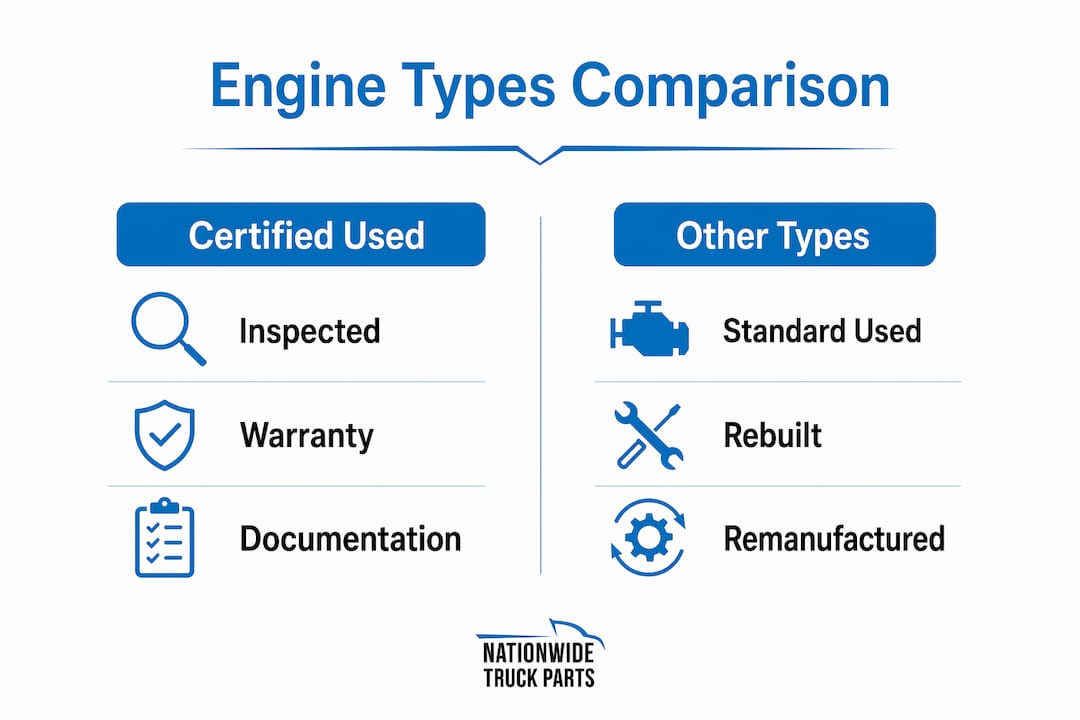
A standard used engine is pulled from a salvage vehicle and sold with little or no inspection. Mileage may be unknown, and unknown wear history adds real risk. Labor costs for multiple engine replacements frequently exceed the initial savings on these units.
A certified used engine has passed the inspection and testing process described above. It carries documentation and a warranty. It is not factory-new, but its condition is verified.
A rebuilt engine has been disassembled and repaired to correct known failures. The rebuild scope varies by shop, and warranty terms reflect that variability.
A remanufactured engine is disassembled and rebuilt to defined OEM standards, with stronger warranty language. Remanufactured engines reduce unknowns compared to used engines and are the better default for daily drivers with high annual mileage.
| Engine type | Inspection level | Typical warranty | Best use case |
|---|---|---|---|
| Standard used | None or minimal | None to 30 days | Low-budget, short-term fix |
| Certified used | Full inspection and testing | 3–12 months | Reliable mid-range option |
| Rebuilt | Partial disassembly | 90 days to 6 months | Known failure corrected |
| Remanufactured | Full OEM-spec rebuild | 12–36 months | High-mileage daily drivers |
Cost increases as you move down the table. Certified used engines occupy the middle ground: more reliable than standard used, more affordable than fully remanufactured. For fleet managers watching per-unit costs, that balance matters.
Pro Tip: If your truck runs more than 100,000 miles per year, the remanufactured tier is worth the price premium. For lower-mileage fleet vehicles or older trucks nearing retirement, a certified used engine is the financially sound call.
What benefits do certified used engines offer buyers?
Certified used engines deliver four concrete advantages over standard used options.
- Reduced financial risk. The inspection and testing process catches failures before the engine reaches your truck. You pay for a known condition, not a guess.
- Warranty protection. Coverage of 3–12 months on mechanical parts means you have recourse if something fails shortly after installation. Standard used engines rarely offer this.
- Lower total cost of ownership. Buying a cheaper uncertified engine and replacing it twice costs more than buying a certified unit once. The math favors certification for any truck that stays in regular service.
- Environmental responsibility. Certified used engines reuse factory-spec OEM components, reducing the carbon footprint compared to manufacturing a new engine from raw materials. For businesses with sustainability reporting requirements, this is a documented advantage.
"Certification provides risk transparency essential to professionals for predicting maintenance costs, unlike standard used engines with unknown histories. Third-party certification fills the gap left by limited federal safety testing, providing essential verification of quality and performance." — Approved Engines / Automotive Body Parts Association
Fleet managers running five or more trucks see this benefit multiply. Predictable maintenance costs let you plan budgets instead of reacting to surprise failures. That operational stability is worth more than the price difference between certified and uncertified units.
What should buyers consider when purchasing a certified used engine?
Knowing the meaning of certified used engine is only the first step. Buying one correctly requires attention to several details that sellers do not always volunteer.
- Read the warranty exclusions carefully. Warranty coverage often excludes labor for reinstallation. A 6-month parts warranty sounds strong until you realize a $1,200 installation bill is entirely on you if the engine needs to come back out.
- Request mileage verification documentation. Mileage verification logs are critical documents buyers should always request. Without them, you cannot estimate remaining engine life.
- Confirm engine compatibility before purchase. A certified engine that does not fit your truck's application is worthless. Use your VIN and engine serial number to verify fitment. Nationwide Truck Parts provides compatibility guidance to prevent this mistake.
- Verify the supplier's certification process. Ask specifically what tests were performed and whether documentation is available. A supplier who cannot answer that question has not certified the engine in any meaningful way.
- Match the engine to your expected usage. A truck used for local delivery has different demands than a long-haul unit. The right engine choice depends on your application, not just the price tag.
Pro Tip: Always ask whether the warranty is transferable if you sell the truck. A transferable warranty adds resale value and signals that the supplier stands behind the product.
Key Takeaways
A certified used engine is the most cost-effective way to get a verified, warranty-backed engine without paying remanufactured prices, provided you confirm documentation, warranty terms, and compatibility before buying.
| Point | Details |
|---|---|
| Certification requires documentation | Always request compression test results, leak-down data, and mileage verification logs. |
| Warranties cover parts, not labor | Read exclusions carefully; installation labor is typically the buyer's cost. |
| Certified beats standard used on total cost | Multiple uncertified replacements cost more than one certified engine over time. |
| Legal disclosures protect buyers | Federal and state laws require written disclosure of part status, giving buyers legal recourse. |
| Compatibility check is non-negotiable | Confirm fitment using your VIN and engine serial number before any purchase. |
Why I think most buyers undervalue the paperwork
After years of watching truck owners and fleet managers make engine purchases, the pattern is consistent: buyers focus on price and warranty length, then skip the documentation entirely. That is the wrong order of priority.
The paperwork is the certification. A warranty without test results behind it is just a promise. I have seen engines sold as "certified" that came with nothing more than a handwritten note and a 30-day return window. That is not certification. That is marketing language applied to a standard used engine.
The buyers who get the best outcomes are the ones who treat the documentation request as a filter. If a supplier hesitates or cannot produce compression test results and mileage logs, walk away. A legitimate certified engine program generates that paperwork automatically. It is not an extra request. It is the product.
One more thing most articles skip: the labor exclusion in warranty terms is not a technicality. It is a real cost. If an engine fails at 90 days and the warranty covers parts only, you are still paying $800 to $1,500 in labor to swap it again. Factor that into your total cost calculation before you compare prices between suppliers.
Certification done right is both financially smart and environmentally responsible. It extends the life of OEM components with known quality, which beats both the waste of a new engine build and the risk of an unknown used unit. The buyers who understand this do not shop on price alone. They shop on documentation.
— John
Certified used truck engines from Nationwide Truck Parts
Nationwide Truck Parts inspects and tests every engine before it ships, and each unit comes with warranty documentation you can actually read before you buy.
The inventory at Nationwide Truck Parts changes daily, which means fresh stock with verified histories rather than engines sitting on a shelf for months. Whether you need a Detroit Diesel engine for a long-haul application or a specific unit for a fleet replacement, the team provides compatibility confirmation and same-day shipping on in-stock units. Every engine comes with the test results and mileage documentation that define a real certification. Browse the full truck engine inventory or contact Nationwide Truck Parts directly to match the right engine to your application.
FAQ
What does certified used engine mean?
A certified used engine is a pre-owned engine that has passed documented inspection, testing, and refurbishment steps, and comes with a warranty typically covering 3–12 months on mechanical parts.
Does certified mean the engine is like new?
No. A certified used engine is rebuilt to quality standards but is not factory-new. Buyers should review warranty terms carefully, as labor for reinstallation is usually excluded.
What documents should I request with a certified used engine?
Request compression test results, leak-down test data, and mileage verification logs. These documents confirm the engine's condition and support any warranty claim.
How does a certified used engine differ from a remanufactured engine?
A remanufactured engine is fully disassembled and rebuilt to OEM specifications with stronger warranty coverage, typically 12–36 months. A certified used engine undergoes inspection and targeted refurbishment at a lower price point.
Are there legal protections when buying a certified used engine?
Yes. Federal regulations under 16 CFR Part 20 require disclosure of part status on invoices. Many states also require written customer authorization before installing used or remanufactured parts, giving buyers legal recourse if a part fails.