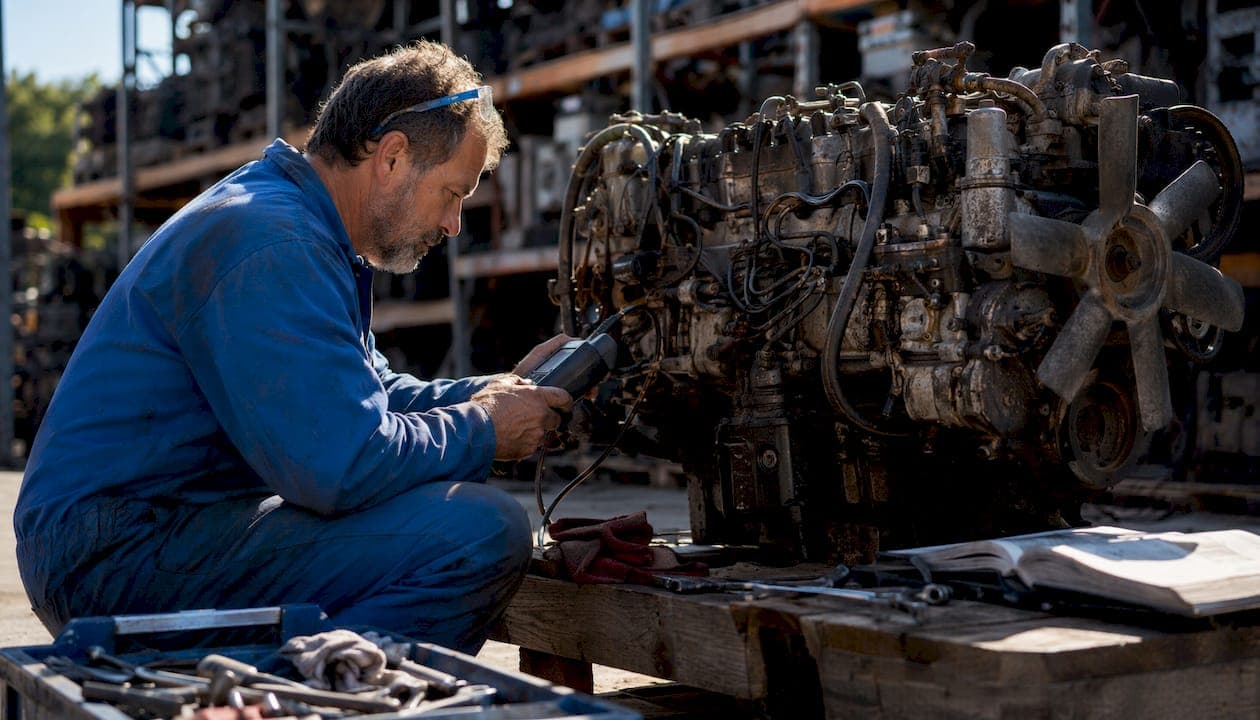
Tested used diesel engines are pre-owned power units that have passed a formal diagnostic process covering compression, blow-by, oil pressure, and crankcase integrity before resale. The benefits of tested used diesel engines are substantial: buyers typically save 40%–60% compared to new engine prices, while still getting a unit that meets defined performance benchmarks. For fleet operators managing tight budgets and tight schedules, that combination of cost savings and verified reliability is hard to ignore. Nationwide Truck Parts tests and inspects every engine before it ships, backing each unit with a standard warranty so operators know exactly what they are getting.
1. What are the benefits of tested used diesel engines for cost savings?
Buying a tested used diesel engine is the single fastest way to cut capital expenditure on a drivetrain replacement. Savings of 40%–60% compared to new engine prices are common across the industry. That gap matters most for operators running older fleets where the vehicle itself is not worth a new engine investment.
The financial case goes beyond the purchase price. Maintenance costs on a properly tested unit track closely with those of a new engine during the early service period, because the diagnostic process flags worn components before the engine ships. Fleet managers who replace multiple units per year can redirect the savings into preventive maintenance programs, tires, or driver retention.
- Purchase price: 40%–60% below new engine cost
- Faster ROI on older vehicles with lower resale value
- Reduced capital tied up per unit, freeing budget for other fleet needs
- Lower insurance replacement value on used assets
Pro Tip: Track your cost per mile on replaced engines for at least 90 days after installation. That number tells you whether the used unit is performing at the level the test data promised.
2. Reliability and performance of professionally tested engines

A tested used diesel engine is not simply a used engine with a clean exterior. Professional testing covers crankcase pressure, blow-by levels, oil carry-over, compression ratios, and coolant integrity under load. Crankcase pressure limits during testing typically run between 1.0 and 4.0 inches of water column. Any reading above that range signals ring wear or cylinder damage, and the engine fails inspection.
Blow-by measurement is equally telling. Blow-by and oil carry-over levels give earlier and more accurate indications of internal wear than performance metrics alone. Testing must be done on a fully warmed-up engine. Cold-engine vapor readings at the oil fill cap are unreliable and can mask serious wear.
"A properly tested used diesel engine can offer performance and service life comparable to that of a rebuilt engine when sourced carefully. The outcome depends on testing rigor, the extent of any refurbishment, and ongoing maintenance after installation."
Warranty coverage is the clearest signal of a supplier's confidence in their testing process. Warranty periods for quality used engines typically run from 6 to 24 months depending on the supplier and installation conditions. A supplier who backs their engine with a meaningful warranty has skin in the game.
- Crankcase pressure tested at varied load conditions
- Blow-by measured on warmed-up engines only
- Compression and oil pressure verified against OEM specs
- Coolant system checked for contamination and leaks
3. Immediate availability and reduced downtime for fleet operators
Every day a truck sits idle costs money. New diesel engines carry lead times of 2–12 weeks or longer depending on the model and supply chain conditions. Used engines are typically available in 1–4 weeks, and suppliers with large rotating inventories can often ship the same day an order is placed.
For fleet operators, that speed difference is not a minor convenience. A single truck out of service for three weeks can disrupt delivery contracts, trigger penalty clauses, and force expensive spot-market freight decisions. Replacing that engine with a tested used unit in days rather than weeks protects revenue and client relationships.
- Identify the failed engine model and pull the spec sheet
- Contact a supplier with a daily-changing inventory to confirm availability
- Confirm warranty terms and shipping timeline before ordering
- Schedule the installation crew to minimize additional downtime
- Run a post-installation check at operating temperature before returning the truck to service
Pro Tip: Keep a short list of two or three tested engine suppliers with your most common engine models on hand. When a failure happens, you want to call, not search.
Fleet operators who plan ahead consistently report shorter average repair cycles than those who source engines reactively. The inventory relationship matters as much as the engine price.
4. Environmental benefits of reusing diesel engines
Reusing an engine block instead of manufacturing a new one cuts the carbon cost of the replacement dramatically. Reconditioning a used engine produces roughly 80–120 kg of CO₂ equivalent, compared to 400–600 kg for manufacturing a new unit. That reduction of up to 80% in emissions per replacement is a meaningful number for fleets operating under sustainability reporting requirements.
The environmental case also connects to regulatory compliance. Emissions standards apply to the vehicle and its exhaust output, not to whether the engine block is new or used. A tested used engine from the same model year as the original meets the same emissions certification as a new replacement of identical spec.
| Factor | New engine | Tested used engine |
|---|---|---|
| CO₂ to produce | 400–600 kg | 80–120 kg |
| Manufacturing waste | High | Minimal |
| Emissions certification | Current spec | Same spec as original |
| Resource consumption | Full raw materials | Reused core components |
- Choose a supplier who documents the engine's service history
- Verify emissions certification matches your vehicle's model year
- Confirm the engine passed exhaust and coolant system checks
- Factor environmental reporting requirements into your sourcing decision
5. Maintenance considerations that protect your investment
Professional installation is not optional. Warranties on used engines are voided if the unit is not installed by a qualified technician. Labor also represents 25%–35% of the total engine replacement cost, which means a botched installation is expensive in two directions: it voids the warranty and it can cause the kind of catastrophic failure that costs more than the engine itself.
Maintenance after installation follows the same schedule as any diesel engine. Change the oil and filter at the first 500 miles after installation to flush any residual debris from the testing and shipping process. After that, follow the OEM maintenance intervals for the engine model.
- Use OEM-spec oil and filter grades from day one
- Check coolant concentration and condition at installation
- Inspect all gaskets and seals replaced during installation
- Log the installation date and mileage as the warranty start point
The used diesel engine buying checklist from Nationwide Truck Parts covers the full pre-installation verification process, including torque specs and break-in procedures for common heavy truck engines.
6. How to choose the right tested used diesel engine
Selecting the right engine starts with matching the application, not just the price. A long-haul prime mover needs a different power band and torque curve than a regional delivery truck. Buying the cheapest available engine without checking application fit is the most common and most expensive mistake in this category.
Industry analysts confirm that tested used engines strike the best balance of cost, availability, and reliability for prime mover applications where downtime is critical. That balance shifts for specialty vehicles or applications with unusual duty cycles, where a rebuilt or new engine may be the better call.
- Match engine displacement and power rating to the vehicle's original spec
- Verify the supplier's testing documentation before purchasing
- Confirm warranty length and what voids it
- Ask whether the supplier offers same-day shipping on in-stock units
- Check whether warranty terms include roadside assistance or mileage extensions
- Prioritize suppliers with a daily-changing inventory for faster sourcing
Fleet operators who have gone through multiple engine rebuilds on the same block often reach a point where a tested used replacement is the smarter call. Fleet operators often prefer tested used units over repeated rebuilds once block integrity becomes a concern. A fresh tested block with documented diagnostics gives you a clean starting point.
Key takeaways
Tested used diesel engines deliver the best cost-to-reliability ratio available for fleet operators who need fast replacements without sacrificing performance standards.
| Point | Details |
|---|---|
| Cost savings are substantial | Tested used engines cost 40%–60% less than new units, freeing budget for other fleet needs. |
| Testing determines reliability | Crankcase pressure, blow-by, and compression checks separate dependable engines from risky ones. |
| Availability cuts downtime | Used engines ship in 1–4 weeks versus 2–12 weeks for new, protecting fleet uptime. |
| Environmental impact is lower | Reconditioning cuts CO₂ emissions by up to 80% compared to manufacturing a new engine. |
| Installation quality protects warranty | Qualified technician installation is required to keep warranty coverage valid. |
What I've learned after years of watching fleets make this call
Fleet managers tend to fall into two camps. The first group treats engine replacement as a crisis and buys whatever is available fastest, regardless of testing documentation. The second group has a sourcing process ready before the failure happens, and they almost always come out ahead on both cost and downtime.
The biggest mistake I see is operators skipping the warranty conversation entirely. They focus on the engine price and ignore the terms. A 6-month warranty with no mileage cap is a very different product from a 6-month warranty that voids at 50,000 miles. Read the terms before you wire the money.
The other thing I'd push back on is the assumption that a tested used engine is always the second-best option. For a truck with 600,000 miles on the frame, putting a new engine in it rarely makes financial sense. A tested used unit at the right price point, from a supplier with real diagnostic documentation, is often the most rational decision in the room. The key word is "tested." An untested used engine is a gamble. A tested one is a calculated purchase.
— John
Nationwide Truck Parts: tested engines ready to ship
Nationwide Truck Parts stocks a wide range of commercial truck engines that are tested and inspected before every sale, backed by a standard warranty. The inventory changes daily, which means the engine your fleet needs is often available faster than you expect.
Every engine ships with documentation covering the key diagnostic checks performed during testing. Same-day shipping is available on in-stock units, so a failed engine does not have to mean a week of lost revenue. If your fleet runs Detroit Diesel power, the Detroit Diesel engine inventory includes tested units across multiple configurations. Nationwide Truck Parts also carries transmissions and differentials for operators who need a complete drivetrain solution.
FAQ
What are tested used diesel engines?
Tested used diesel engines are pre-owned units that have passed a formal diagnostic inspection covering compression, crankcase pressure, blow-by, oil pressure, and coolant integrity before being sold. The testing process verifies that the engine meets defined performance standards rather than relying on visual inspection alone.
How much can I save buying a tested used diesel engine?
Buyers typically save 40%–60% compared to the cost of a new engine of the same model. The exact savings depend on the engine type, age, and supplier.
Are tested used diesel engines as reliable as new ones?
A properly tested used diesel engine can deliver performance and service life comparable to a rebuilt engine when sourced from a supplier with rigorous diagnostic standards. Reliability depends on the quality of testing, any refurbishment performed, and professional installation.
How long do warranties last on tested used diesel engines?
Warranty periods for quality used engines typically range from 6 to 24 months, depending on the supplier and installation conditions. Some suppliers also offer mileage-based extensions or roadside assistance as part of the warranty package.
How quickly can I get a tested used diesel engine?
Used engines are typically available in 1–4 weeks, compared to 2–12 weeks or longer for new engines. Suppliers with large rotating inventories, like Nationwide Truck Parts, often offer same-day shipping on in-stock units.