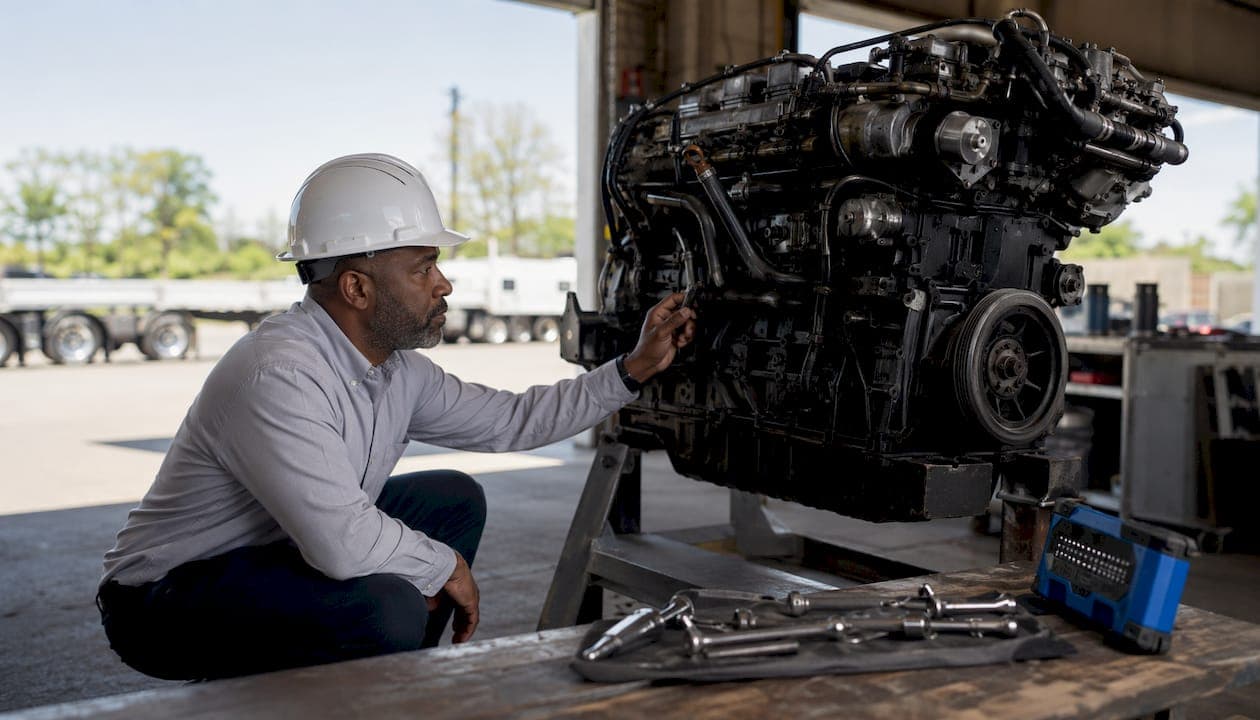
A complete engine inspection checklist for a used heavy-duty truck covers ten non-negotiable areas: visual condition, fluid sampling and oil analysis, ECM/diagnostic scan with saved logs, compression and leakdown testing, borescope inspection, turbocharger and fuel system checks, a cold-start and loaded road test, maintenance records verification, VIN and engine serial confirmation, and clear go/no-go criteria before any money changes hands. Miss one of these and you risk a rebuild bill that can run $15,000–$30,000 according to Rocky Transport.
Immediate deal-breakers (walk away):
- Coolant in oil (milky, frothy oil on dipstick or cap)
- Seized or spun bearings
- Cracked block or head
- Mismatched engine serial vs. VIN/title paperwork
- Severe blow-by at the oil cap under load
Negotiable issues (push for price reduction):
- Turbo shaft play within tolerance
- Worn belts, hoses, and minor seals
- Injector servicing needed
- DPF/SCR cleaning or sensor replacement
Documents to request before you commit:
- Full service history with dated invoices
- Previous ECM scan logs or a signed inspection report
- Oil analysis results (lab report, not just a visual check)
- Warranty or core-return policy in writing
Nationwide Truck Parts and fleet procurement specialists like Rocky Transport consistently flag documentation gaps as the single biggest source of costly surprises after purchase.
Table of Contents
- What does an engine inspection checklist include, step by step?
- How do you run an ECM scan properly on a used diesel?
- What do fluid samples and oil analysis actually tell you?
- Does maintenance history matter more than mileage?
- What are the deal-breakers vs. negotiable issues?
- How long does a full inspection take?
- What paperwork should you demand from the seller?
- Safety precautions to follow during an engine inspection
- How do storage conditions affect what you find in an inspection?
- How do you verify engine serial numbers and documents to avoid fraud?
- How do you negotiate price based on inspection findings?
- What engine areas do most inspectors miss?
- Key Takeaways
- What most inspection guides won't tell you
- Nationwide Truck Parts has tested engines ready to ship
- Useful sources
- FAQ
What does an engine inspection checklist include, step by step?
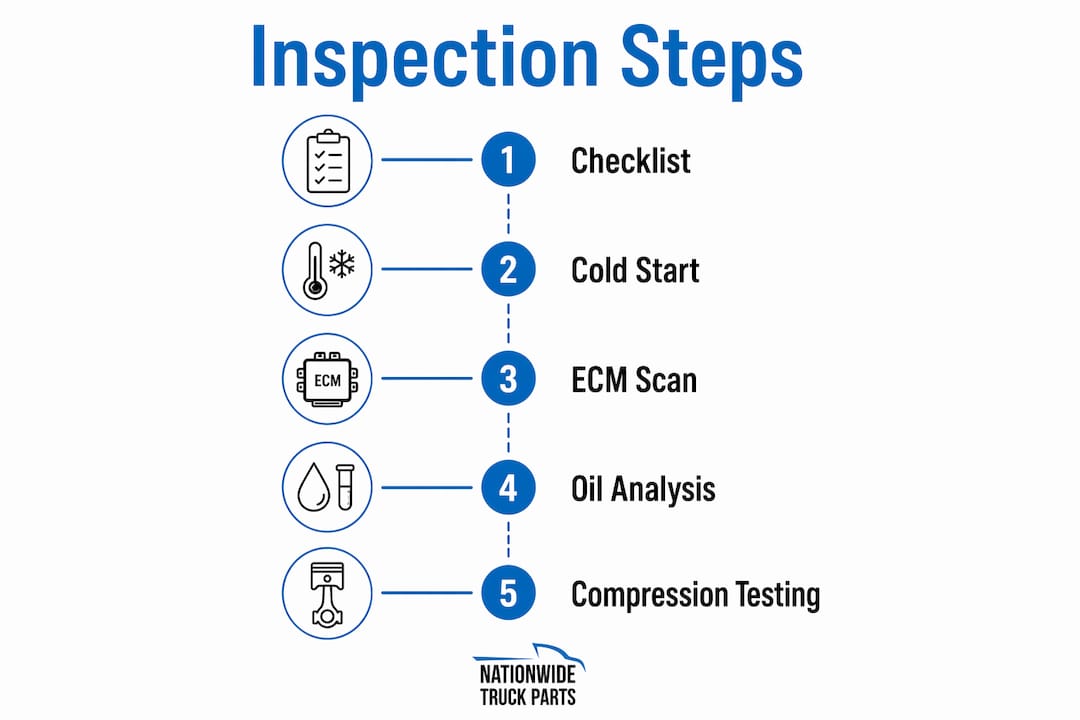
A staged inspection workflow moves from lot-level triage to diagnostics to shop-level mechanical testing, which surfaces problems early and avoids wasting shop time on engines that fail the first pass.
Tools to bring on-site: OBD/J1939 scanner, compression tester, leakdown tester, borescope, infrared thermometer, coolant test strips, oil sample kit, clean sample bottles, PPE (gloves, safety glasses, hearing protection).
- Cold visual triage (10–15 min on the lot): Walk the engine bay before anyone starts the truck. Look for oil seepage at the pan, valve cover, and turbo lines. Check for coolant stains on the block, radiator, and hose connections. Note any wiring harness chafing or zip-tie repairs that signal previous electrical work.
- Cold-start and warm-up (15–20 min): Start the engine cold and watch the exhaust immediately. Blue smoke signals oil burning; white smoke points to coolant combustion; black smoke suggests a fueling or air restriction issue. Remove the oil filler cap at idle and hold a rag nearby. Excessive blow-by pressure is a red flag for worn rings or liners.
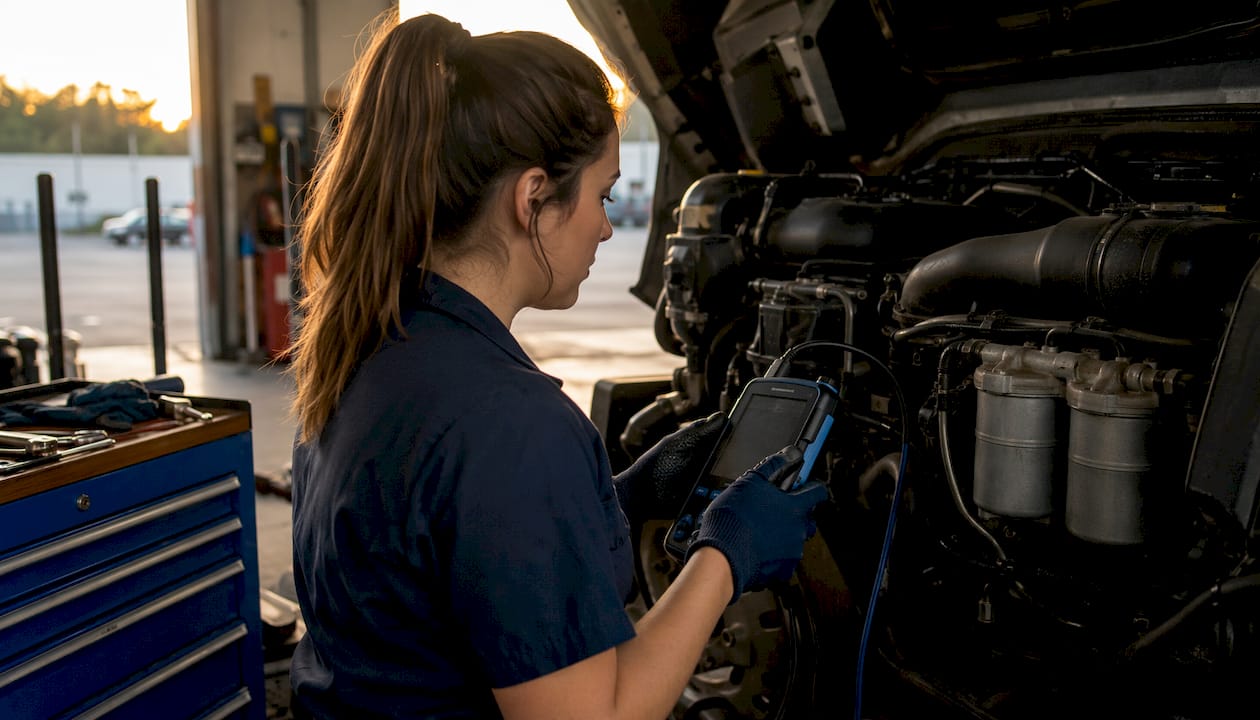
- ECM/diagnostic scan (15–30 min): Connect your scanner before clearing anything. Capture active DTCs, pending codes, freeze-frame data, engine hours, and historical misfire or overtemp events. Save the full session file.
- Fluid sampling (10 min, warmed engine): Pull oil, coolant, and fuel samples using clean labeled bottles. Mark each with VIN, engine hours, and date. Send to a lab; results typically return in 48–72 hours.
- Road/load test (20–30 min): Drive under load and note boost pressure, throttle response, transmission shift quality, and any smoke under acceleration. An infrared thermometer on exhaust manifold ports can reveal a dead or weak cylinder.
- Compression and leakdown testing (60–90 min, shop): Compression and leakdown tests expose uneven cylinder wear, valve issues, and liner problems that no visual check will catch. Require a shop lift for this step.
- Borescope inspection: Insert through injector ports to inspect cylinder walls, piston crowns, and valve seats for scoring, pitting, or carbon buildup.
- Shutdown checks: After the road test, recheck oil level and color, inspect for new leaks that appeared under heat, and listen for bearing noise during cool-down.
- Photo documentation: Capture the ECM label and serial plate, dipstick sample, turbo inlet and outlet, oil pan condition, and exhaust smoke on cold start.
Pro Tip: Never let the seller start the engine before you arrive. A cold-start inspection gives you the highest-value early signals, and a warm engine hides blow-by, idle roughness, and smoke color.
How do you run an ECM scan properly on a used diesel?
Essential ECM parameters to record:
- Active and pending DTCs with freeze-frame snapshots
- Engine hours (cross-reference against mileage for idle-heavy use)
- Fuel trim and injection quantity maps
- Boost and torque readings vs. spec
- EGT trends and DEF dosing event history
- Historical overtemp or low-oil-pressure events
- Any emissions-related deletions or tune modifications
Emissions deletions are a legal liability for fleets operating in EPA-regulated jurisdictions. If the ECM shows evidence of DPF/SCR tampering or a non-stock tune, factor in the cost of restoring legal configuration, or walk away. See Nationwide Truck Parts' testing standards guide for what a properly documented scan file should contain.
Pro Tip: Ask the seller to supply their own scan logs from the last service visit. If they can't produce them, treat the engine's history as unknown and price accordingly.
What do fluid samples and oil analysis actually tell you?
Oil analysis and coolant testing reveal wear patterns that are invisible on visual inspection, especially when service history is incomplete. High iron in a spectrometric test points to bearing or ring wear. Elevated copper suggests bushing or cooler degradation. Silicon above normal levels means dirt ingestion, often from a failed air filter or intake seal. Low TBN (total base number) indicates a depleted additive package, which means the oil has been run too long.
| Test | What It Measures | Red-Flag Threshold |
|---|---|---|
| Spectrometric oil analysis | Wear metals (Fe, Cu, Al, Si) | Elevated Fe or Cu vs. baseline |
| Viscosity | Oil grade integrity | Significant thinning = fuel dilution |
| TBN | Remaining alkalinity/additive life | TBN near zero = overdue oil |
| Coolant pH and glycol % | Freeze protection, acidity | pH below 7 or oil contamination |
| Fuel sample | Water and particulate content | Any free water = immediate concern |
Sampling protocol:
- Warm the engine to operating temperature before pulling samples.
- Use clean, labeled sample bottles (VIN, hours, date on each).
- Pull oil from the dipstick tube, not the drain plug, to avoid settled sediment skewing results.
- Take coolant from the overflow reservoir and fuel from the filter housing when contamination is suspected.
Pro Tip: Abnormal wear metals or fuel dilution in the oil report are direct negotiation leverage. Get a mechanic's repair estimate and subtract it from the asking price before you counter.
Does maintenance history matter more than mileage?
Yes, and by a significant margin. Maintenance records predict remaining engine life more reliably than raw mileage. A well-documented Cummins ISX at 800,000 miles with consistent oil-change intervals and a recent injector service is a safer buy than a Detroit Diesel DD15 at 400,000 miles with no paperwork and evidence of idle-heavy use.
Documents to request from the seller:
- Dated oil-change invoices showing intervals and oil spec used
- Injector, turbo, and fuel pump replacement receipts
- ECM reflash or emissions service records
- Any rebuild paperwork with parts list and shop name
- Previous owner's duty-cycle description (local delivery, regional, long-haul)
The AFDC rightsizing guidance makes the point clearly: duty cycle drives durability expectations. A Caterpillar C15 pulled from a local refuse fleet has a very different wear profile than the same engine from an interstate long-haul application, even at identical mileage. Compare engine hours against miles to spot idle-heavy use. High hours relative to miles means the engine spent significant time at idle, which accelerates certain wear patterns (cylinder glazing, injector tip carbon) while reducing others.
If records are sparse, default to conservative remaining-life estimates and require compression testing and oil analysis before committing. Use the heavy truck parts compatibility checklist to confirm the candidate engine matches your chassis and application before going further.
What are the deal-breakers vs. negotiable issues?
The core principle: some findings end the conversation, others open it.
Absolute deal-breakers:
- Coolant in oil or oil in coolant (head gasket failure, cracked head, or cracked block)
- Seized or spun bearings (catastrophic internal damage)
- Severe blow-by under load (worn rings/liners, major rebuild required)
- Mismatched engine serial vs. VIN or title (fraud risk, insurance and registration problems)
- Evidence of a cracked block or welded repair
Negotiable items with cost context:
| Issue | Ballpark Repair Cost | Time to Repair |
|---|---|---|
| Turbo replacement | — | 1–2 days |
| Injector bank service | — | 1–3 days |
| Head gasket replacement | — | 3–7 days |
| DPF/SCR replacement | — | 1–3 days |
| Hoses, belts, minor seals | — | Half day |
Turbo shaft play and oil leakage are common on high-mileage engines and often negotiable, but get a shop estimate first. For a deeper look at failure modes by engine family, the commercial truck engine failures guide breaks down what to expect from Cummins, Detroit Diesel, and Caterpillar platforms specifically.
How long does a full inspection take?
A complete inspection runs in stages, not all at once.
- Lot triage (10–15 min): Visual walk-around, paperwork review, cold-start smoke check.
- Cold-start and warm-up (15–20 min): Smoke color, blow-by, idle quality.
- ECM scan (15–30 min): Full diagnostic capture with saved session file.
- Road/load test (20–30 min): Boost, throttle, smoke under load.
- Compression/leakdown and borescope (60–90 min, shop): Requires lift and shop access.
- Lab sample turnaround (48–72 hours): Oil, coolant, fuel analysis.
Steps you skip at your own risk: ECM scan, compression/leakdown, and oil analysis. These three catch the issues that cost the most. Steps that require a shop: compression testing, leakdown testing, and borescope inspection. Factor lab turnaround and warranty verification into your acquisition timeline before committing funds.
What paperwork should you demand from the seller?
- VIN and engine serial number photos (match to title and chassis)
- Signed service receipts with shop name and dates
- Previous ECM scan logs or a signed inspection report
- Recent oil analysis lab results
- Warranty terms in writing: length, parts vs. labor coverage, core-return policy
- Any rebuild documentation with parts list
Authentication steps: Cross-reference the ECM serial with the engine block serial and the title. Look for tamper marks, mismatched casting dates, or part numbers that don't align with the stated model year. Requesting original scan files rather than screenshots reduces the risk of altered data. For conditional purchases, consider a holdback or escrow arrangement until oil analysis and compression results clear.
Safety precautions to follow during an engine inspection
Never work under a running engine without proper support stands. Use wheel chocks before any under-vehicle inspection. Wear heat-resistant gloves when checking exhaust manifold temperatures with an infrared thermometer. Keep hands and tools clear of belt and fan paths during cold-start checks. Ensure adequate ventilation in any enclosed space where you run the engine. Hearing protection is required during extended idle and road test phases. If you're pulling fuel samples, use chemical-resistant gloves and have an absorbent spill kit nearby.
How do storage conditions affect what you find in an inspection?
An engine stored outdoors in a humid climate for six months tells a different story than one pulled from a climate-controlled shop. Check for:
- Rust on exposed metal surfaces (exhaust manifold, turbo housing, block casting)
- Corrosion inside the air intake or intercooler piping
- Fuel degradation (diesel stored over 12 months without stabilizer breaks down and can plug injectors)
- Coolant freeze damage if the engine was stored without adequate glycol protection
- Rodent damage to wiring harnesses (a common and expensive surprise)
- Flat spots or cracking on rubber hoses and belts from UV and temperature cycling
An engine that sat outdoors in a northern state through winter deserves extra scrutiny on the cooling system and fuel system before you trust the rest of the inspection.
How do you verify engine serial numbers and documents to avoid fraud?
Serial number fraud in used heavy-truck engines is more common than most buyers expect. The engine serial plate is typically stamped on the block itself, not just on a label. On a Cummins ISX, it appears on the front gear housing. On a Detroit Diesel DD15, it's on the driver's side of the block near the front. On a Caterpillar C15, check the left side of the block above the oil pan rail.
Cross-reference the block-stamped serial against the ECM's stored serial (readable via diagnostic scan), the engine data plate, and the title or bill of sale. Any mismatch is a hard stop. Request the original purchase invoice from the previous owner if the seller acquired the engine secondhand. Altered or reprinted service records are harder to fake when you ask for shop copies with a business letterhead and a technician's signature.
How do you negotiate price based on inspection findings?
Every defect you document is a negotiating data point. Get written repair estimates from a shop before you counter. A turbo with measurable shaft play and an oil leak at the compressor housing has a known repair cost; subtract that from the asking price and present the estimate, not just the observation.
For oil analysis results showing elevated wear metals, frame the conversation around remaining engine life rather than a single repair. If the seller can't explain an overtemp event in the ECM history or won't provide original scan logs, that uncertainty has a dollar value too. Conditional purchase terms, where final payment releases only after lab results clear, are a reasonable ask for any engine over $10,000. For context on when a replacement engine makes more financial sense than negotiating a repair, the engine replacement vs. full truck purchase breakdown is worth reading before you sit down with the seller.
What engine areas do most inspectors miss?
The breather system (crankcase ventilation) is one of the most overlooked indicators of internal condition. A clogged or oil-saturated breather on a Cummins or Detroit engine signals excessive blow-by that a quick idle check won't reveal. Check the breather outlet tube for oil accumulation.
Wiring harness condition near the exhaust and turbo is another blind spot. Heat cycling degrades insulation over years, and chafed wires cause intermittent faults that show up as unexplained DTCs after purchase. Inspect the harness routing along the firewall and near the turbo downpipe.
Engine mount condition affects vibration transfer and long-term frame stress. Sagged or cracked mounts are cheap to fix but easy to miss on a quick visual. Coolant weeps at the liner O-rings (on wet-liner engines like the Caterpillar C15) are invisible externally but show up as slight coolant loss over time. An oil analysis that shows trace coolant contamination without obvious external leaks is the tell.
Key Takeaways
A complete used heavy-truck engine inspection requires visual checks, ECM scan with saved logs, oil analysis, compression/leakdown testing, and verified documentation before any purchase decision.
| Point | Details |
|---|---|
| ECM scan is non-negotiable | Clearing codes hides history; save the full session file including freeze-frame and historical DTCs. |
| Oil analysis beats visual checks | Lab results for wear metals, TBN, and coolant contamination reveal issues no dipstick check will catch. |
| Maintenance records beat mileage | A well-documented high-mileage engine is often a safer buy than a low-mileage unit with missing service history. |
| Rebuild costs set your walk-away point | Engine rebuilds can run between $15,000 and $30,000; use repair estimates as direct negotiation leverage. |
| Nationwide Truck Parts option | Tested and warrantied used engines with inspection reports and same-day shipping available for fleets that need a verified replacement. |
What most inspection guides won't tell you
The biggest mistake fleet managers make isn't skipping a test. It's running every test in the wrong order. Most guides hand you a checklist without telling you that the cold-start visual and the ECM capture, done before the engine is touched, are worth more than the compression test that comes later. By the time you're on the lift, you've already decided whether the engine is worth the shop time.
The second blind spot is treating documentation as a formality. A signed inspection report and an oil analysis lab result are negotiation tools. A seller who won't provide them is telling you something. That silence has a price, and it should come off the asking price or end the conversation.
Harness chafing, breather system saturation, and engine mount sag are the three items I see missed most consistently on field inspections. None of them are catastrophic on their own. Together, they tell you how the previous operator maintained the truck, and that pattern predicts what you'll find inside the engine more accurately than the odometer reading.
*— John
Nationwide Truck Parts has tested engines ready to ship
When an inspection turns up a deal-breaker and you need a verified replacement fast, Nationwide Truck Parts carries a daily-changing inventory of tested and warrantied used diesel engines covering Cummins, Detroit Diesel, Caterpillar, Volvo, International, Mack, and more. Every engine comes with inspection documentation and a standard warranty, so you're not starting the evaluation process from scratch.
Same-day shipping is available on in-stock units, which matters when a truck is down and a rebuild timeline isn't an option. If you're sourcing engines for multiple units, the fleet sourcing guide covers procurement workflows that scale. Browse the current truck engines for sale inventory or contact Nationwide Truck Parts directly to request inspection reports and warranty terms for a specific engine.
Useful sources
- Used Diesel Engine Buying Checklist for Truck Owners — Nationwide Truck Parts' own checklist guide for diesel engine purchases, with documentation standards.
- Rocky Transport: Used Semi Truck Buying Guide — Red-flag identification and rebuild cost context for used semi-truck buyers.
- Charter Trucks: What Mileage Really Means — Maintenance records vs. mileage analysis for used semi-truck buyers.
- Charter Trucks: Smart Buyer's Inspection Checklist — Cold-start inspection steps and smoke-color interpretation.
- AFDC Rightsizing Guidance — Duty-cycle and application-fit evaluation before engine selection.
- OxMaint: Fleet Vehicle Pre-Purchase Inspection Checklist — 50-point staged inspection workflow with time estimates.
- Nationwide Truck Parts: Heavy Truck Parts Testing Standards — Diagnostic and testing standards for used heavy truck parts.
- Nationwide Truck Parts: Engine Swap Cost Factors — Cost drivers for engine swaps to support procurement decisions.
FAQ
What are the most critical items on an engine inspection checklist?
The non-negotiable items are a cold-start visual check, ECM diagnostic scan with saved logs, oil analysis, compression and leakdown testing, and verification of engine serial numbers against title paperwork. Skipping any of these leaves you exposed to hidden failures that can cost tens of thousands of dollars to repair.
Is clearing fault codes before a sale a red flag?
Yes. Clearing codes removes the visible warning but leaves the underlying fault and its history in the ECM. Always run your own full diagnostic scan and save the session file before making any purchase decision.
How do I know if a used diesel engine's maintenance history is reliable?
Request dated invoices from named shops, not just a verbal summary. Cross-reference oil-change intervals against engine hours on the ECM, and look for injector, turbo, and emissions service receipts. A well-documented high-mileage engine is often a better buy than a lower-mileage unit with gaps in the record.
Where can I find a tested and warrantied used diesel engine if the inspection fails?
Nationwide Truck Parts carries tested and warrantied used diesel engines for Cummins, Detroit Diesel, Caterpillar, and other major brands, with inspection reports and same-day shipping available at nationwideheavytruckparts.com.
How long does a complete used engine inspection take?
Lot triage and cold-start checks take some time. Adding an ECM scan and road test increases the on-site total substantially. Compression, leakdown, and borescope testing in a shop add further significant time, and oil analysis lab results typically return within a few days.