Run the full 17-character VIN through NHTSA's vPIC decoder, which returns engine model, displacement, cylinder count, and engine manufacturer when the maker supplied them. For heavy-duty trucks, treat that result as a starting point and confirm it against the emissions label on the engine and the engine serial number before you order parts. After a swap or rebuild, check the physical engine identification information against the VIN result.
TL;DR:
- Blank decoder fields mean the manufacturer omitted those details from its filing; they do not show that the engine lacks those specifications.
- For heavy duty engines, record the VECI label’s engine family and test group, then locate the serial number on the engine or its identification tag.
- Before ordering, provide the VIN, serial number, model code, engine family, test group, any CPL or ARR numbers, and clear tag photos.
- If an emissions label is missing or damaged, contact the manufacturer’s technical support for the original certification data rather than relying on incomplete VIN results.
Table of Contents
- How do you run a VIN lookup that shows engine fields?
- How does a VIN translate into engine specifications?
- What if the VIN does not tell you everything about a heavy-duty engine?
- What should you collect before ordering an engine or engine parts?
- Where VIN decoding goes wrong, and how we fix it
- How we help you get the right engine fast
- FAQ
- Sources
How do you run a VIN lookup that shows engine fields?
Start with the full 17-character VIN, found on the dash near the windshield, the driver's door jamb, or your registration. Enter it into NHTSA's decoder, then scan the engine section of the results.
- Enter the VIN exactly. Copy the VIN carefully from the dash plate rather than retyping it from memory.
- Look for four engine fields. The decoder lists Engine Model, Engine Displacement (L), Engine Number of Cylinders, and Engine Manufacturer. You can see how these appear in a sample decoded result.
- Expect extras. Some decoders may provide additional vehicle details. Those are useful for context, but they do not replace engine identifiers.
- Know why fields go blank. NHTSA notes that the data comes straight from the vehicle manufacturer, so a missing engine spec means the maker did not include it in its required filing.
- Save the output. Screenshot the page and write down exactly which engine fields came back, because you will compare them with the physical engine later.
How does a VIN translate into engine specifications?
A VIN is 17 characters. A VIN encodes information about the vehicle, and the decoder can return manufacturer-submitted engine details when available. The decoder does not guess. It looks up each code in tables the manufacturer submitted to NHTSA, as explained in the agency's VIN decoding overview.
- Engine codes live in manufacturer tables. The way engine information is encoded can vary by manufacturer.
- The decoder only translates. It displays whatever the maker supplied under its Part 565 submittal, so the output is only as detailed as that filing.
- Blank means unknown, not absent. When a maker left out engine data, the engine fields come back empty or limited. That says nothing about what is actually under the hood.
A VIN may not provide the exact engine configuration needed to identify parts.
What if the VIN does not tell you everything about a heavy-duty engine?
VIN results may not show engine details, and the engine currently in a vehicle may not match its original configuration. NHTSA is clear that its decoder output reflects only what the maker submitted.
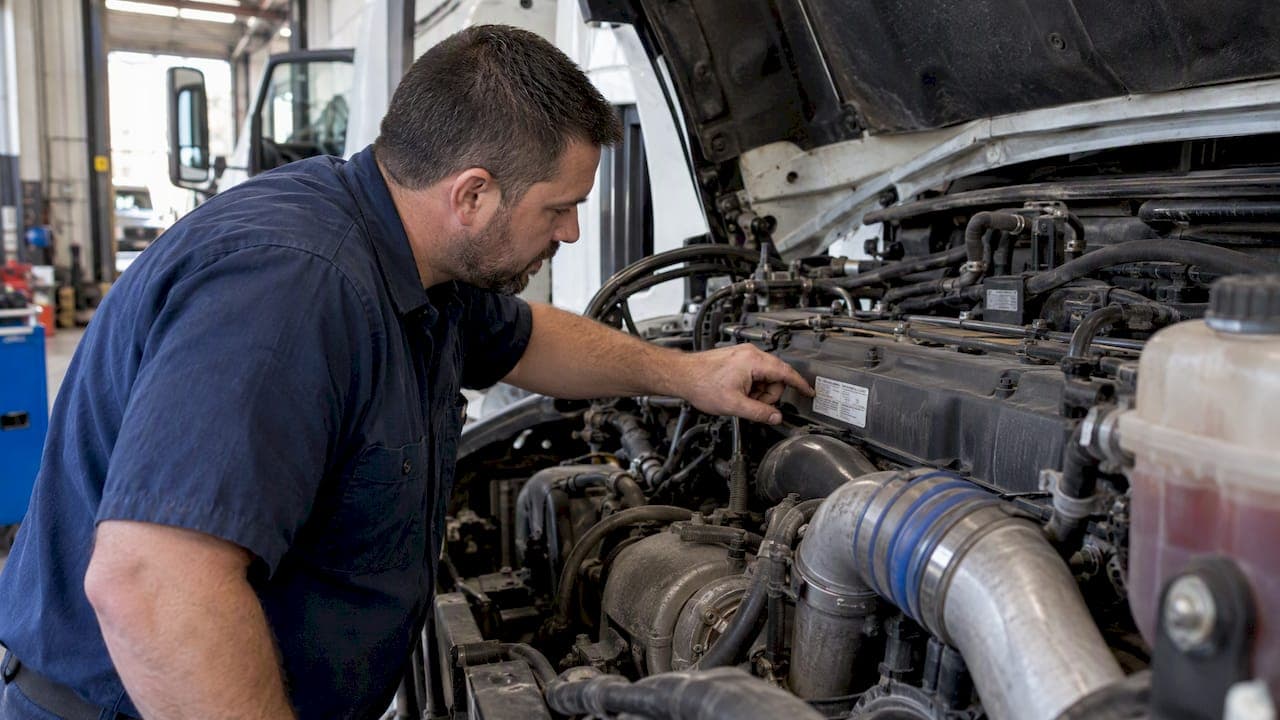
For heavy-duty engines, the authoritative record is the Vehicle Emission Control Information (VECI) label on the engine block. EPA explains that this label and the engine family name identify the engine for certification, separate from the VIN, in its guide to locating the emissions label. Use this workflow:
- Locate the VECI label or engine data plate on the block.
- Record the engine family name and test group printed on it.
- Look for the engine serial number on the engine or its identification tag.
- Note any additional engine identifiers shown on the engine or its documentation.
- Photograph every tag in good light, with the full plate in frame.
- If a label is missing or damaged, contact the manufacturer's technical support to request the original certification data, as EPA suggests in its certificate guidance.
Pro Tip: Read EPA's engine family naming conventions once so you can tell which characters of the family name point to the manufacturer and displacement.
For inspection steps beyond the labels, our engine inspection checklist walks through what to look at on the engine itself.

What should you collect before ordering an engine or engine parts?
A dealer or parts specialist uses your VIN as a starting point, but exact component compatibility depends on the engine's own identifiers. Gather these before you call or fill out a form:
- The full VIN, copied from the truck.
- The engine serial number from the block or data tag.
- The engine model code as shown on the plate or in the decoder result.
- The engine family and test group from the VECI label.
- CPL and ARR numbers, where the engine has them.
- Clear photos of the engine tag and the mounting points.
- Mileage and service history, if you have them.
Sending all of this at once avoids the back and forth that delays an order. If something is unreadable, say so and include a photo so a specialist can assess the available information.
To double-check fit after you have a candidate engine, our guides on confirming engine compatibility and finding compatible used diesel engines cover the common fit questions. Buyers comparing options can also work through our used diesel engine buying checklist.
Where VIN decoding goes wrong, and how we fix it
We review the available engine information when assessing a possible mismatch. Our approach is the same each time. We review the available engine information and can discuss inspection, warranty, and shipping details with you before ordering. To speed up a match, have your VIN, engine serial, tag photos, and any CPL or ARR number ready when you contact our parts team.
— John
How we help you get the right engine fast
We offer used truck engines. Ask us about inspection, warranty, and shipping details. Send us your VIN, engine serial or CPL, and photos of the tags, and we use them to help identify a suitable option from our inventory.

- Browse our full truck engines category.
- See an example listing: the 2014 Volvo D13J.
- See another: the 2015 Volvo D13 MP8 assembly.
- Need controls too? Check the OEM ECU for Volvo DXI13 D13.
- Replacing more than the engine? We also carry transmissions, differentials, and exhausts.
Ready to order? Send your VIN and engine tag photos through our site to help us identify a suitable part. Our same-day ordering playbook explains how to speed that up.
FAQ
Can you look up an engine number by VIN?
Not reliably. A VIN decoder may return engine model, displacement, and cylinder count when the manufacturer supplied them. To find an engine serial number, check the engine or its identification tag. Read it from the block or data tag.
How can I find a GM build sheet using the VIN?
To ask about a build sheet or original configuration, contact the manufacturer or an authorized dealer.
How do you decode a 17-digit VIN?
Enter it into the NHTSA decoder and review the vehicle and engine sections. The tool translates each code using tables the manufacturer submitted.
Why are the engine fields blank in my VIN result?
The manufacturer likely did not include that data in its filing. Check the physical engine label and serial number instead.