
A Jake brake is a compression release engine brake built into diesel engines to slow a heavy truck by converting engine compression into a retarding force, reducing reliance on wheel brakes. The formal industry term is "compression release engine brake," though "Jake brake" is the universal name on the road, derived from the Jacobs Vehicle Systems brand that pioneered the technology. Understanding the role of Jake brake in diesel trucks is not optional knowledge for professional drivers. It is a core safety skill that directly affects brake life, load control, and your ability to manage a fully loaded rig on a mountain grade. Modern Class 8 diesel engines equipped with this system can generate 300–600 horsepower of retarding force, enough to control heavy loads on moderate to steep grades without touching the service brakes.
How does a Jake brake work in a diesel engine?
A Jake brake transforms the engine from a power-producing unit into a powerful air compressor that absorbs the vehicle's kinetic energy during deceleration. The system does this by modifying exhaust valve timing during the compression stroke. Normally, a diesel engine compresses air, injects fuel, and releases that energy as power. With the Jake brake activated, the exhaust valves open near the top of the compression stroke, venting the compressed air before it can push the piston back down. The engine absorbs energy instead of producing it.
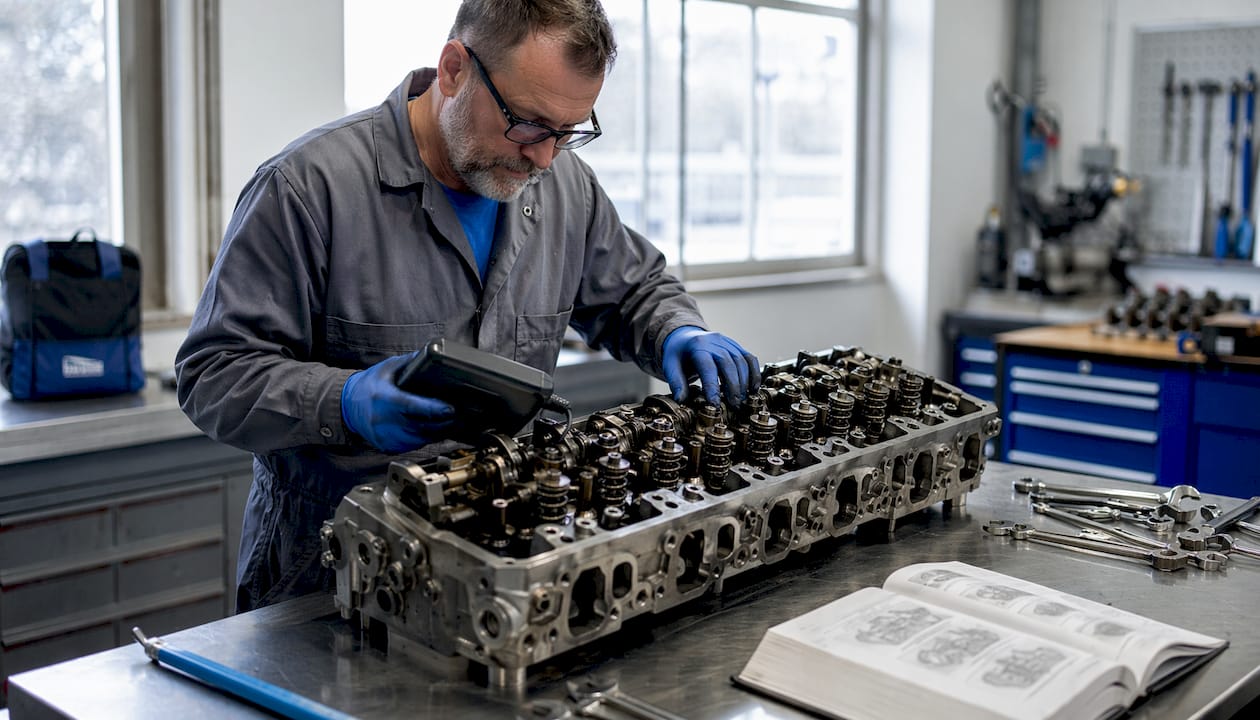
The four-stroke diesel cycle is central to understanding this. On the compression stroke, the piston rises and compresses air to extreme pressure. The Jake brake interrupts this cycle by opening the exhaust valve at peak compression, releasing that stored energy through the exhaust system. That release is exactly what creates the loud, machine-gun rattle sound the system is known for. The signature sound is a natural result of compressed air venting through the exhaust, not a sign of engine damage.
The key difference between a Jake brake and an exhaust brake is where the restriction occurs. An exhaust brake closes a valve in the exhaust pipe, building back pressure to slow the engine. A Jake brake actively opens exhaust valves at the wrong time in the cycle, creating a much stronger retarding effect. Exhaust brakes are quieter and work well on medium-duty trucks. Jake brakes are the standard for Class 8 rigs carrying heavy freight.
- Compression release: Exhaust valves open at peak compression, dumping stored energy.
- Air compressor effect: The engine absorbs kinetic energy instead of generating power.
- Exhaust brake comparison: Exhaust brakes use back pressure; Jake brakes use active valve timing.
- Sound source: The rattle comes from repeated compressed air release, not mechanical failure.
Pro Tip: Activate the Jake brake before you need it, not after speed builds. The system works best when the engine is already under load, not when you are trying to recover from excess speed.
What are the key benefits of Jake brakes for truck drivers?
Jake brakes function as a primary speed management tool, not a convenience feature. Their core job is to keep service brakes cool and ready for emergency stops. That distinction matters enormously on a long downhill grade with 80,000 pounds behind you.
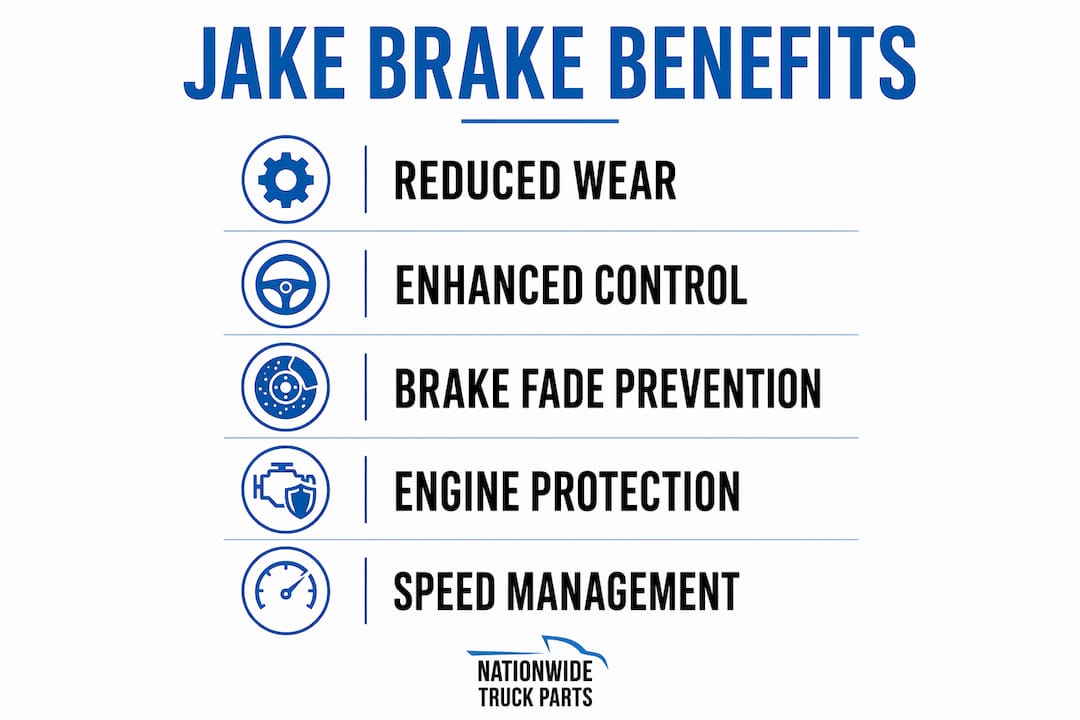
Reduced service brake wear
Engine braking significantly reduces thermal stress on brake pads, drums, rotors, and shoes. Brake fade happens when friction components overheat and lose stopping power. A Jake brake prevents that scenario by handling the bulk of deceleration before the service brakes are ever needed. Fleet operators see direct cost savings in extended brake component life across their entire truck pool.
Enhanced control on steep descents
A loaded semi on a 6% grade builds speed fast. The Jake brake gives you a steady, controllable retarding force that holds your speed without the pulsing effort of repeated brake applications. Drivers report significantly less fatigue on long mountain routes because the system handles continuous deceleration automatically. Less physical braking input means more mental bandwidth for road conditions and traffic.
Prevention of brake fade
Brake fade is not just uncomfortable. On a steep grade, it is catastrophic. Overuse of service brakes leads to unrecoverable overheating, where the brakes stop responding entirely. The Jake brake eliminates this risk by taking over the primary deceleration role, leaving service brakes cool and fully functional for the moments they are truly needed.
Fuel and speed management
Holding a steady speed on a downhill grade with engine braking reduces the need to accelerate back up to speed after braking. That cycle of brake and accelerate burns more fuel than a steady descent managed by the Jake brake. The benefit is modest on any single run but adds up meaningfully across thousands of miles in a fleet operation.
- Brake life: Pads, drums, and rotors last longer when the engine handles routine deceleration.
- Driver fatigue: Less frequent brake pedal input reduces physical and mental strain on long hauls.
- Emergency readiness: Cool service brakes are always available for sudden stops.
- Mountain safety: Consistent retarding force prevents runaway truck scenarios on steep grades.
What maintenance does a Jake brake require?
Jake brake maintenance centers on three systems: the hydraulic slave pistons, the solenoid controls, and the exhaust valve lash settings. Each of these components must be inspected at regular intervals to keep the system working within manufacturer specifications. Skipping this maintenance does not just reduce Jake brake performance. It can accelerate wear on the entire valve train.
The hydraulic slave piston system is the most critical maintenance point. These pistons actuate the exhaust valves at the precise moment required for compression release. If the oil pressure is low or the hydraulic passages are dirty, the pistons cannot respond fast enough. Using the Jake brake under low oil pressure conditions accelerates wear and can damage the valve train.
Exhaust valve lash is the second major checkpoint. Lash refers to the small gap between the rocker arm and the valve stem. If this gap is out of specification, the Jake brake either activates too early or too late in the compression cycle, reducing effectiveness and increasing stress on components. Valve lash should be checked and adjusted according to the engine manufacturer's service schedule.
- Inspect hydraulic slave pistons at each major service interval for wear and proper oil flow.
- Check solenoid controls for electrical faults and clean any contamination from the solenoid valve body.
- Verify exhaust valve lash settings against manufacturer specifications and adjust as needed.
- Confirm engine oil pressure meets minimum operating requirements before activating the Jake brake.
- Review noise ordinance compliance and disable the Jake brake in posted residential or urban zones.
Pro Tip: Follow the engine manufacturer's service intervals for Jake brake components, not just the truck's general maintenance schedule. The two schedules are not always the same, and the Jake brake system has its own inspection requirements.
Jake brakes do not damage engines when used correctly and maintained properly. Most engine damage attributed to Jake brakes traces back to driver error, such as activating the system at high RPM, or maintenance neglect. Treating the Jake brake as a set-and-forget feature is the fastest way to shorten engine life. Treating it as a precision system that needs regular attention keeps it working reliably for hundreds of thousands of miles. For guidance on extending the full drivetrain's service life, the engine longevity practices used by experienced owner-operators apply directly to Jake brake system care.
When and how should you use Jake brakes safely?
Safe Jake brake use starts before the descent begins. Proper speed selection at the top of a grade is critical. Attempting to use the Jake brake to recover speed after a truck has already built too much momentum often leads to brake overheating and loss of control. Set your speed before the grade drops, not after.
Gear selection is the other half of the equation. The Jake brake produces its strongest retarding effect at higher engine RPM within the safe operating range. Selecting a lower gear before the descent keeps the engine RPM in the effective range for compression release braking. Dropping into a gear that is too high lets the engine lug, reducing Jake brake effectiveness and putting more load on the service brakes.
Conditions where Jake brake use is appropriate
| Condition | Jake brake use |
|---|---|
| Steep downhill grade, dry road | Full Jake brake, correct gear selected |
| Long moderate descent, dry road | Jake brake with periodic service brake snubs |
| Wet or rain-slicked road | Reduced Jake brake setting, monitor traction |
| Icy or snowy road | Disable Jake brake, use service brakes carefully |
| Urban or residential zone | Disable Jake brake per local ordinance |
The snub braking technique combines Jake brake and service brakes for maximum control. Apply the Jake brake continuously for sustained deceleration, then use short, firm service brake applications to trim speed further when needed. This keeps brake temperatures low while giving you precise speed control.
Using Jake brakes on slick surfaces can cause drive wheel lockup, which leads to jackknife events before traction control systems can intervene. On wet, icy, or snowy roads, reduce the Jake brake setting or disable it entirely. The retarding force acts on the drive axles, and if those wheels lose traction, the trailer can swing out faster than any driver can correct. Understanding diesel engine availability and its connection to braking system performance is relevant for fleet operators managing routes through varied terrain.
Key Takeaways
The Jake brake is the single most effective tool for controlling speed and protecting service brakes on heavy diesel trucks during long descents and heavy-load operations.
| Point | Details |
|---|---|
| Core function | Jake brakes convert engine compression into retarding force, reducing service brake reliance. |
| Retarding power | Modern Class 8 engines generate 300–600 horsepower of braking force through compression release. |
| Brake protection | Engine braking prevents brake fade by keeping pads, drums, and rotors cool during descents. |
| Maintenance priority | Hydraulic slave pistons, solenoid controls, and exhaust valve lash require regular inspection. |
| Traction risk | Disable or reduce Jake brake on icy or wet roads to prevent drive wheel lockup and jackknife. |
What 15 years on the road taught me about Jake brakes
Most new drivers treat the Jake brake like a bonus feature. They flip it on when they remember and ignore it when they do not. That mindset is the root cause of most avoidable brake failures I have seen on mountain routes.
The Jake brake is not a supplement to your service brakes. It is the primary braking system for sustained deceleration, and your service brakes are the backup for emergencies. Flip that mental model, and your entire approach to downhill driving changes. You start choosing your gear at the top of the grade instead of grabbing the brake pedal halfway down. You arrive at the bottom with cool brakes and full stopping power in reserve.
The maintenance piece is where I see fleet operators lose money quietly. A Jake brake that is slightly out of adjustment does not fail dramatically. It just works at 70% efficiency, and the service brakes pick up the slack. Over thousands of miles, that slack shows up as worn rotors and overheated drums that should have lasted twice as long. A valve lash check costs almost nothing. Replacing a full brake system on a Class 8 truck costs a great deal.
The technology is also getting better. Electronic controls now let drivers select braking intensity levels, and integration with ABS and traction control systems has made the traction risk on slick roads much more manageable than it was a decade ago. But the fundamentals have not changed. Set your speed before the grade, select the right gear, and let the engine do the work.
— John
Nationwide Truck Parts has the engine components you need
When your Jake brake system needs attention, the engine components behind it matter as much as the brake hardware itself. A well-maintained diesel engine with correct oil pressure and a healthy valve train is the foundation that makes compression release braking work reliably.
Nationwide Truck Parts carries a wide inventory of tested and inspected commercial truck engines and drivetrain components, backed by a standard warranty and available with same-day shipping. Whether you are replacing an engine that has seen too many hard descents or sourcing parts for a fleet overhaul, Nationwide Truck Parts stocks the components that keep your braking system performing at full capacity. Browse the current inventory at Nationwide Truck Parts and get back on the road without delay.
FAQ
What is a Jake brake on a diesel truck?
A Jake brake is a compression release engine brake that opens exhaust valves at peak compression to slow the truck using engine resistance. It generates 300–600 horsepower of retarding force on modern Class 8 diesel engines.
Does using a Jake brake damage the engine?
Jake brakes do not damage engines when used correctly and maintained properly. Damage typically results from activating the system at high RPM, running with low oil pressure, or skipping scheduled maintenance on the valve train components.
What is the difference between a Jake brake and an exhaust brake?
An exhaust brake restricts exhaust flow to build back pressure, while a Jake brake actively opens exhaust valves during compression to release stored energy. Jake brakes produce significantly more retarding force and are standard on Class 8 trucks.
When should you turn off a Jake brake?
Disable the Jake brake on icy, snowy, or wet roads where traction is reduced. The retarding force acts on drive wheels and can cause lockup and jackknife events on low-traction surfaces before traction control can respond.
How often does a Jake brake need maintenance?
Jake brake maintenance intervals follow the engine manufacturer's service schedule, not just the truck's general maintenance program. Key inspection points include hydraulic slave pistons, solenoid controls, and exhaust valve lash settings.